Jordan Poe
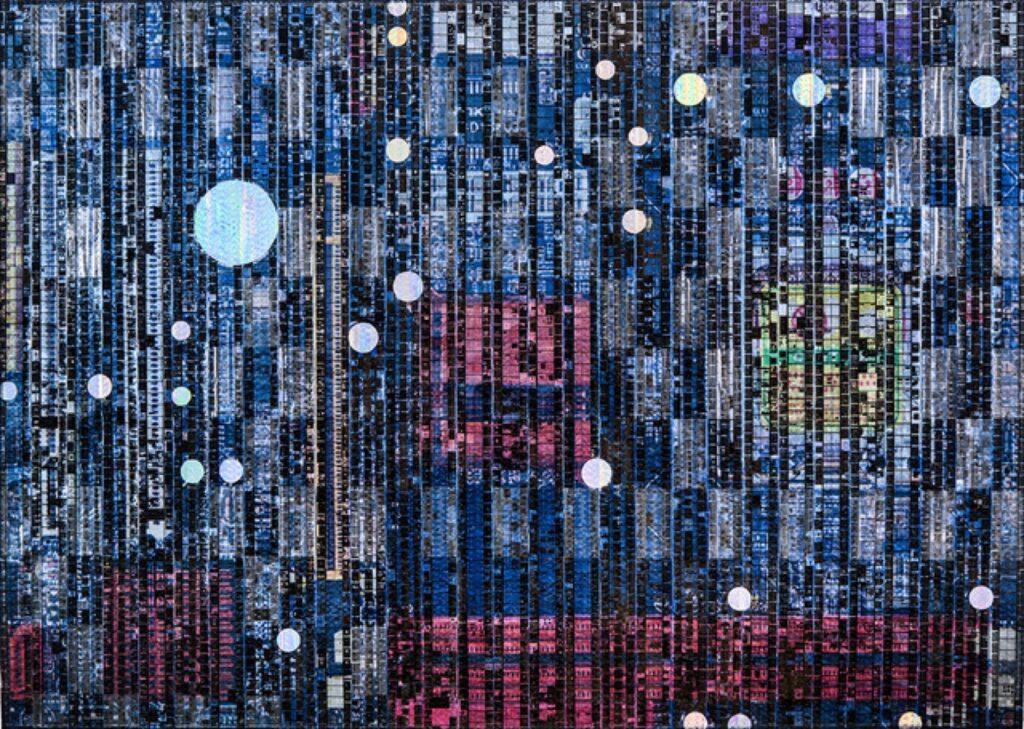
As an artist specializing in infrared photography printed on aluminum, I am fascinated by the unique and ethereal qualities that this medium offers. Infrared photography allows me to see the world in a whole new way, revealing a hidden landscape of dreamlike, otherworldly hues and textures.
By using the latest technology in infrared imaging, I am able to capture light in a way that is beyond the visible spectrum, producing images that are mysterious and hauntingly beautiful. Printing these images on aluminum adds depth, vibrancy, and durability, enhancing the impact of each piece.
My goal in creating these works is to inspire a deeper contemplation of the natural world around us, and to connect viewers with the inherent imagination and mystery that resides within it. Through the unique qualities of infrared photography and aluminum printing, I hope to open new channels of perception and invite viewers to see the world in a new light.
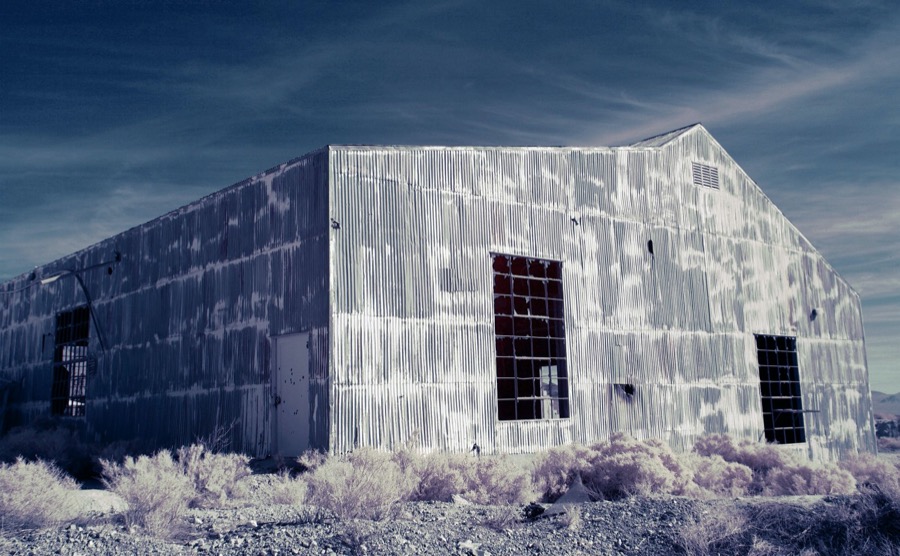
Old Steel Corrugated Building (Remnants #3)
Remnants
The Gold Rush and subsequent expansion into the West through the early 20th century drove an overwhelming need for prosperity and wealth which developed into unbridled greed, opportunism and exploitation in a nearly unknown region that the Industrial Revolution started in the decades prior to it. Bodie was a prime example of this mindset that was well documented; however, there were several places during this time going through the same thing that either people or time itself tried to erase – whether it was their histories or physical remnants.
Atolia, California (#1-6), located in the heart of the Mojave Desert was once a thriving tungsten mining community founded in 1905 that eventually saw a peak population of over 2000 people and several businesses including the infamous “Bucket of Blood” Saloon after the reconstruction of a fire damaged mine in early 1916. This was followed immediately by its boom period in the mid to late 1910’s. Like mining in other mining towns, when there was a sharp downward spike in the production, people deserted to other mining towns rather than wait to see if production came back on pace with a discovery of a new source of ore. Atolia, as a town, was over; though, commercial production continued on and off through the next few decades. These days, even though Atolia is barely off modern day Highway 395, it is very easy to pass right by without even knowing that you did in the first place. Time has eroded most of the townsite that had not been already looted, relocated or even sunken into exposed mine shafts. What is left is an eerily beautiful reminder of its past.
St. Thomas, Nevada (#7-14), on the shores on the Muddy River and just outside of the Valley of Fire, was founded by Mormon settlers who discovered gold by accident while washing clothes in the river. Mining was expanded into the surrounding hillsides where salt and silica deposits were discovered. The self-sustaining community prospered until 1871 when the Federal Government came in, surveyed the land and subsequently moved the Nevada state line one degree of longitude east (which included the St. Thomas townsite) and demanded that the residents pay taxes on gold they had previously mined. Because of this, instead of complying, they fled to Utah and founded new communities. Miners in the nearby areas took the opportunity to claim St. Thomas for their own. When the nearby Hoover Dam was completed, the town was then abandoned for good when the rising waters from Lake Mead turned the townsite into a modern day city of Atlantis. During the dry season when the waters recede, it uncovers a seemingly out of place group of foundations out of sight of anything that resembles civilization.
Rhyolite, Nevada (#15-23), was Nevada’s answer to Bodie. Surrounded by a mining district of over 200 small mining companies, Rhyolite was officially founded in 1905 when the Bullfrog Mine was started by two miners, Frank Harris and Ernest Cross, after striking one of the biggest gold deposits in the area. Word quickly spread about the discovery and suddenly, Rhyolite went from a two man operation to a full fledged town of 1,200 people in just two weeks. Soon, there were dozens of saloons, brothels, general stores, banks, an opera house and even a stock exchange. Harris and Cross then realized that their strike might be short lived because of the lack of new high density deposits being found. Starting to panic, they started selling shares in their overvalued mine company to all the uninformed miners coming in hoping to get rich. Playing on the miners’ desperation to get rich fast, Harris and Cross came up with a seemingly ingenious marketing ploy that billed Rhyolite as the “Paris of the West”. The campaign was so good that even the likes of Charles Schwab wanted in and eventually bought out Harris and Cross’ stake in the company. Schwab then built up Rhyolite’s infrastructure to include electricity, running water, a post office and railway spurs that connected to other big mining towns, San Francisco and Las Vegas. These improvements brought Rhyolite into its explosive, but short lived boom period. At this point, the population swelled to about 3,500 to 5,000, based on academic records since there were no official records of the population. Profits soon flattened which caused Schwab to realize that he was fooled by Harris and Cross and demanded an independent survey of the mine. The surveyor deemed the mine to be “severely overvalued” which caused the mine’s stock price to plummet after the majority of miners dumped all their stock and move away. Rhyolite’s six year boom abruptly ended. With the 1906 San Francisco Earthquake and Financial Panic of 1907, capital was hard to come by to improve or expand. Soon after when the post office closed down, Rhyolite was completely abandoned and its buildings were either moved or scraped to build new buildings in neighboring Beatty. Ironically, a deposit of nearly three million ounces of gold was struck by three mining companies in the 1990’s just on the other side of a mountain ridge south of Rhyolite. It has been estimated that the remaining buildings of Rhyolite will by fully eroded by wind, dust storms, heat or other natural factors within a century.
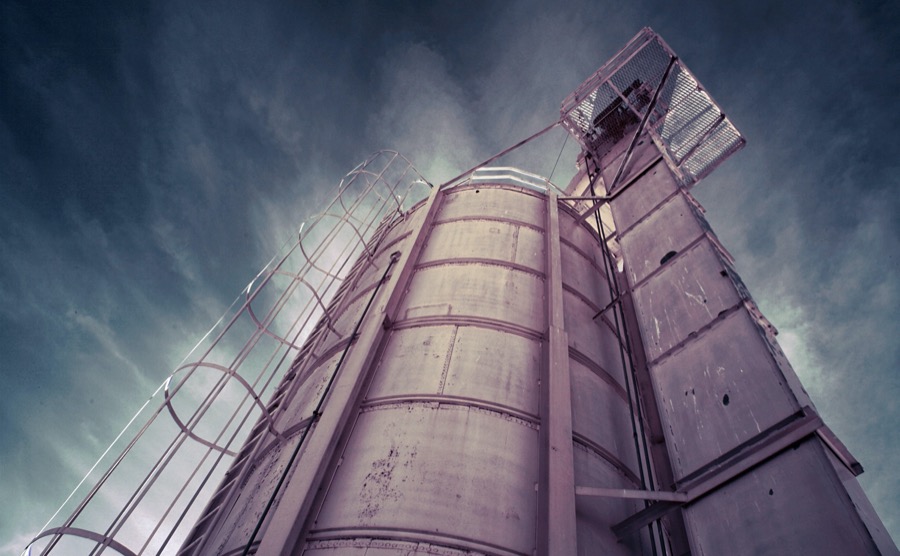
Scary Dairy Silo (Remnants)
Scary Dairy (#24-31): In the 1930’s, the state of California completed construction of Camarillo State Hospital (now the site of California State University, Channel Islands) in Camarillo to house drug addicts, the mentally ill and criminally insane in order to rehabilitate them to rejoin society. The hospital was soon praised for its cutting edge treatments for the illnesses and disorders seen at the hospital. Despite this, there was an equal amount of barbaric and exploitive practices. So much so that the movie “The Snake Pit” was filmed here depicting these dangerous “treatments”. One of the most well-known rumors of Camarillo State Hospital is that The Eagles wrote “Hotel California” about it. The dairy that the hospital ran on its grounds (now known by locals as Scary Dairy) used the patients as a cheap labor source in the name of “work study” in order to prepare them for living a normal life after they were released. Many of the horror stories and local folklore of the hospital revolve around the dairy. One of the dairy’s most well known stories is that of a criminally insane patient who was subjected to some of the most barbaric treatments. He did not want to go through them anymore so he manipulated the staff into thinking he was getting better. He soon became eligible to work at the dairy under minimal supervision. He then took advantage of the situation to escape. The story goes that he came across a nearby ranch house, broke in while the family was sleeping and killed and robbed them. Events like this and finding out how patients were being treated forced them to reform patient treatment and the forced the closure of the dairy in the 1960’s. The hospital never recovered back to its peak of its innovation and eventually shut down in the 1990’s to make way for the university. Yet, the dairy has sat abandoned and forgotten to this day by most of the world since its closure and has become home to rumored gang activity, delinquents, and a collection of graffiti art that ranges from basic tagging to the downright bizarre in its own strangely beautiful isolated ecosystem.
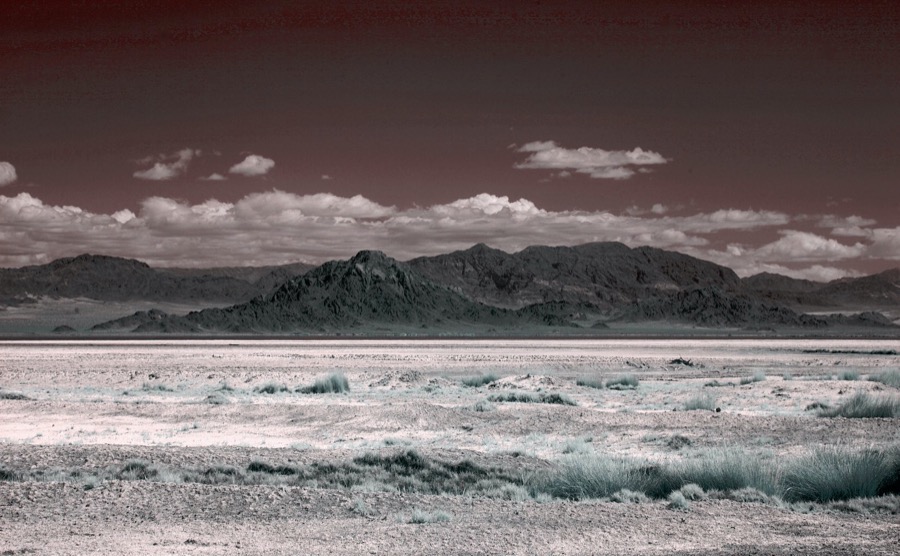
Mountain Range with a Copper Hue Horizon (Zzyzx #27)
Zzyzx
Whomever has ever driven between Los Angeles and Las Vegas has most likely seen “that” exit sign with the weird name out in the middle of nowhere. Zzyzx has been called by many names: Soda Springs, Lake Tuendae, but what makes Zzyzx both intriguing and bizarre is the time period it was known as The Zzyzx Mineral Springs and Healing Center and its con artist founder and his naive clients. Beginning in 1944, when Curtis Howe Springer, a self-proclaimed (but unlicensed) doctor and minister, started the “health center” by convincing people that the springs were a cure all for an assortment of ailments in ways that would make Charles Ponzi look like an amateur. Springer started his dubious plan by falsifying mineral rights to 12,000 acres of surrounding land then driving a bus to Skid Row in Los Angeles and promising the homeless and other vulnerable people hot meals and shelter to help with the construction of his self described utopia. With modern medicine still catching up about whether or not Springer’s claims were conclusively real or not and because of his ability to make his “health center utopia” con to his radio sermon listeners and the general public with strategic advertising campaigns believable, he was able to brainwash those people listening to come out to the middle of one of the most inhospitable places on Earth to be cured of whatever they were suffering from with his snakeoil tonics and presumed benefits of the hot springs. By naming it Zzyzx, other than the fact that it was catchy, he was able to come up with the slogan of “Zzyzx- The Last Word in Health”. However, Zzyzx was just a made up word created by Springer thinking it was the last word in the English language. He was able to finance all of it through donations from his most devote religious followers. Over the years, after Springer’s tonics were proved not useful for treating any ailments, he started his next scheme by trying to sell off the surrounding land he fraudulently obtained in the first place. When that con fell through and the lawsuits started to pile up, the government inquiries began. By this time, modern medicine had caught up with Springer as well and was able to prove that he, along with his tonics and elixirs, to be a fraud. Even the “natural” hot springs were heated by water heater pumps. Because of this, The American Medical Association outed him and dubbed Springer the “King of Quacks” while others named him the “King of All Snake Oil Salesmen”. Springer, along with his remaining followers, were eventually evicted from the site in 1974. Springer eventually died in obscurity in Las Vegas in 1985. The only unanswered question about Zzyzx is “what would have happened to Springer and his followers if Springer was not outed and kept his con going?”.
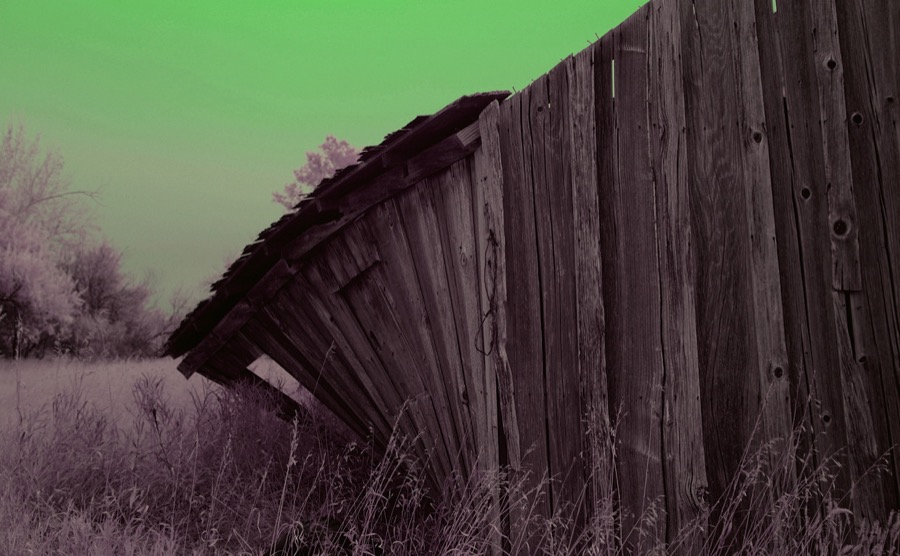
Side of Old Wooden Barn with Green Horizon (Medicine Lake #14)
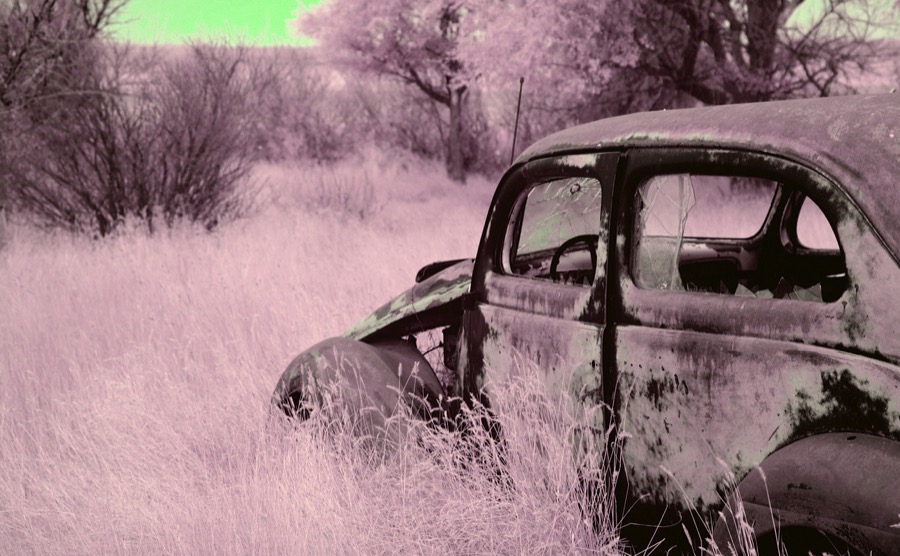
Old Coupe in the Grass Light Pink Hue (Medicine Lake #15)
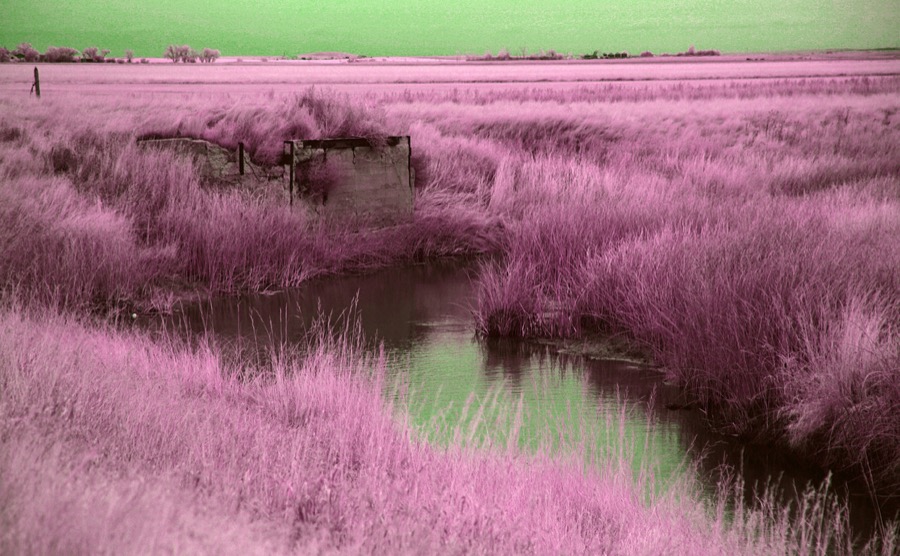
Pasture with a Pink and Green Hue (Medicine Lake #8)
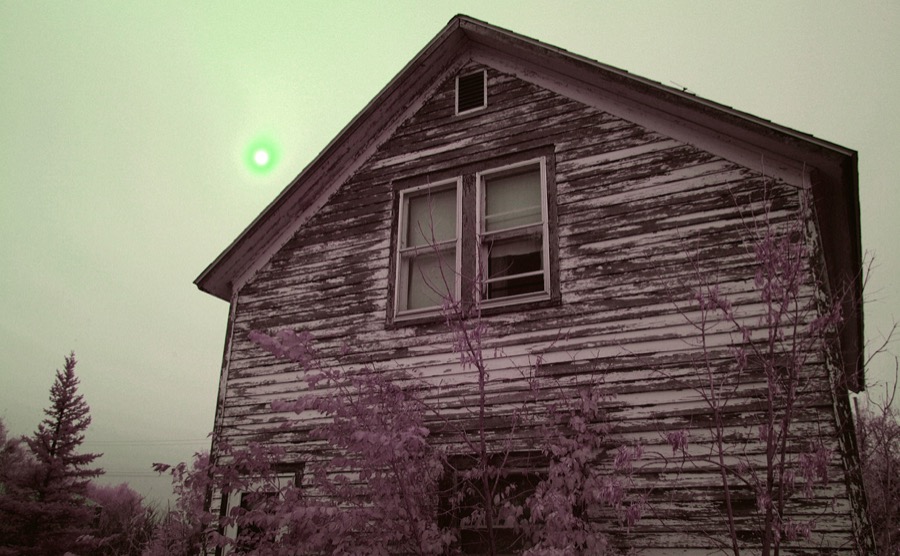
Wooden House with Windows and Green Horizon (Medicine Lake #2)
Medicine Lake
Medicine Lake, Montana, (located about 25 miles from North Dakota and about 30 miles from Canada) is my father’s hometown. It was founded in 1910 by my great-grandfather who served as the town’s first mayor. He then served as the town doctor and ran the local pharmacy in town. My grandfather also served as mayor and ran the pharmacy until the mid 1980’s when he retired. I have been going up there my entire life for family gatherings and hunting trips. Whenever I go up there, it has always been a surreal experience both from the drastic contrast between the town and my experience growing up and living in Southern California and hearing stories from the locals. With this series, I wanted to illustrate my experiences there.
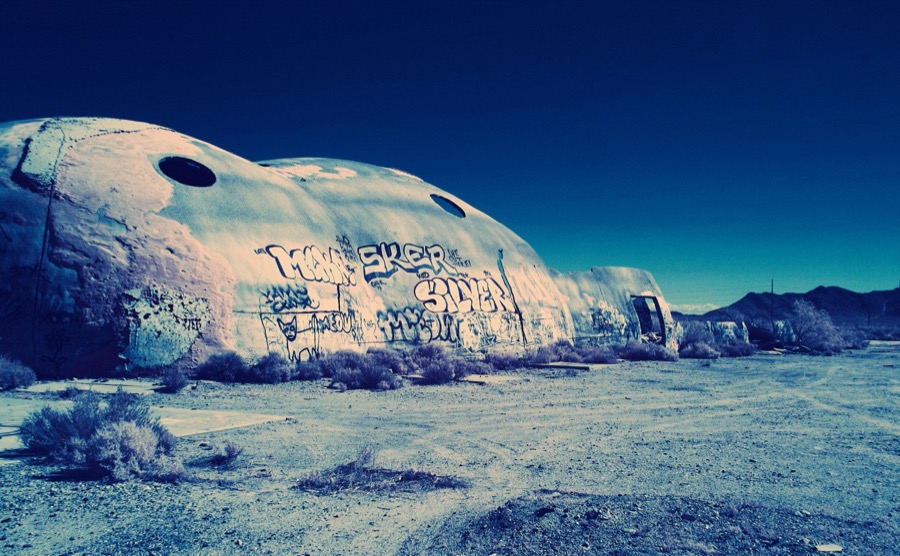
Graffiti on Domes (Domes #21)
The Domes
The Casa Grande Domes have been a site of intrigue ever since their construction. The concrete and polyurethane domes were built in the early 1980’s by InnerConn Technology Inc. as a complex to manufacture circuit boards in order to improve cost efficiency and insulation. Despite their efforts for cost efficiency, InnerConn went into bankruptcy forcing them to default on a loan and abandon the domes in 1983. The discovery of the hazardous chemical, trichloroethylene, in the groundwater under the domes did not exactly help their attempts to continue InnerConn’s operations there. Ever since then, like every other strange abandoned places — stories, rumors and urban legends began circulating. Some stories involved drifters and the homeless using the site as temporary housing while there were also claimed sighting of chupacabra and other cryptozoological creatures. The most popular and seemingly outlandish urban legend was that it turned into a Satanist hangout and sacrificial ritual site. Being a skeptic of such rumors, I came to investigate why such rumors would be linked to a defunct tech company’s abandoned manufacturing complex in the middle of nowhere and become a real life episode of The Twilight Zone. Since The Domes were in the heart of the Sonoran Desert, the natural decay process of the site started rapidly which gave it a unique aesthetic quality to it. I quickly realized the Satanist rumors were true based on the numerous Satanist symbols scattering the site and what appeared to be fresh bonfire ritual surrounded by even more symbols. All of this along side the mysteriously strange graffiti gave justification to The Domes’ stories which turned it from urban legend to weirdly intriguing legend.
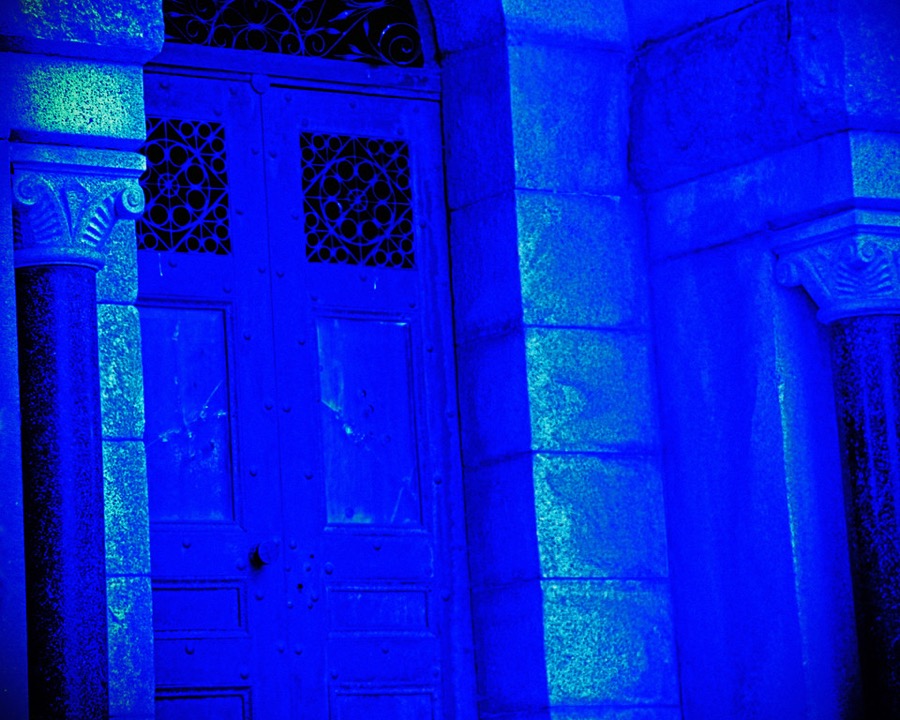
Blue Hue of Steel Front Doors
Mountain View
The first thing that comes to mind when imagining Mountain View Cemetery its impressiveness. It embodies philosophy principles that encompass a link between nature and human triumph. Located in Oakland, California, Mountain View Cemetery is home to some of the most grandiose mausoleums and crypts (appropriately named Millionaires’ Row where many prominent people are buried) including three pyramid mausoleums which is one the largest groupings of burial pyramids outside of Egypt. Due to the way Mountain View Cemetery is designed, walkways and wide avenues were carefully placed to create a natural flow around the grounds. Because of this, the juxtaposition of the ambitious crypts and the indigenous surroundings creates a beautiful environment to contemplate the ambition of the pioneers of the region.