

June 6 – July 25
Curated by Elana Kundell & Peter Tyas
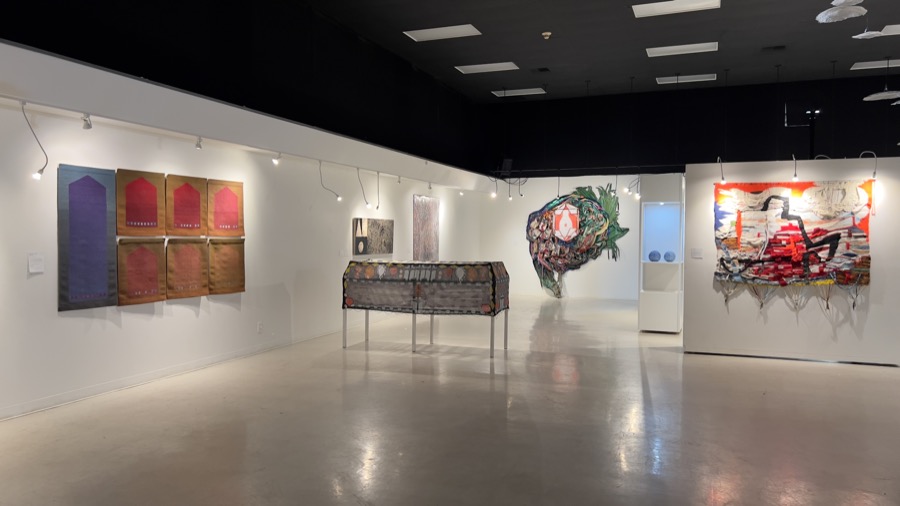
This summer we will mark the 250th anniversary of the Declaration of Independence with an exhibition of contemporary fiber art. The exhibition will feature a diverse range of artists whose work redefines fiber through merging traditional techniques like weaving, crochet, and embroidery with modern themes of identity, sustainability, and activism.
The exhibition takes the long view of the history of a nation and this place that we call home. Fiber itself has a deep symbolic meaning, recalling generations of domestic labor, the struggles for survival, and the embodiment of memories in the everyday objects that fill our homes. The exhibition considers the natural process and the geological time which has shaped the land upon which we stand, as well as the layers of material culture which sit beneath the surface of our modern lives.
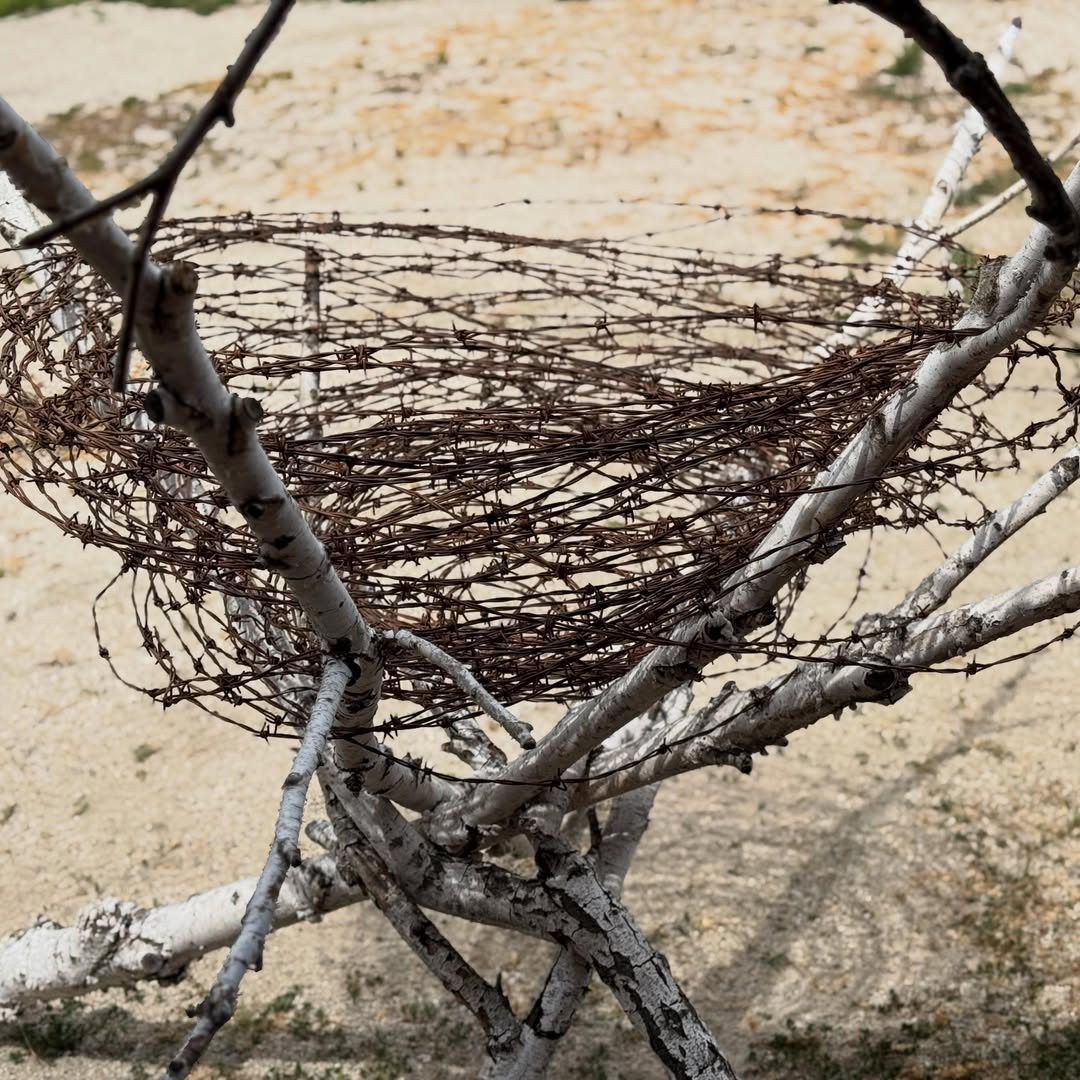
You are invited to take part in creating an artwork within the exhibition. Cyrena Nouzille has installed a massive artist made ‘nest’ in our sculpture garden, made from driftwood and barbed wire and bound with fibers. Starting on April 12, community members have been invited to contribute personal narratives, memories, or messages that reflect this moment in history. These strips of paper will be woven together around the rim of the nest to replicate the patterns of lives and thoughts bound together in place that shape the place where we live.
This exhibition is a part of the 2026 Hyper SoCal initiative, which brings awareness to nonprofit and municipal art venues supporting working artists in Southern California.
 Opening Celebration
 Talk with Dr. Jenni Sorkin & Panel with Exhibiting Artists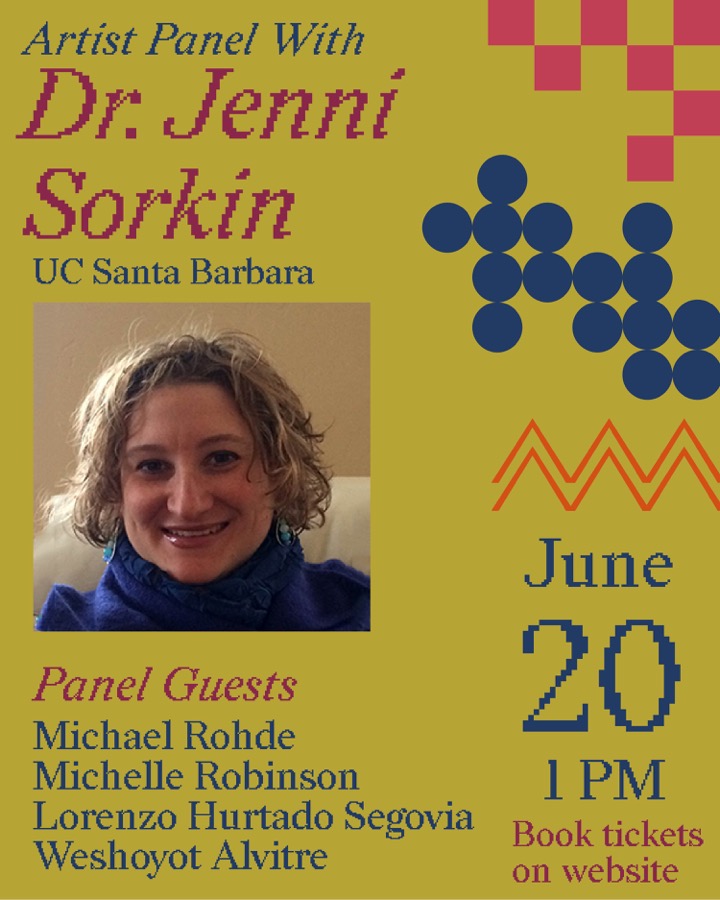

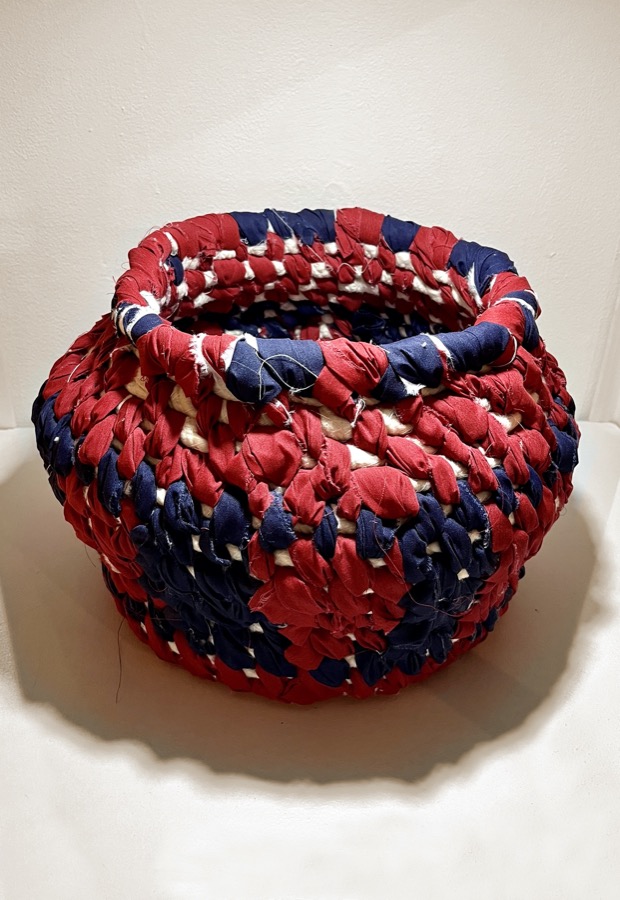
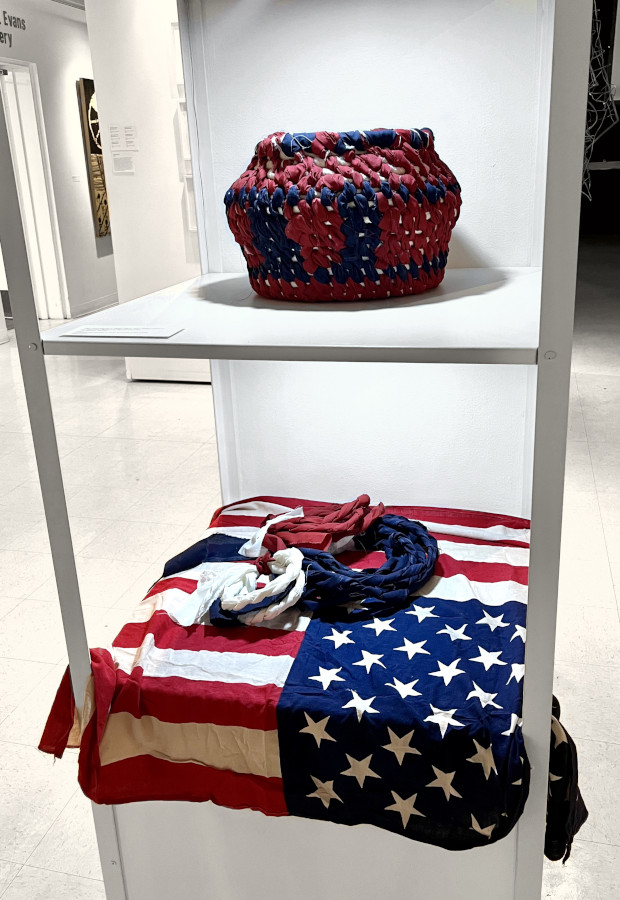
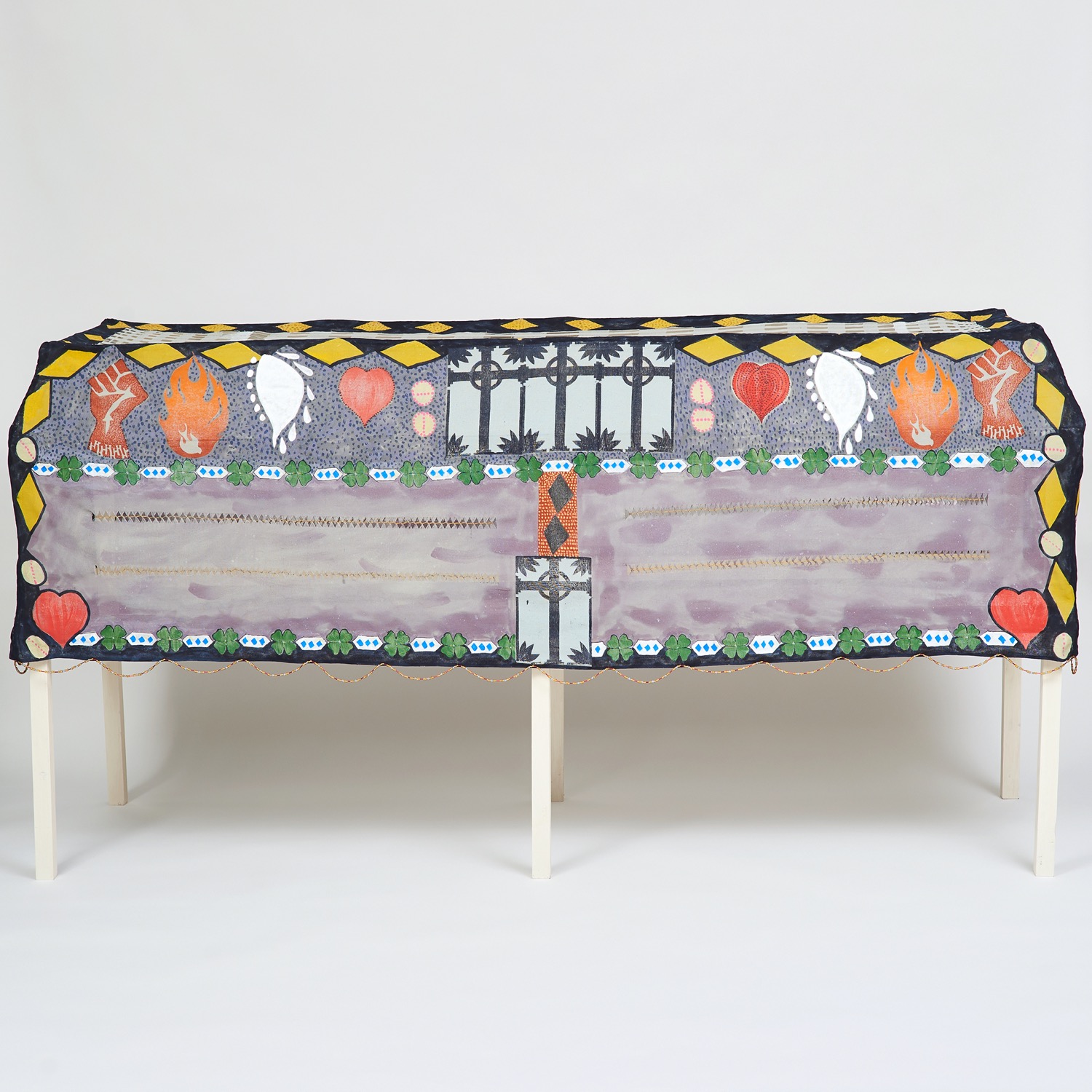
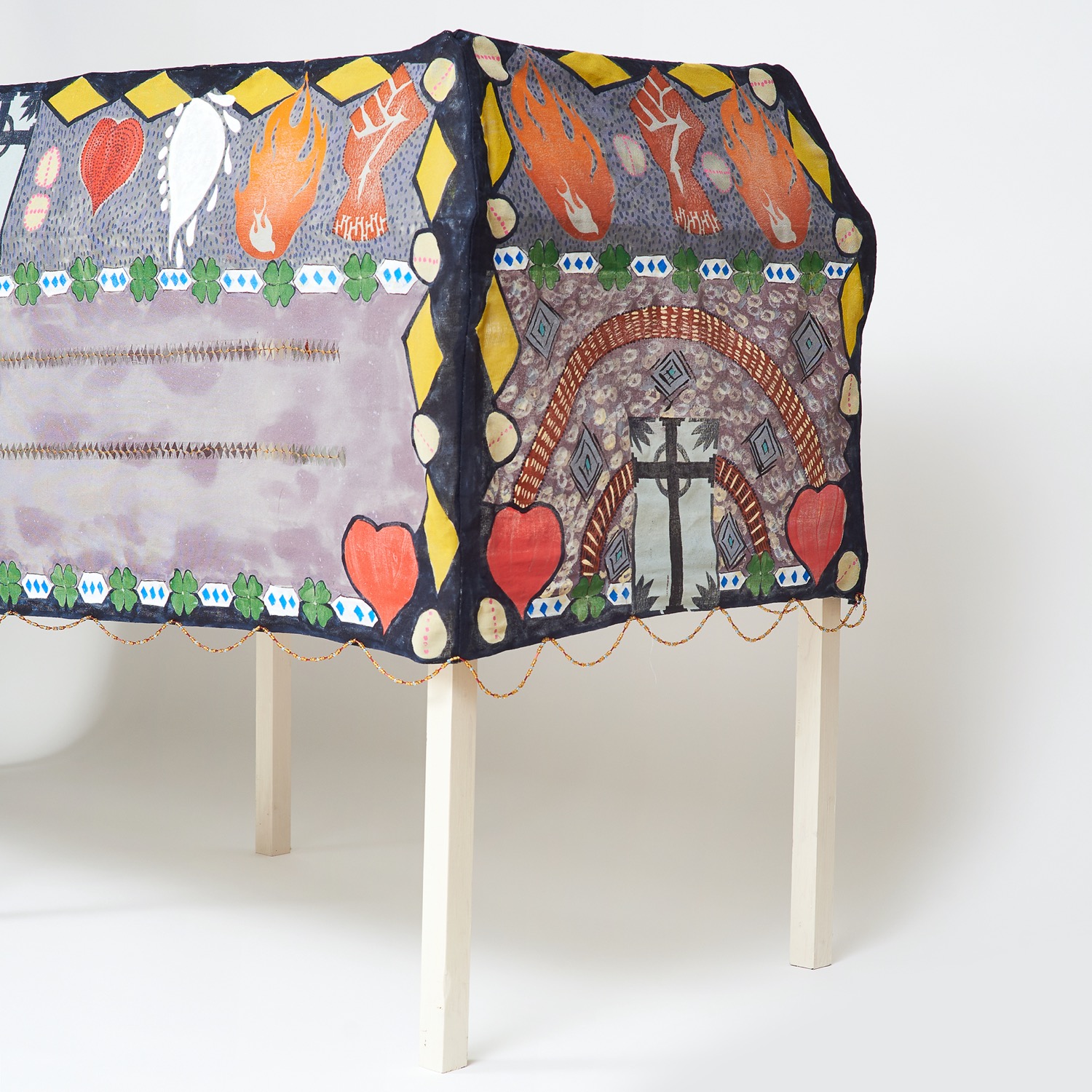
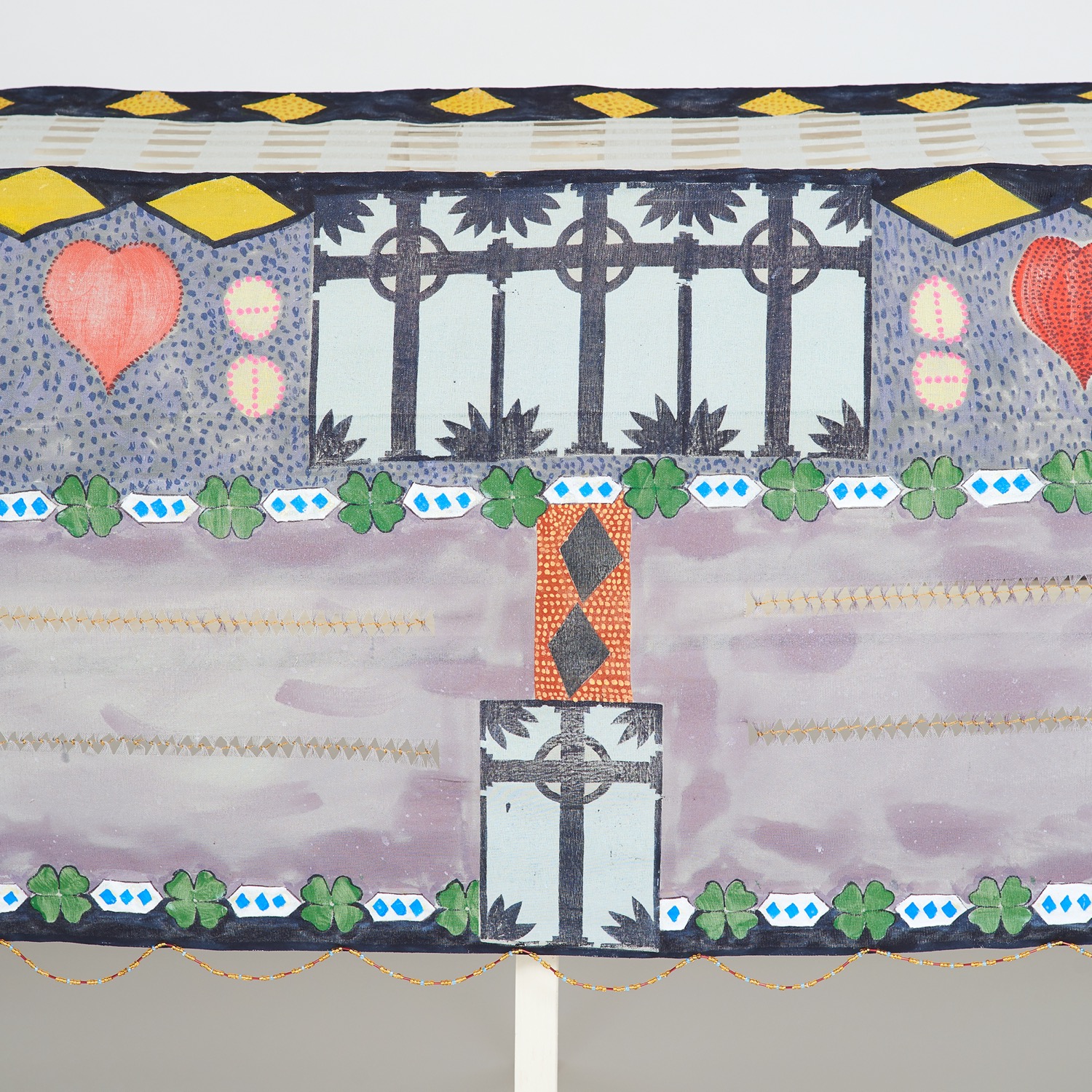
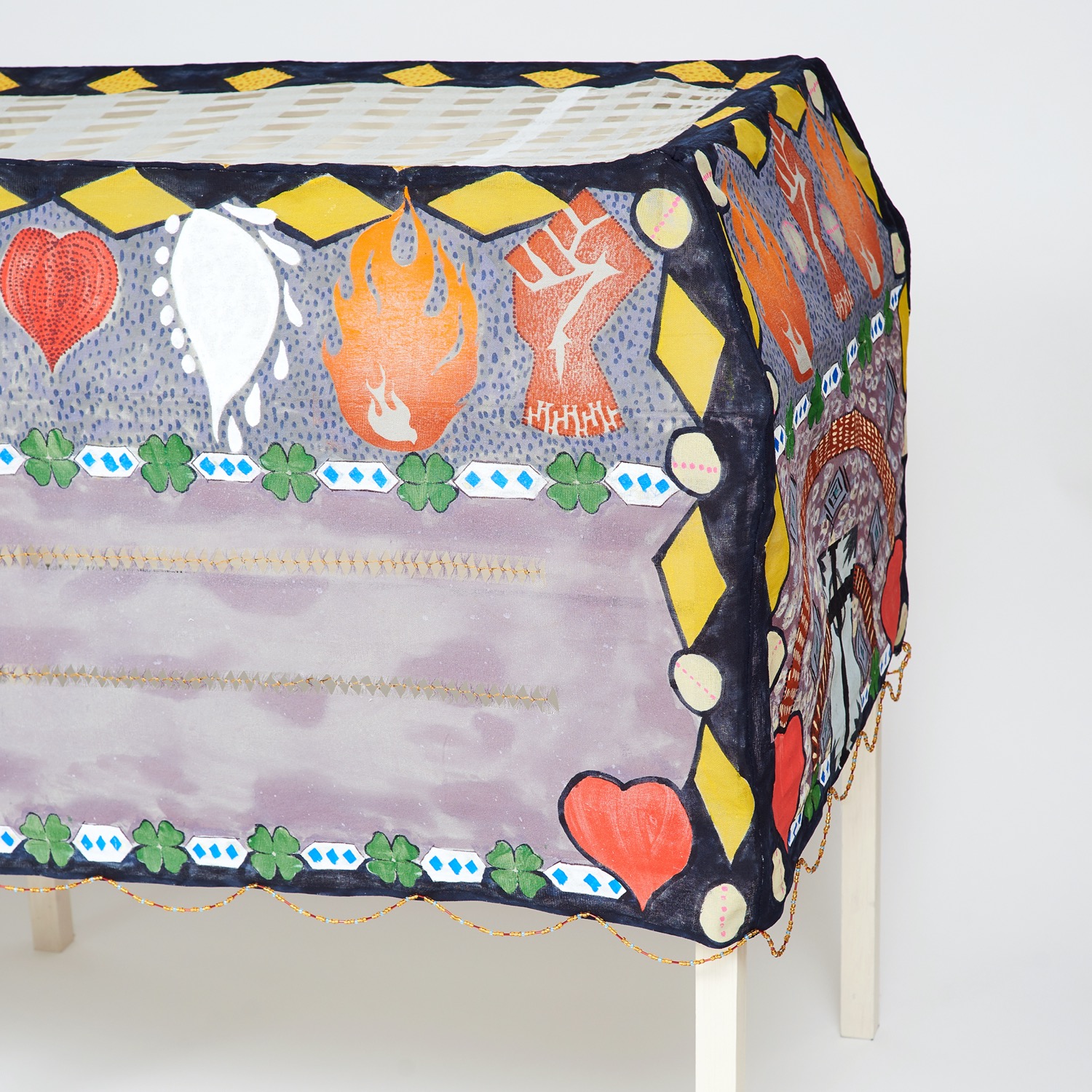
Our Sovereignty is Older Than Your Independence: A Funerary Basket of Deconstruction
Torn patriotic bunting in cotton and dyed cotton, cotton foundation
Weshoyot Alvitre is a Tongva and Scottish interdiciplinary artist with a focus in sequential art, writing, illustration and fiberart. She was born in the Santa Monica Mountains on the property of Satwiwa, a cultural center started by her father Art Alvitre. She grew up close to the land and raised with traditional knowledge that inspires the work she does today. Her work focuses on art and writing that visualizes historical material through an Indigenous lens. She has also contributed art response to contemporary Indigenous issues using pop-culture, sci-fi and archival research materials to spark conversations and re-frame colonial narratives.
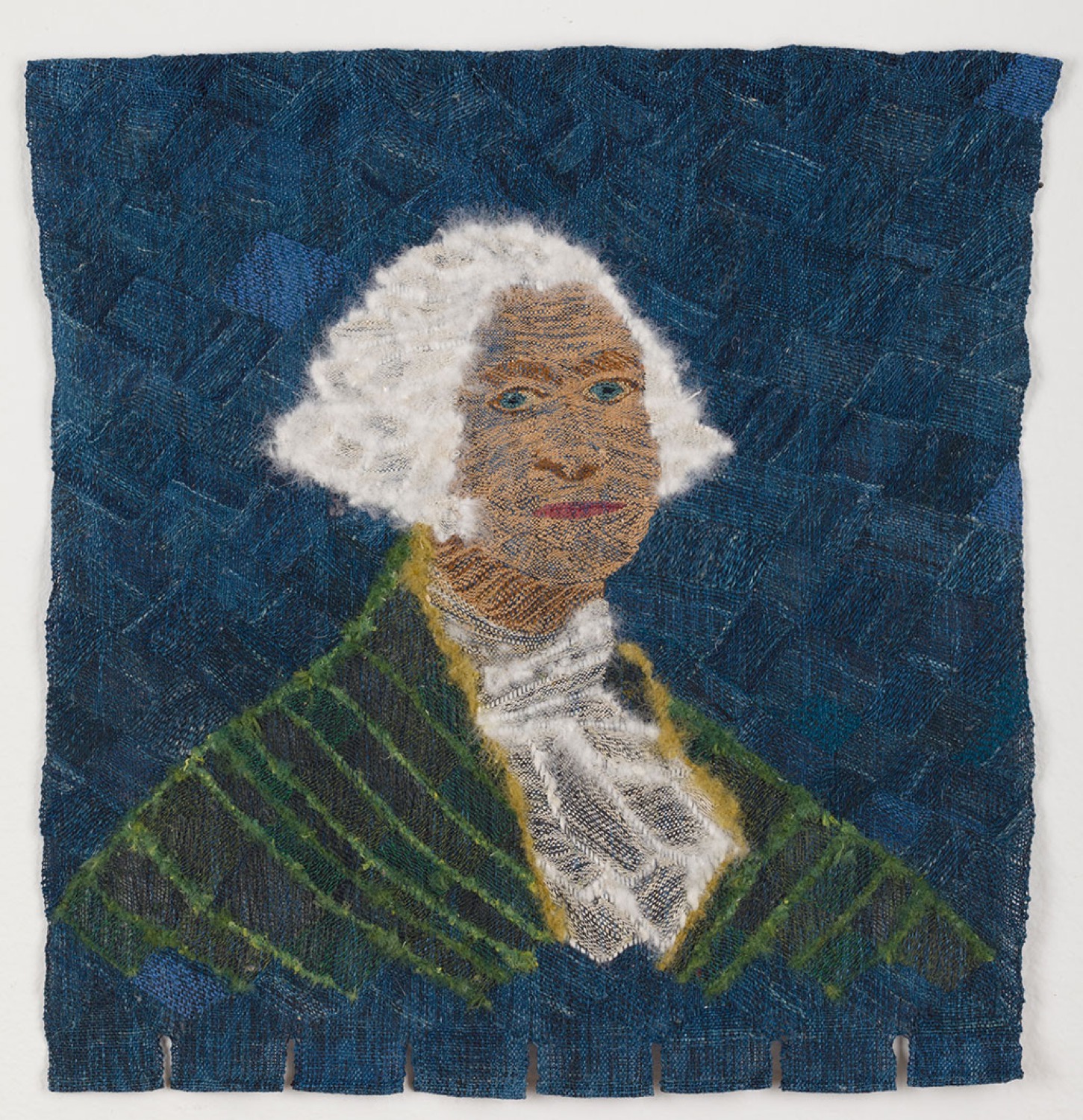
George Washington
2016
Courtesy of Craft in America
Jim Bassler was introduced to textile traditions at an early age through the rug-hooking that his father did in the winter. After high school he settled on studying sociology at UCLA (instead of art, his true passion), however the Korean Conflict interrupted his academic plans. Bassler served in Europe and then worked as a civilian in London.
At 27, Bassler left his job and boarded a cargo ship for Hong Kong. The journey took him through many Eastern and Southeast Asian countries, allowing him to witness how the indigenous people used craft to solve problems and define culture. On these travels he was exposed to spinning, weaving, dyeing, and surface design. In 1960, he returned to UCLA as an Art major, where his early works reflected what he had experienced in his travels. Those experiences and those from other travels continue to inspire him. His complex weaving work also draws inspiration from Navajo, pre-Columbian Andean, and Mexican textile traditions. Bassler moved with his wife, ceramicist Veralee Bassler, and children, to live full-time in Oaxaca, Mexico from 1971 until 1975. This experience provided a direct introduction to the weaving traditions of the indigenous people that greatly influenced his work.
Bassler received his BA and MA from the University of California, Los Angeles, where he taught for 25 years at the UCLA School of Arts and Architecture. He also helped to establish the fiber/textile program at the Appalachian Center for Crafts in Smithville, Tennessee and has taught at the Arrowmont School of Arts and Crafts, and the Penland School of Crafts. He has been recognized as a Gold Medalist by the American Craft Council.
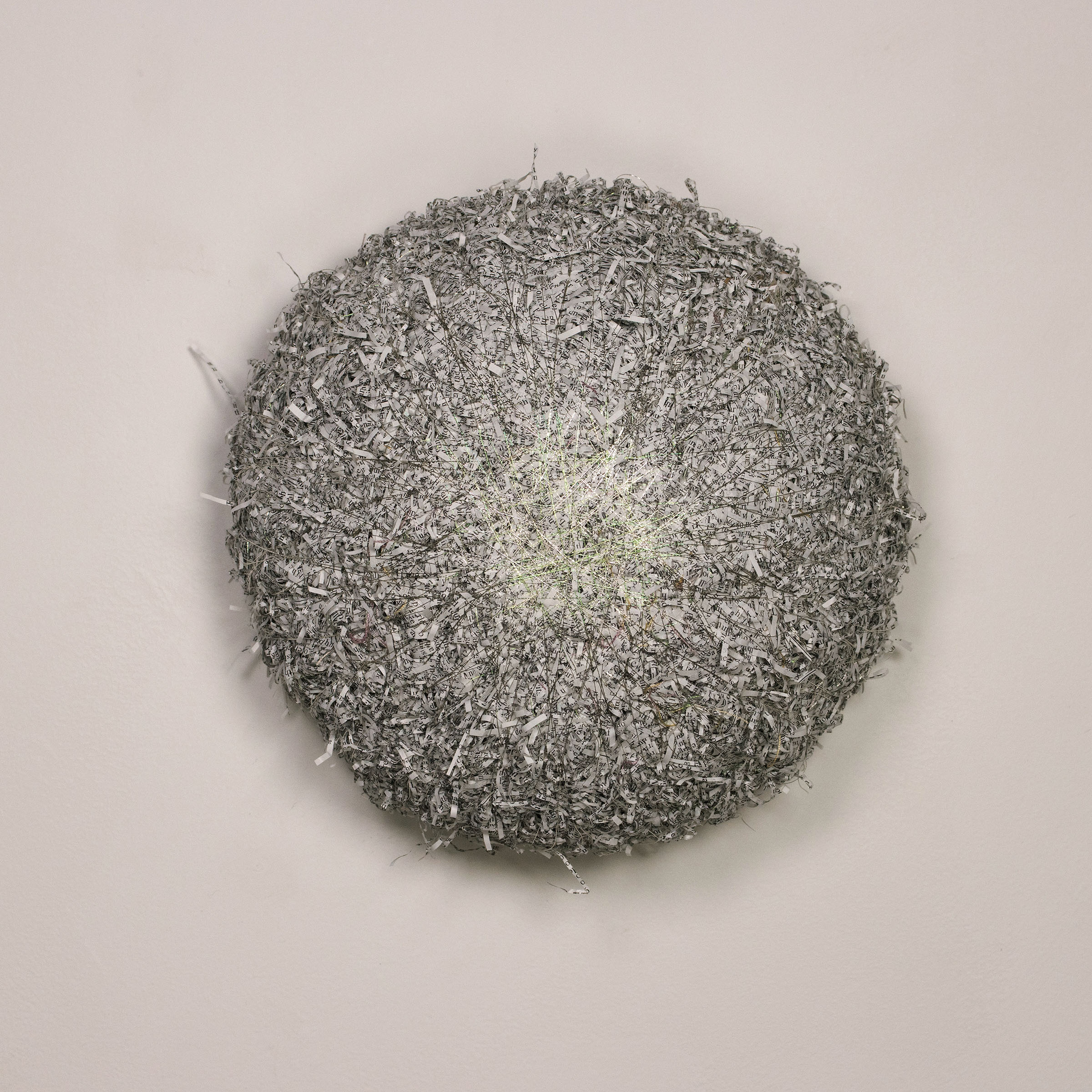
Hemisphere
2003
Altered Bible, thread, wax
7″ x 7″ x 4″
Photo: Chris Rupp
Linda Ekstrom completed her Masters of Fine Art degree at the University of California, Santa Barbara in 1996. She taught printmaking and book arts courses in the Department of Art and in the College of Creative Studies at UCSB from 1998 to 2022. Her art practice is anchored in the book as a cultural and symbolic object, and as a container of history, narrative, and memory. She is inspired by the intersections between art and the sacred, and the ritual dimension present in art practice.
Her artists’ books, sculptures and text-works have been exhibited widely in both solo and group exhibitions, including, Westmont Ridley Tree Museum. Santa Barbara, CA; Concord Art Center and Concord Library, Concord, MA; Jane Deering Gallery, Santa Barbara CA and Gloucester MA; Frumkin Gallery, Santa Monica CA; Yale University Art Gallery, New Haven CT; ArtSpace, New Haven, CT; Calvin College, Grand Rapids, MI; Benton Museum, Pomona College, Claremont CA; Center for the Book, San Francisco, CA; Center for the Book, New York, NY; LIMN Gallery and Quotidian Gallery in San Francisco, CA. In addition, her work was included in the international exhibition, “Faith” at the Aldrich Museum of Contemporary Art, Ridgefield Connecticut; in “Sacred Texts” at the Minneapolis College of Art and Design, Minneapolis, MN; and, “City Dialogues” at Barnsdall Museum, Los Angeles, CA.
Ekstrom’s artists’ books and book works are included in various public and private collections including, Yale University Museum of Art; Pomona College Benton Museum; Westmont Ridley Tree Museum of Art; Boston Athenaeum; Scripps College; Baylor University Special Collections Library; UCSB Special Research Collections Library; UCLA Special Collections Library; Carnegie Mellon University Special Collections Library; and Simon Wiesenthal Center and Tolerance Museum.
Her work has been reviewed in Art in America, Sculpture Magazine, the Los Angeles Times, The Independent, and numerous other publications.
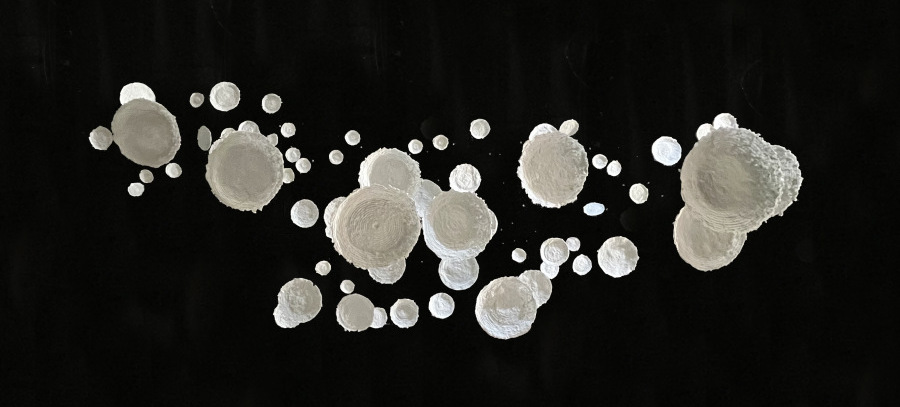
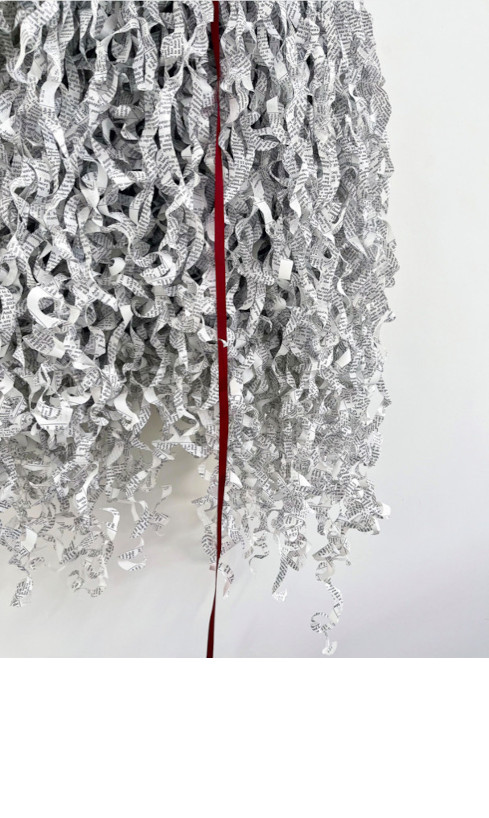
Sky Snake
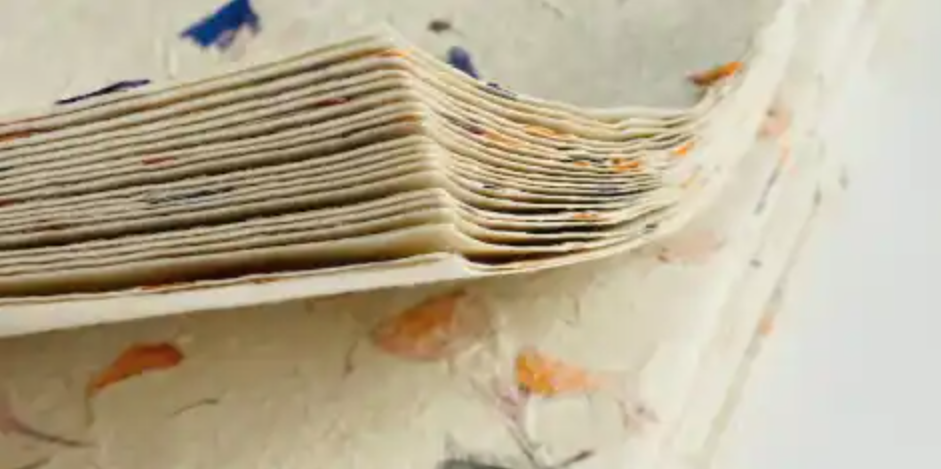
Handmade paper baskets abaca, indigo, thread, and suspension hardware; ceiling-mounted installation
Approximately 8′ x 4′; variable suspension heights
Leah Mata Fragua is a California Indian artist and educator whose work moves across sculpture, handmade paper, stone, shell, sound, and place-based materials. She is yak titʸu titʸu yak tiłhini Northern Chumash, and her practice is grounded in material knowledge, women’s labor, environmental change, and the cultural responsibilities carried through land-based making.
Her work often begins with materials gathered, formed, or transformed by hand. After the collapse of abalone access along the California coast, Mata Fragua turned toward handmade paper as a sculptural medium, using plant fibers, natural pigments, and ephemeral processes to hold questions of memory, land, loss, and continuity. Alongside this work, she continues to engage stone, shell, and other enduring materials, allowing her practice to move between the temporary and the permanent.
Mata Fragua’s work has been collected or exhibited by the Denver Art Museum, the Autry Museum of the American West, the Hood Museum of Art, the Fowler Museum at UCLA, the Tia Collection, and other institutions. She has participated in programs and residencies with the School for Advanced Research, First Peoples Fund, the Alliance for California Traditional Arts, and the National Museum of the American Indian.
In addition to her studio practice, Mata Fragua teaches at the Institute of American Indian Arts, where she works with emerging Native artists across material practice, cultural knowledge, and contemporary art discourse. Her work centers California Indian presence, kincentric relationships to place, and the ongoing labor of carrying culture through material form.
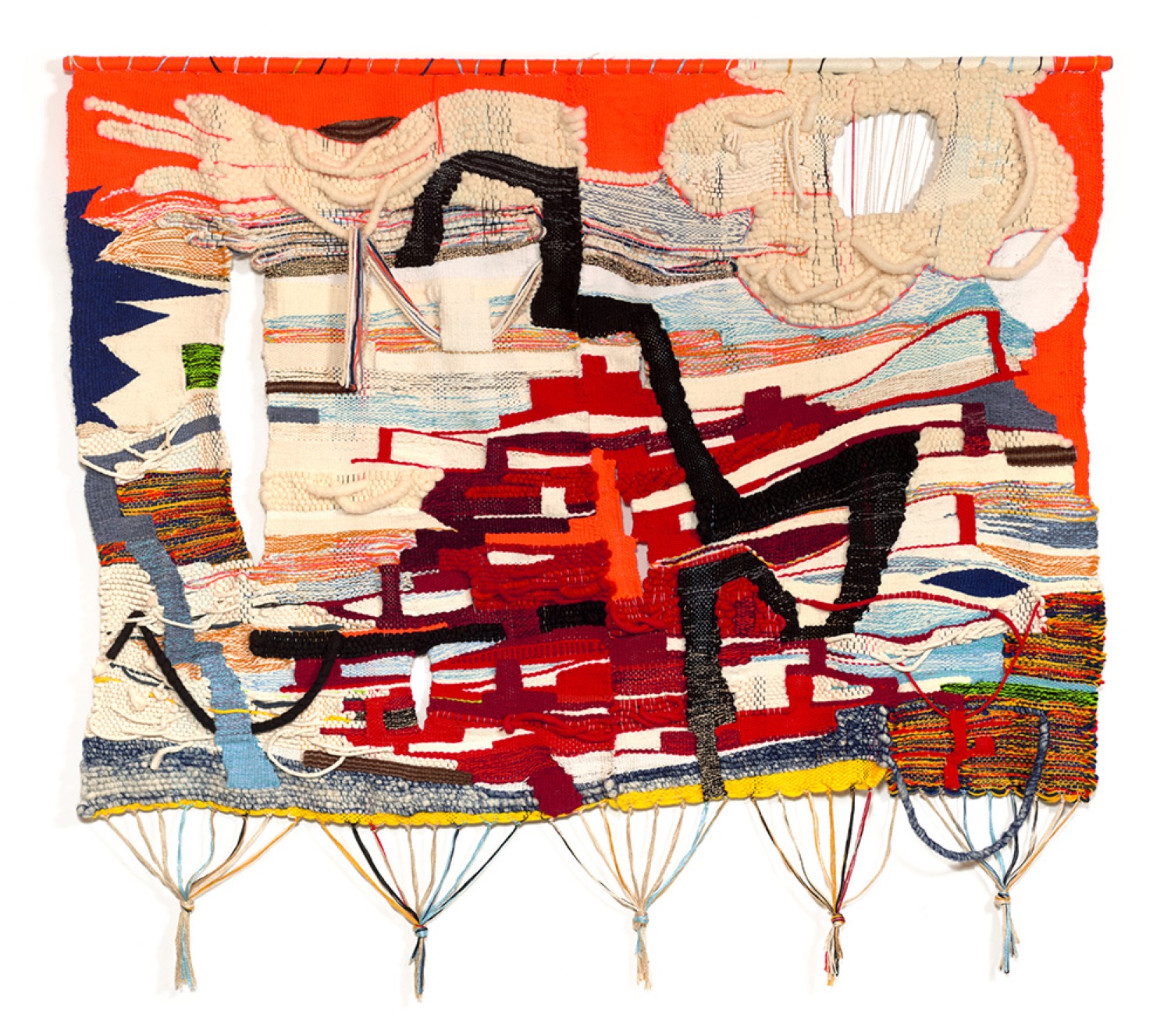
Stay Astonished
2018
Wool, cotton, acrylic, metallic fibers
62″ x 67″
Terri Friedman’s work responds to the current climate of anxiety and uncertainty by enlisting color, abstraction, and text to explore topical issues and personal narratives. Brain science, in particular research on neuroplasticity and epigenetics, are growing fields that set the context for her work. She explores with fiber and optimism the brain-body connection, mental health, and the brain’s ability to rewire from psychological and physical trauma.
After receiving her BA from Brown University and her MFA from the Claremont Graduate School, Friedman exhibited her kinetic sculptures at such venues as the San Jose Museum of Art, MOCA’s Geffen Contemporary, Orange County Museum of Art, and Yerba Buena Center for the Arts. More recently she has exhibited her large scale tapestries at the Berkeley Art Museum, San Jose Institute of Contemporary Art, Long Beach Museum of Art, CODA Museum, Netherlands, and gallery exhibitions in New York and California curated by Jenelle Porter, Glenn Adamson, Betty Sue Hertz and Rirkrit Tiravanija. In 2019 she was featured in Vitamin T: Threads and Textiles in Contemporary Art (Phaidon Press) and in 2020 she had a solo show at the CUE Art Foundation in NYC curated by artist Kathy Butterly.
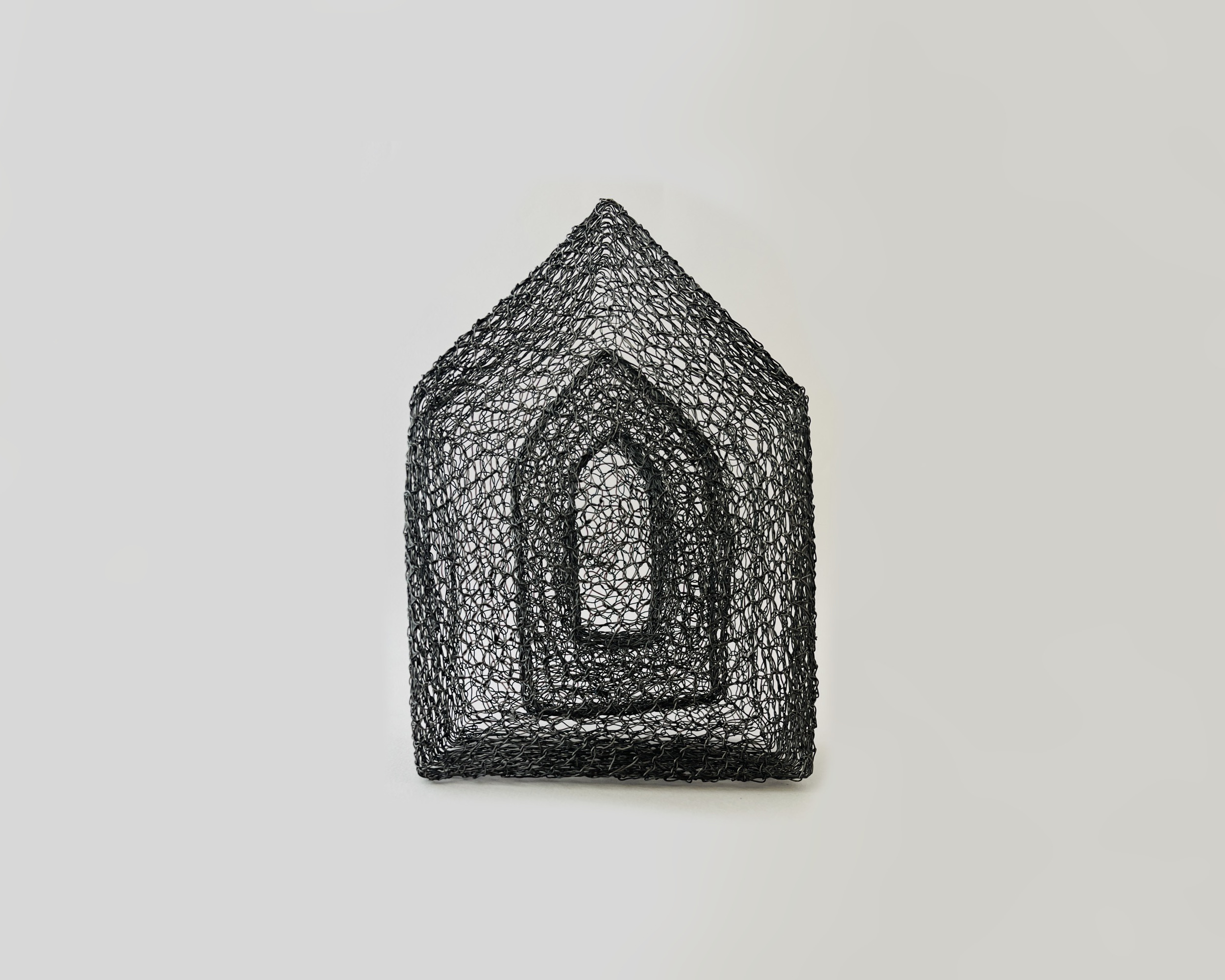
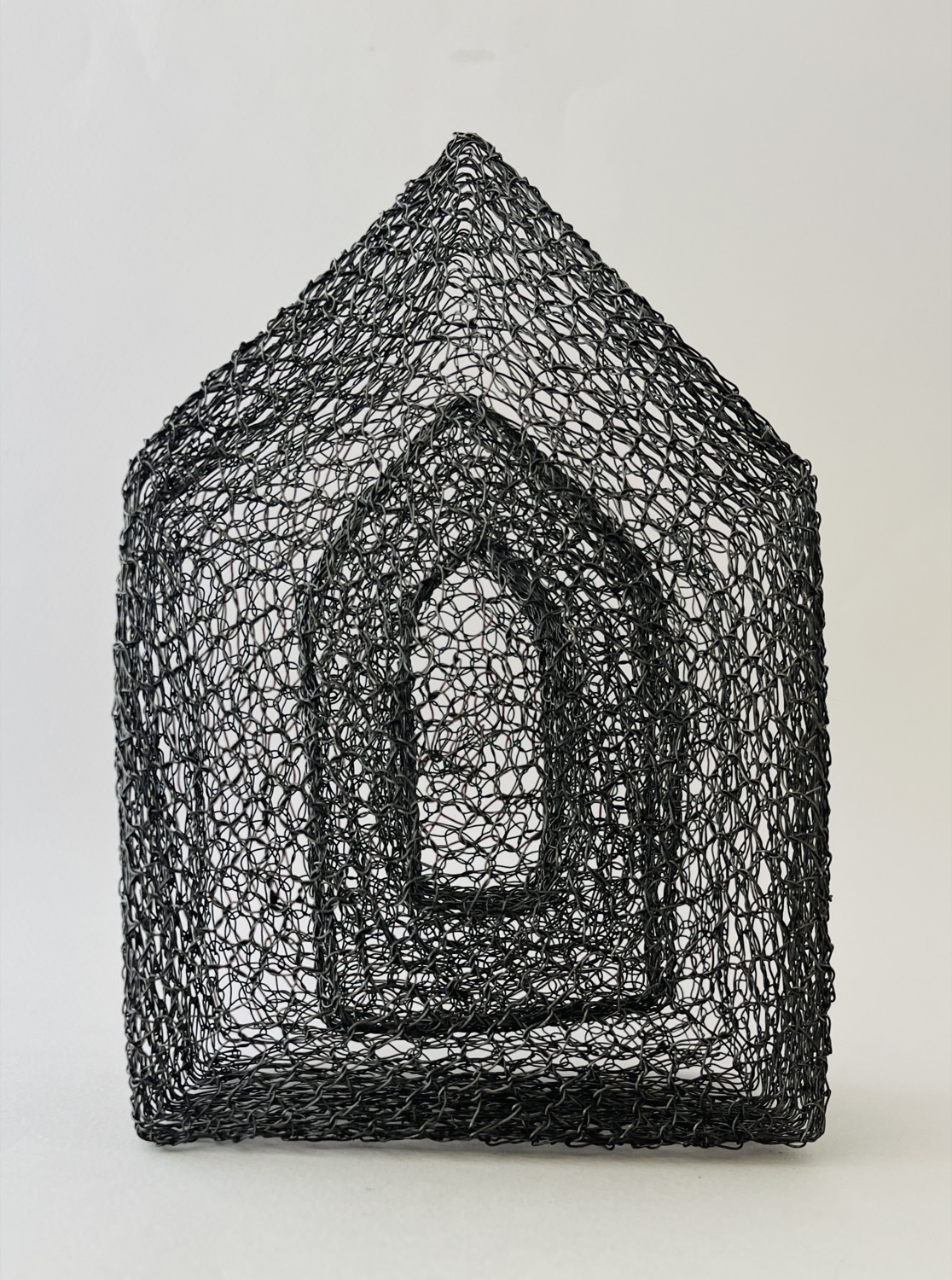
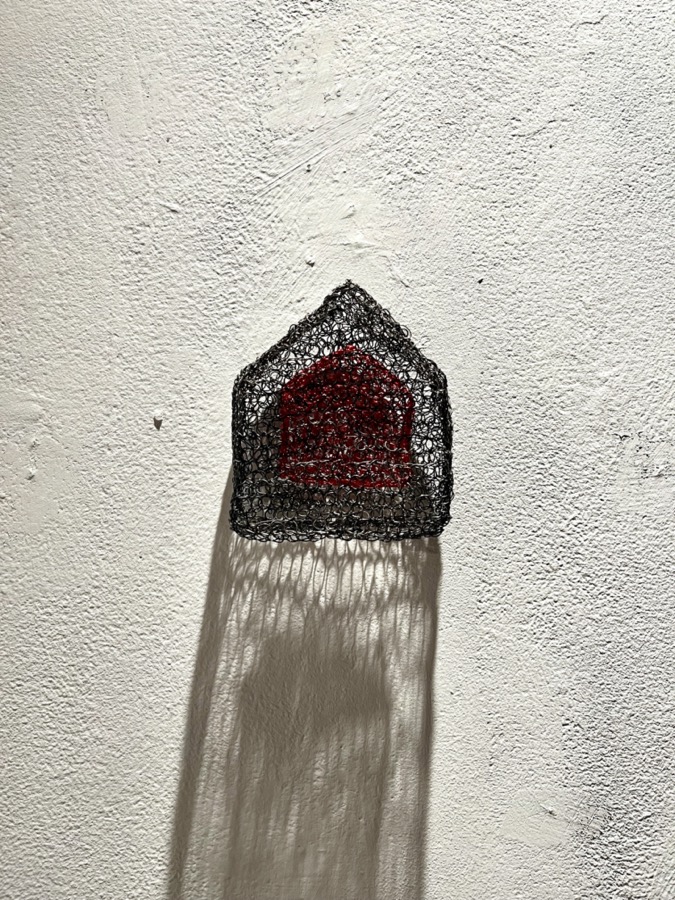
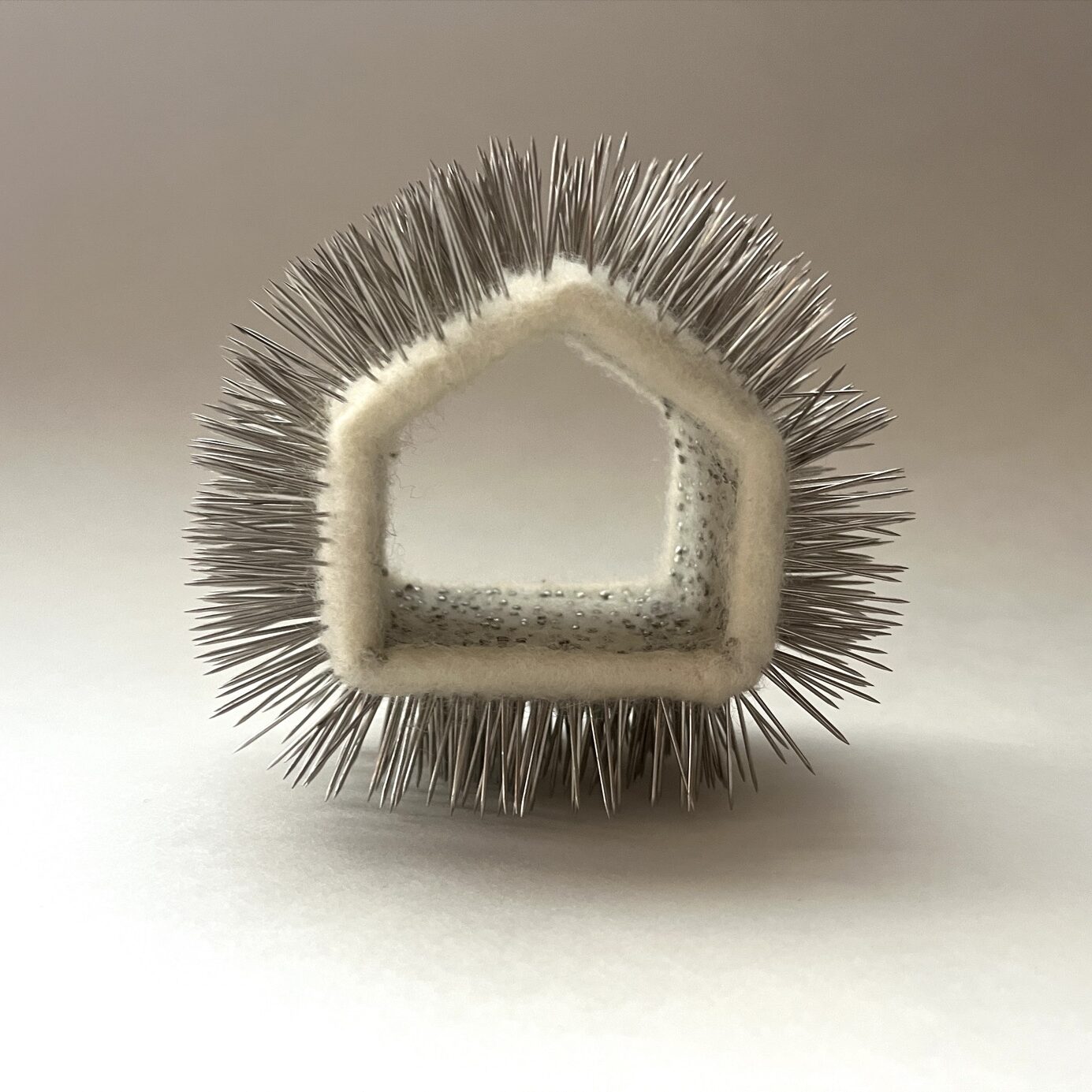
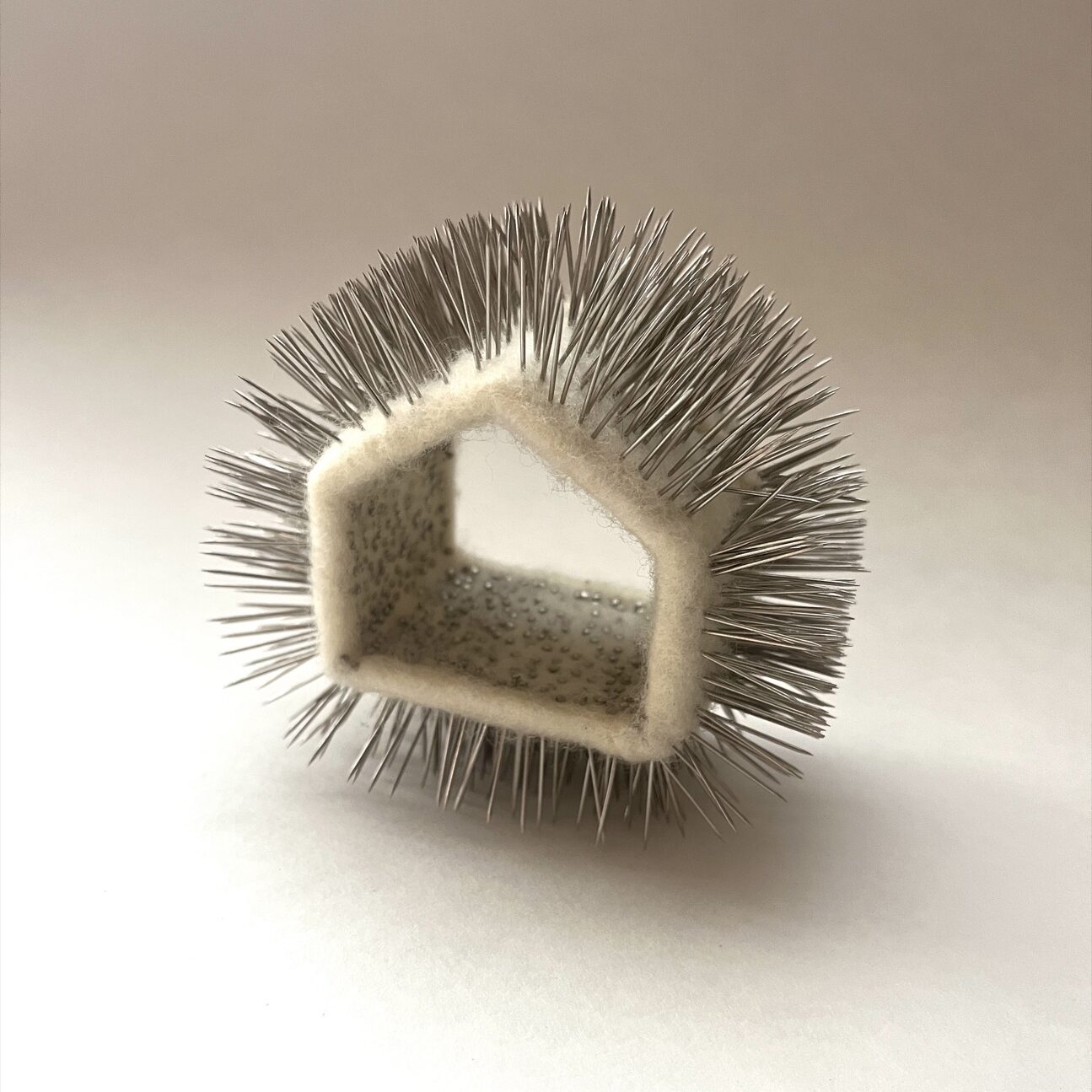
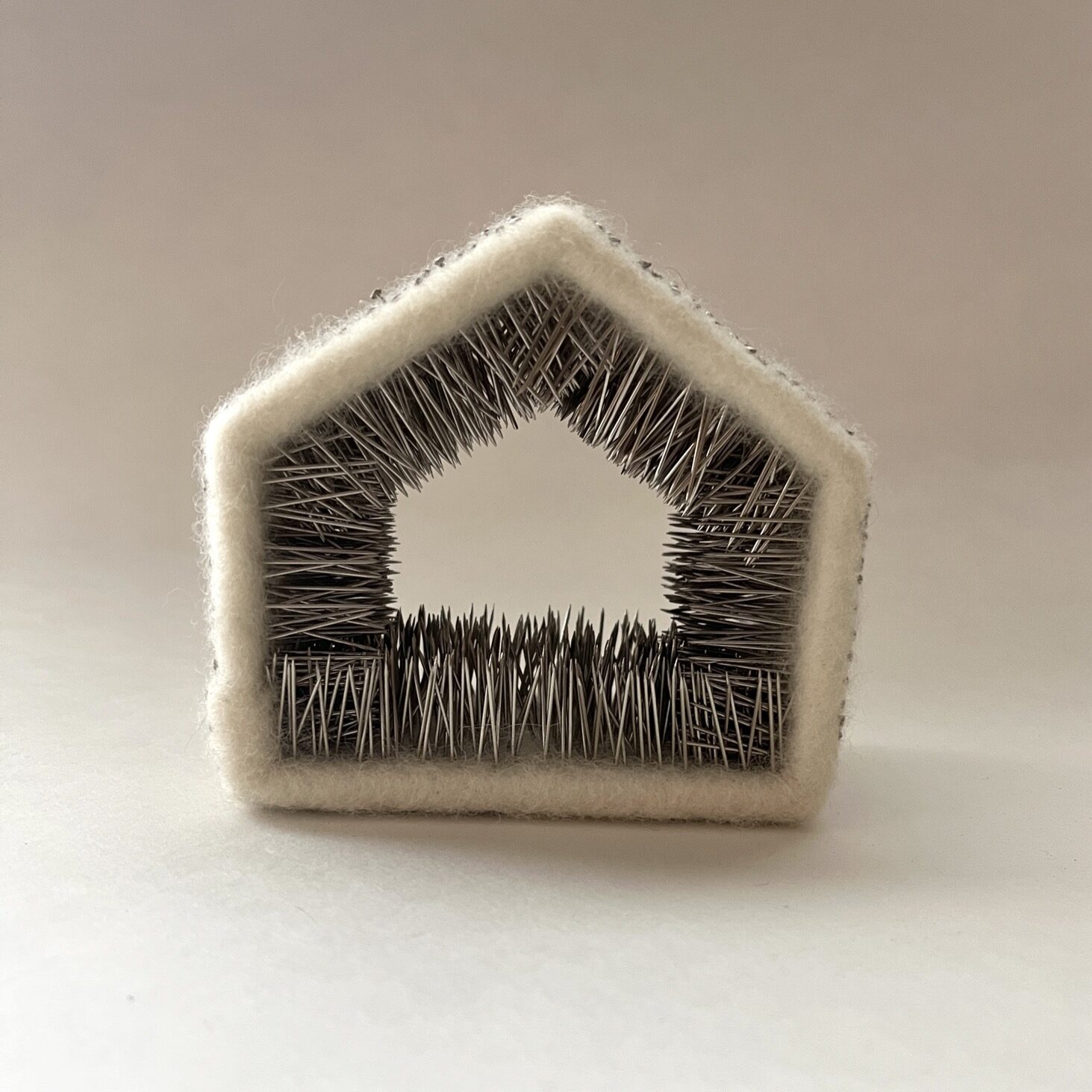
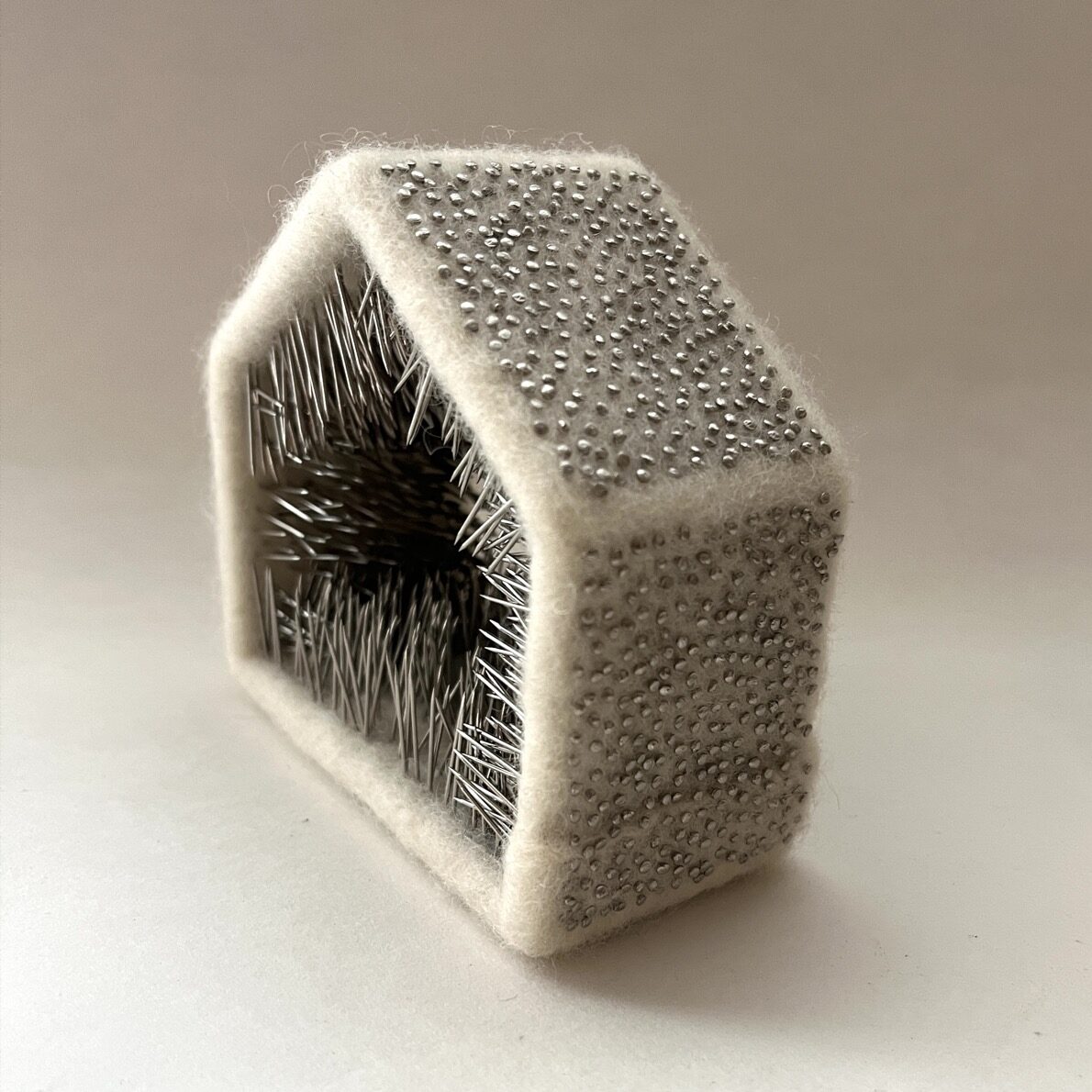
Hollow House Within
2025
Steel wire
7.5″ x 5″ x 3″
Lydia Tjioe Hall is a metal and fiber sculptor. After earning a BA from the University of California at Santa Cruz in 1998 with an emphasis on ceramic sculpture, she attended Cabrillo Community College where she explored both small and large scale metal work. Her mentor there, Dawn Nakanishi, helped lead her to pursue graduate school.
In 2011, Lydia earned her MFA from CalState Long Beach where she concentrated in metal work under Susanna Speirs and fibers under Carol Shaw-Sutton. After graduating, she stayed on as a professor at CSULB teaching Beginning Metals and Fiber Sculpture.
Lydia resides in Altadena, California with her family where her at-home studio is well suited for creatively attending to both her craft and her two young children. From there she continues to generate new ideas and exceed limitations in her sculptural work.
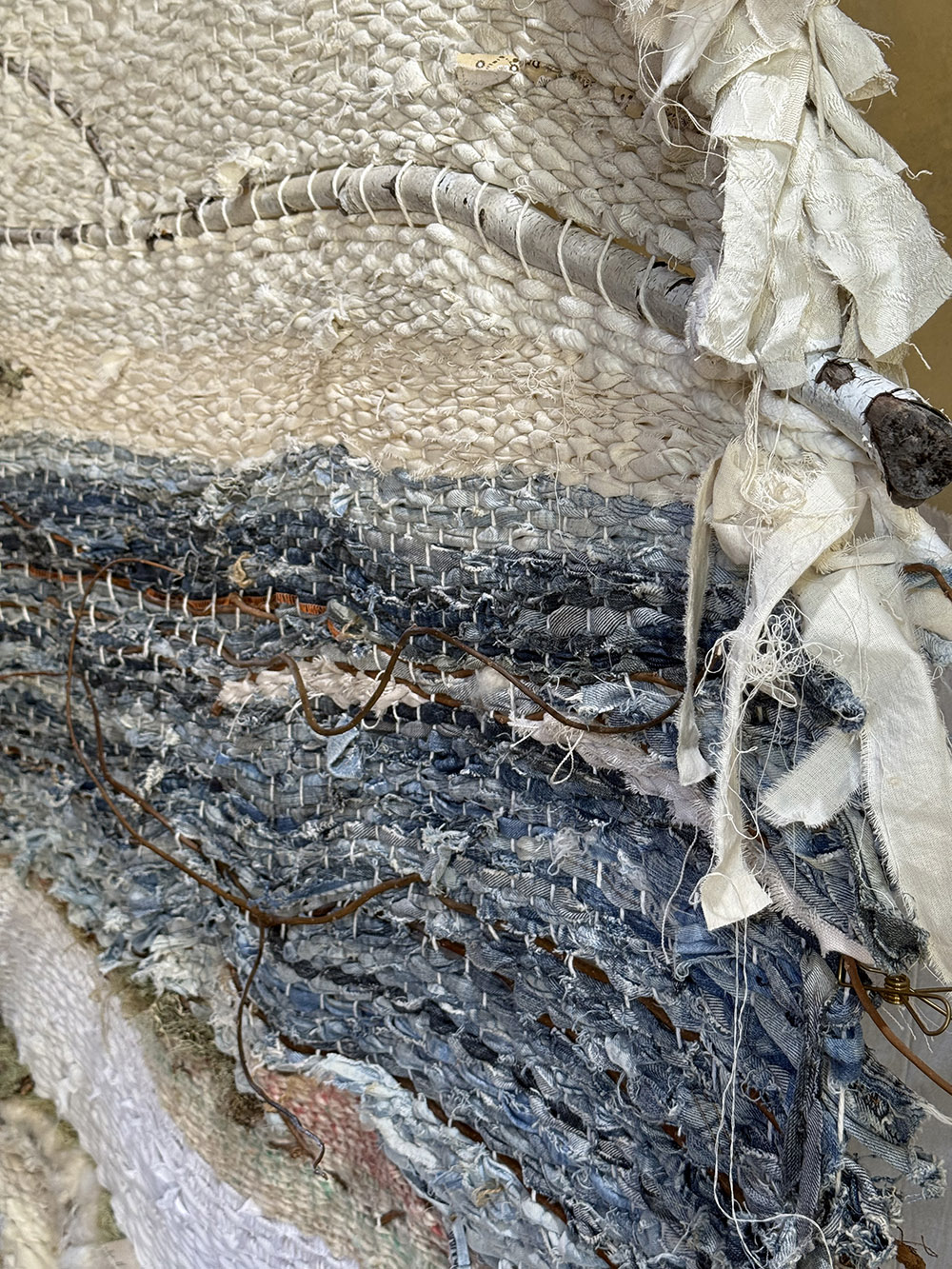
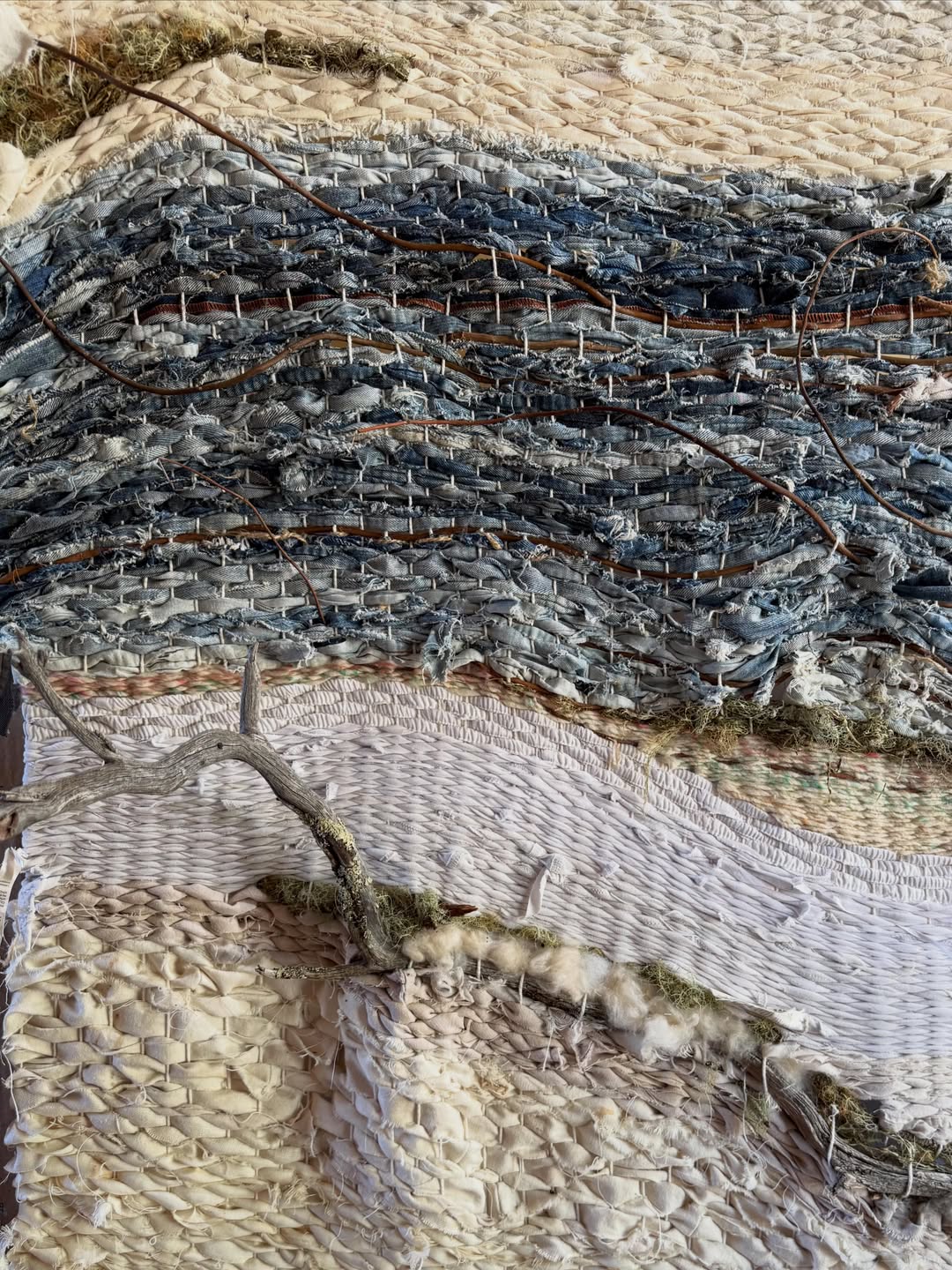
Human Time (detail)
2026
Woven remnants of repurposed textiles and natural materials
9′ x 5′ x 6″
Cyrena Nouzille is a multidisciplinary artist and visual art lecturer at California State University, Northridge. Born in California and based in Los Angeles County, she has an eclectic career background in museum exhibition design, graphic design, and small business ownership of a brewery and restaurant. She received her MFA in Visual Arts from CSUN and holds a B.A. in Biology from Lewis & Clark College. Viewing design through a lens of environmental sustainability, she creates sculptural forms and installations from recycled, repurposed, and biodegradable materials. Applying visual storytelling, Cyrena uses her art to probe the human relationship to the natural world and promote ecological responsibility.
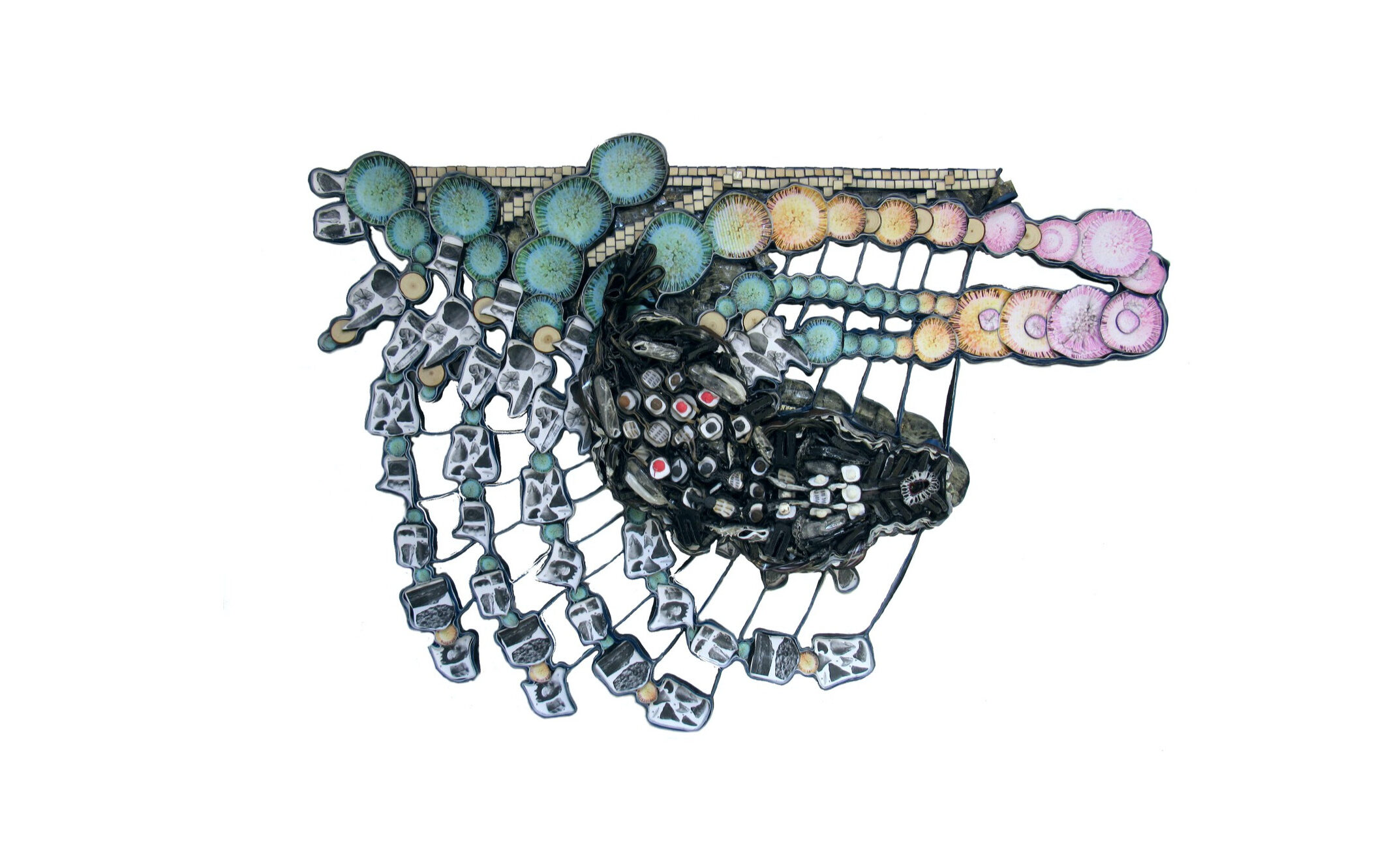
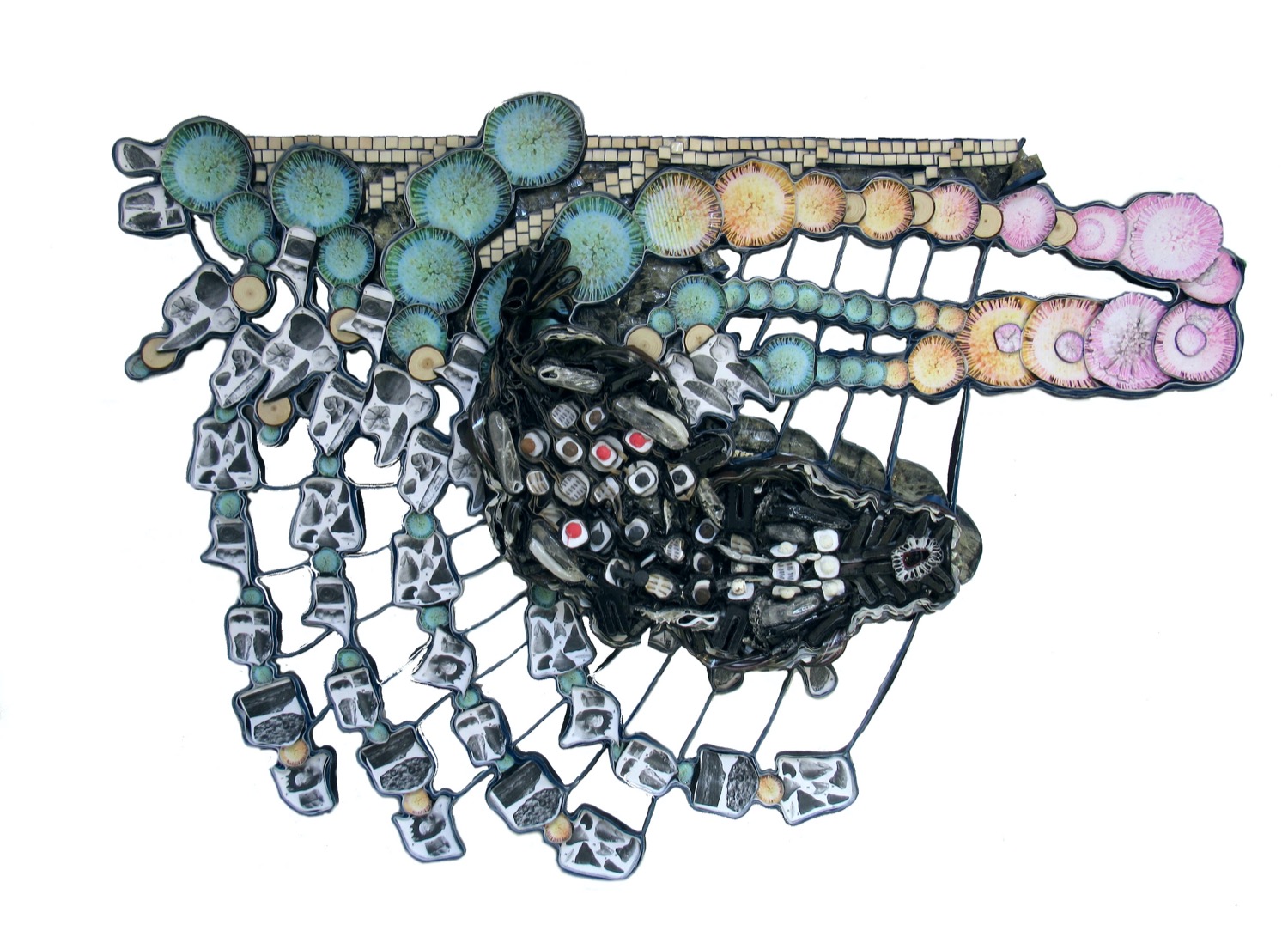
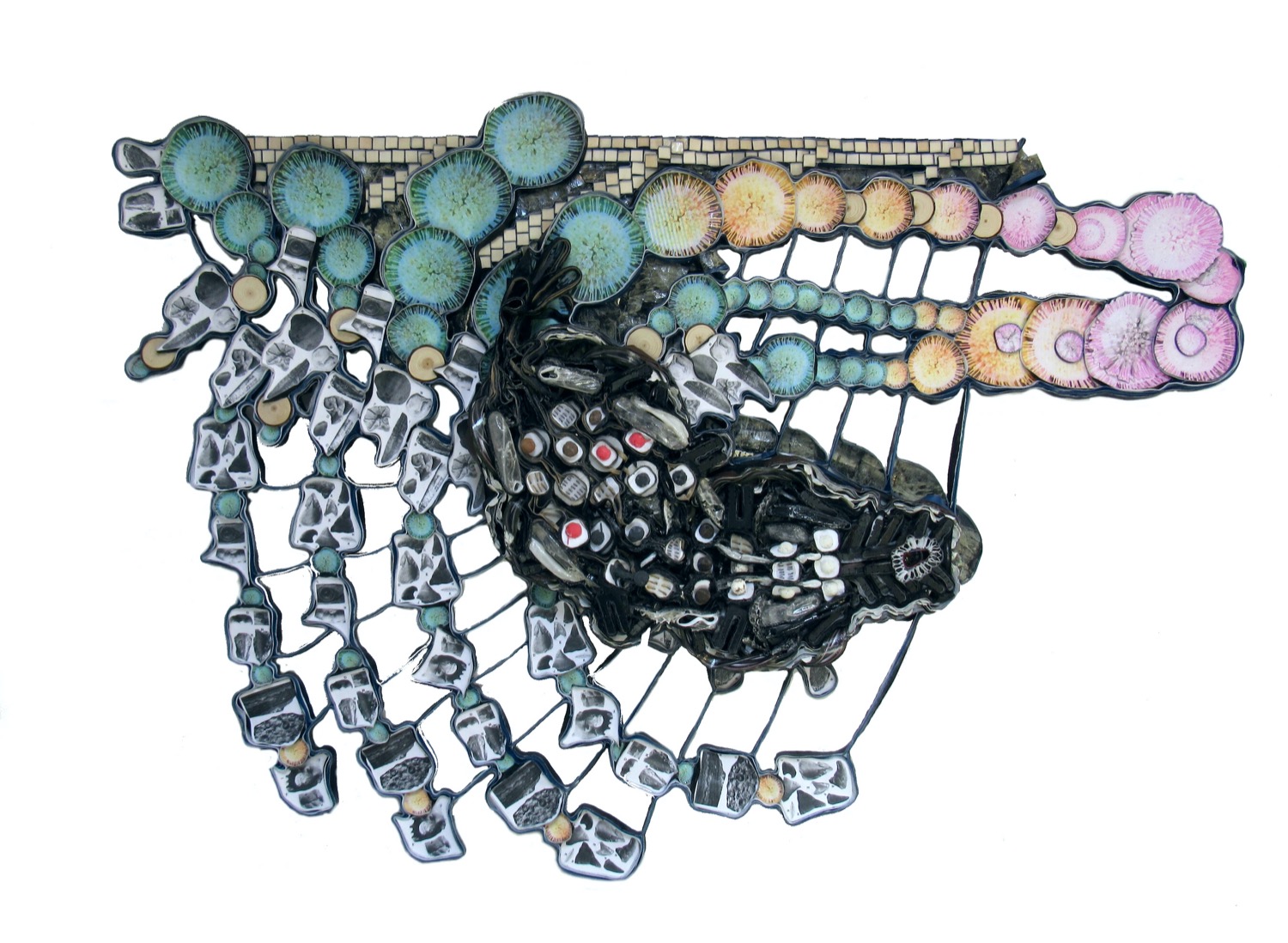
Remains. Tectonic forces. Vanished seas.
Vinyl, recycled screen printing ink on masking tape, latex balloons, gel medium, pine wood, sycamore seed, resin, laser prints (Button bush plant, Mississippian fossils from Missouri, & sycamore seeds), crystal.
67″H X 94″W X 5″D
Alicia Piller is a Los Angeles–based mixed media artist whose practice explores materiality, memory, and the construction of history. Raised in Chicago, she earned her BFA in Painting and Anthropology from Rutgers University in 2004, grounding her work in both visual language and the study of human systems.
Piller spent a decade in New York City working in the fashion industry, followed by three and a half years in Santa Fe, New Mexico—experiences that shaped her distinct sculptural voice and deep engagement with material transformation. She received her MFA in Sculpture and Installation from CalArts in 2019.
Her work constructs what she describes as a material cosmology—where history, identity, and erasure orbit one another across layered systems of meaning. Drawing on cellular biology as a metaphor for trauma, repair, and continuity, she merges organic, industrial, and digital materials to create immersive, large-scale forms that examine how memory persists within contemporary cultural and political landscapes. Incorporating natural materials, recycled fabrics from the fast fashion industry, recycled 3D-printed components, and found objects, her sculptures function as evolving constellations—assembling fragments of labor, consumption, ancestry, and time into dynamic, interconnected fields.
Piller’s work is held in the permanent collections of the California African American Museum, the Hammer Museum, and Glendale Community College, as well as in notable private collections including Pam Royalle, Janine Barrois, Dr. Joy Simmons, and artist Lauren Bon. She has been featured in The New York Times (“5 Artists to Watch at the California Biennial,” 2022) and the Los Angeles Times, including the recent feature “Trash Is Treasure for This Jewelry Maker and Sculptor” (Dec. 30, 2025), and is currently developing a temporary public sculpture for Kings Road Park in West Hollywood (2026).
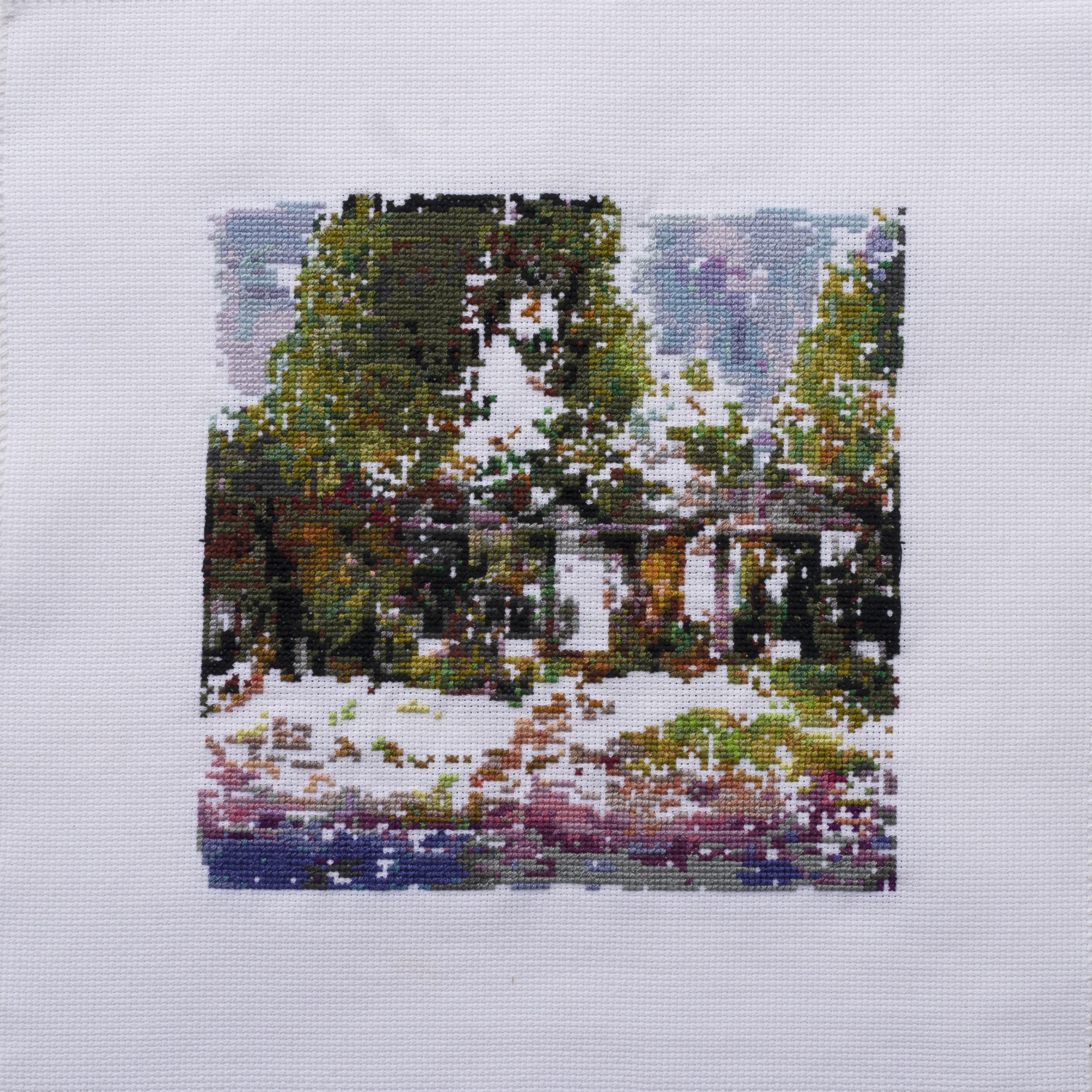
Valley House 50.040
2022
Cotton cross stitch on 18 pt Aida
12″ x 12″
Michelle Robinson is a multi-disciplinary artist and animator. She studied architecture and visualization at Texas A&M University, and holds an MFA in visual art from New Hampshire Institute of Art. She has had her work published in Diffusion of Light, The Hand, Frames, and Precog. Exhibition highlights include solo shows at the Dairy Center for the Arts in Boulder, CO, The Wright Gallery at Texas A&M University, and the Cecelia Coker Bell Gallery at Coker University in NC. She has been awarded residencies with Kipaipai at the Joshua Tree Center for Photographic Arts in 2022, the Virginia Center for Creative Arts in 2023, and PLAYA in 2024. She has been an artist and supervisor with Walt Disney Animation Studios for over 30 years and lives in Los Angeles.
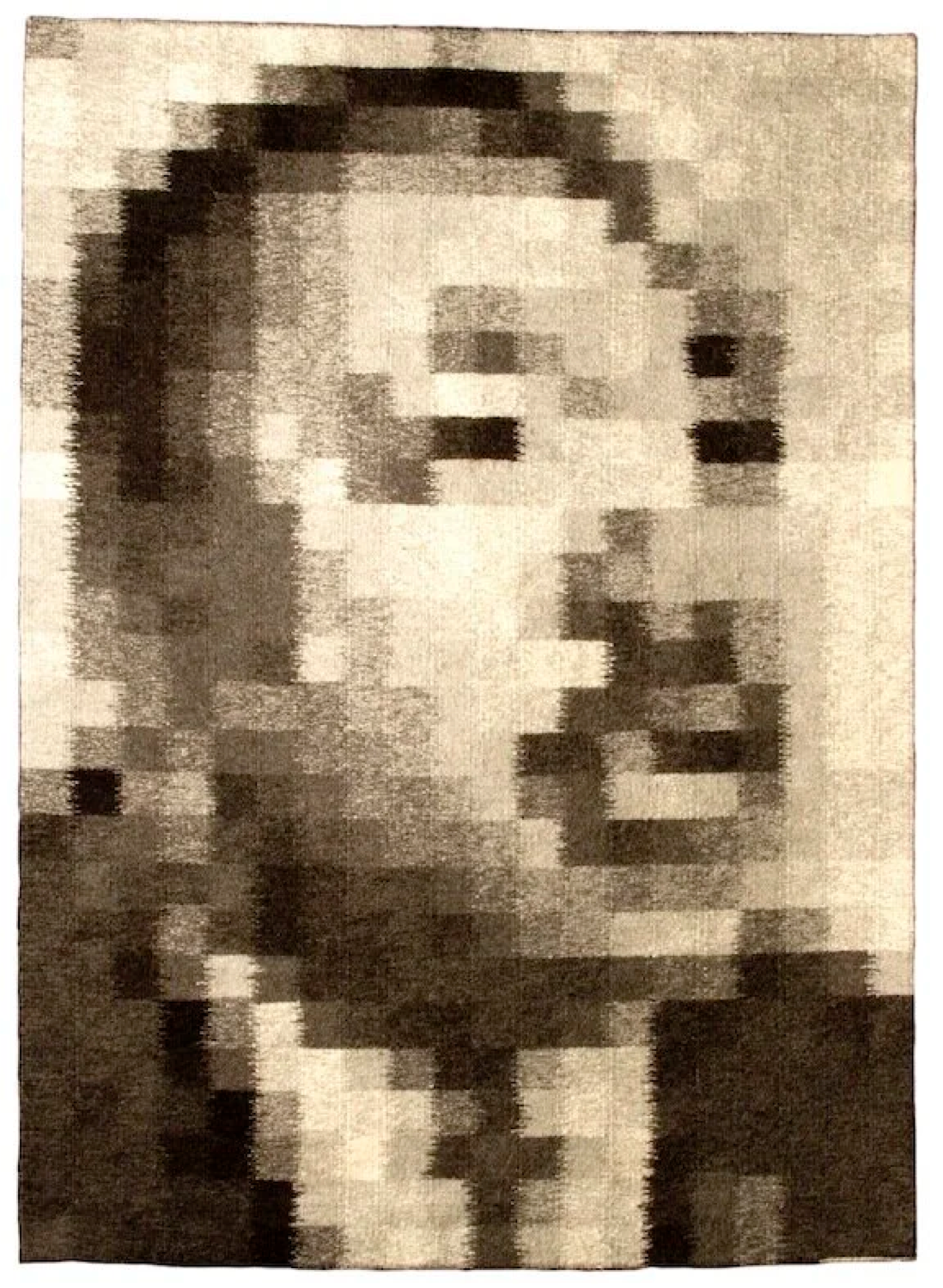
Dream
2014
Handwoven tapestry: un-dyed alpaca
43.5″ x 31.5″
Michael F. Rohde has been weaving since 1973. His formal training in drawing, color and design was at the Alfred Glassel School of the Houston Museum of Fine Arts. His activities include lectures, workshop teaching, juror, exhibition organizer and exhibitor in many local, national and international juried and invited shows.
Recently his work has been included in the United States Department of State Art in Embassies Program, exhibits at the Textile Museum in Washington, DC, the American Craft Museum in New York, the invitational Triennial of Tapestry in Lodz, Poland, from Lausanne to Beijing (twice), Houses for Nomads (a solo exhibit at the Janina Monkute-Marks Museum in Lithuania), an exhibition at the Mingei International Museum in Balboa Park in San Diego. His work is in the permanent collections of the Textile Museum (Washington, DC), the Mingei, the San Jose Museum of Quilts and Textiles, the Ventura County Museum of Art, the Racine Art Museum and The Art Institute of Chicago.
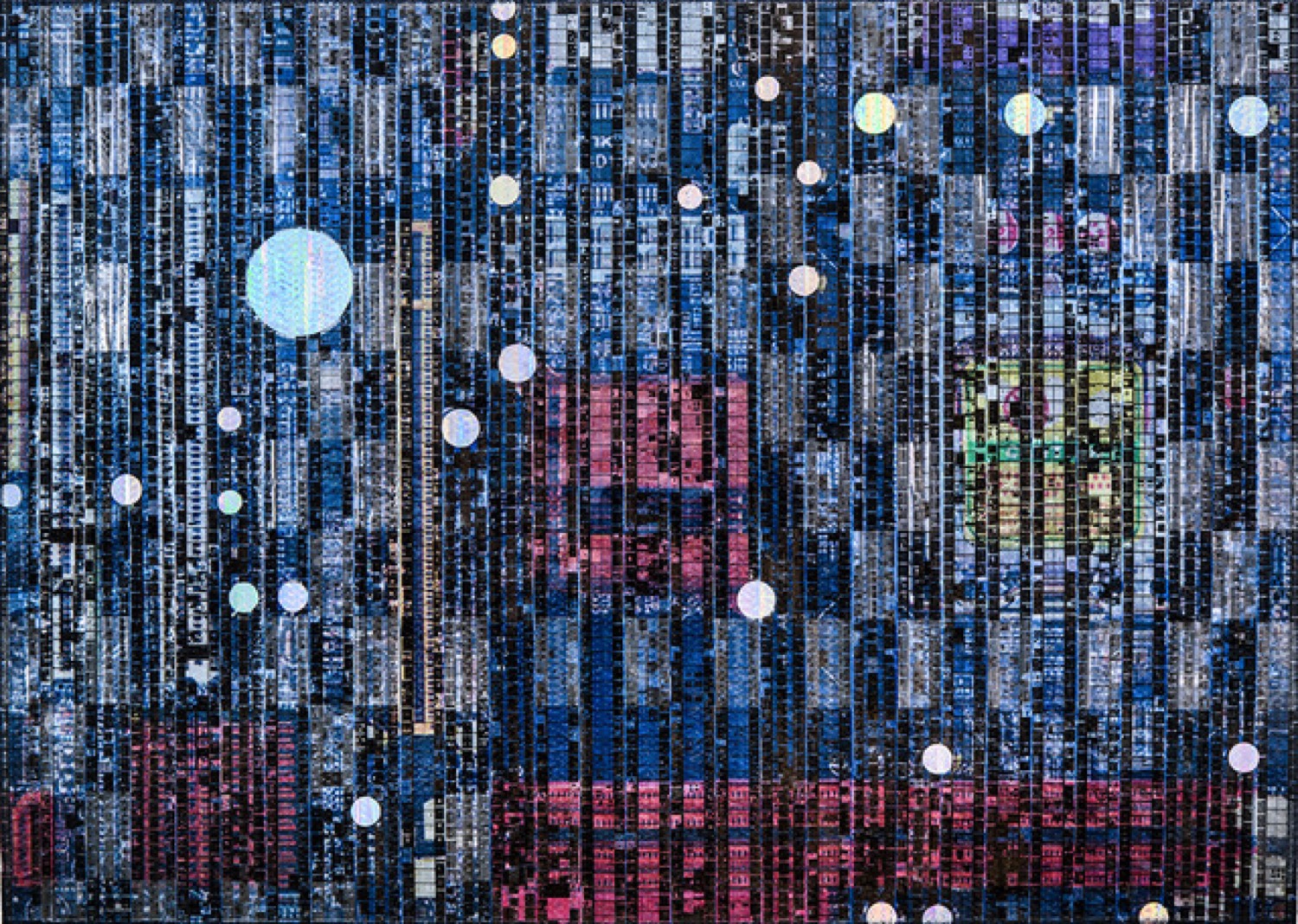
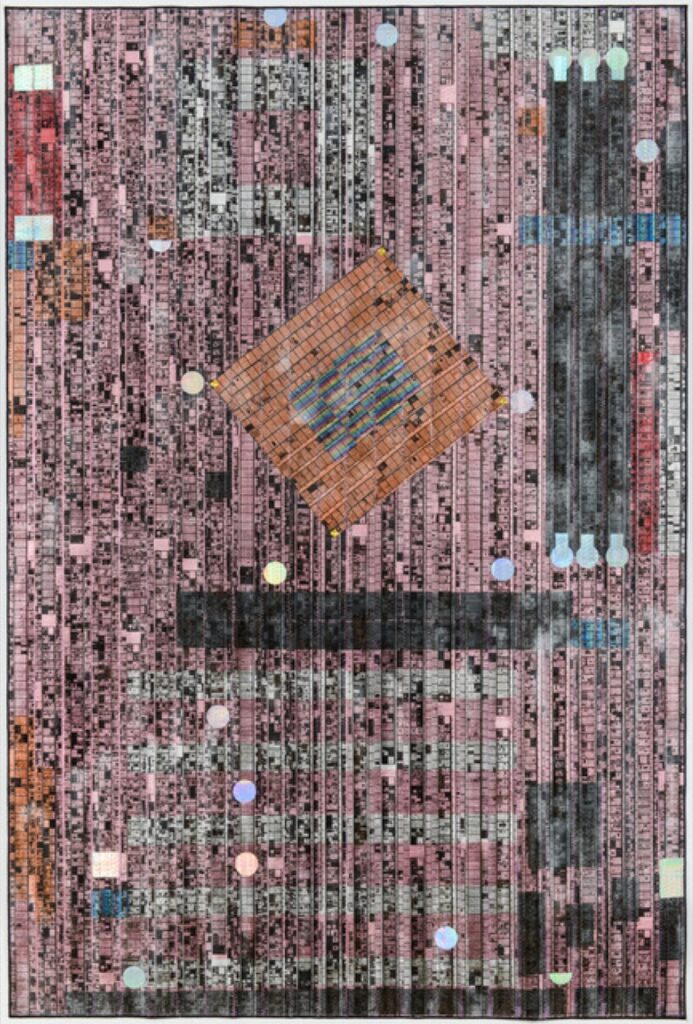
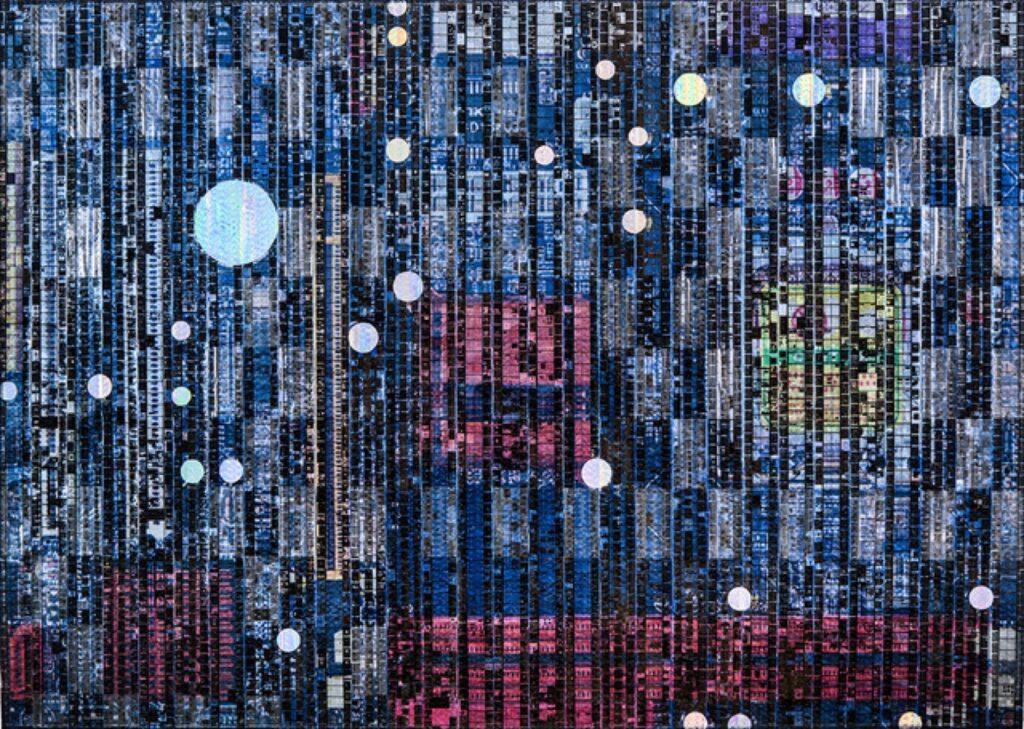
Pattern Fusion No. 20: Motherboard 11 (Blue)
2018
Machine stitched, interlaced, layered and appliqué; digital specialty perforation tape, recycled auto industry Mylar, polyester film, recycled library 35 mm microfilm, monofilament and cotton threads, Holographic tape, Pellon, polymer medium, and fabric backed
42.25″ x 59.25″
Arturo Alonzo Sandoval, Professor Emeritus
Arturo Alonzo Sandoval was born in New Mexico and raised in California. He received his university degrees from Cal-State-University Los Angeles (BA,MA) and Cranbrook Academy of Art (MFA). Sandoval’s background is both Hispanic and Native American (Tano) according to his parents and he discovered that on his paternal grandmother Antonita Cordova’s side, male family members are weavers of colonial Spanish textiles for over 250 years. As a graduate student at CSU-LA he took a weaving course that would change his artistic choices in the future, as did his Vietnam War experience. What distinguishes Sandoval from other visual artists is his decision to explore 20th/21st century flexible linear materials designed for industry. Experimenting with recycling and repurposing them has led him to unusual combinations.
During his tenure at University of Kentucky (1973 – 2017), Sandoval always mentions his best year was 1977 for three reasons: The birth of his daughter Avalon, exhibiting in the 8th Biennale of Tapestry, Lausanne, Switzerland, and having his art purchased by Arthur Drexler, Director, Museum of Modern Art (MOMA), Department of Architecture and Design, New York, New York. Sandoval currently is Professor Emeritus with a named university Endowed Professorship and is known internationally for his innovative mixed media fiber art. Sandoval received two NEA Fellowships, three Al Smith Kentucky Arts Council grants, voted a FELLOW of the American Craft Council, NYC (2007), and awarded a Lifetime Achievement STAR from the Downtown Lexington Corporation. He pursues the cutting edge in art quilts creating unique graphic and colorful art expressions. Sandoval’s mantra is, “Work produces results”.
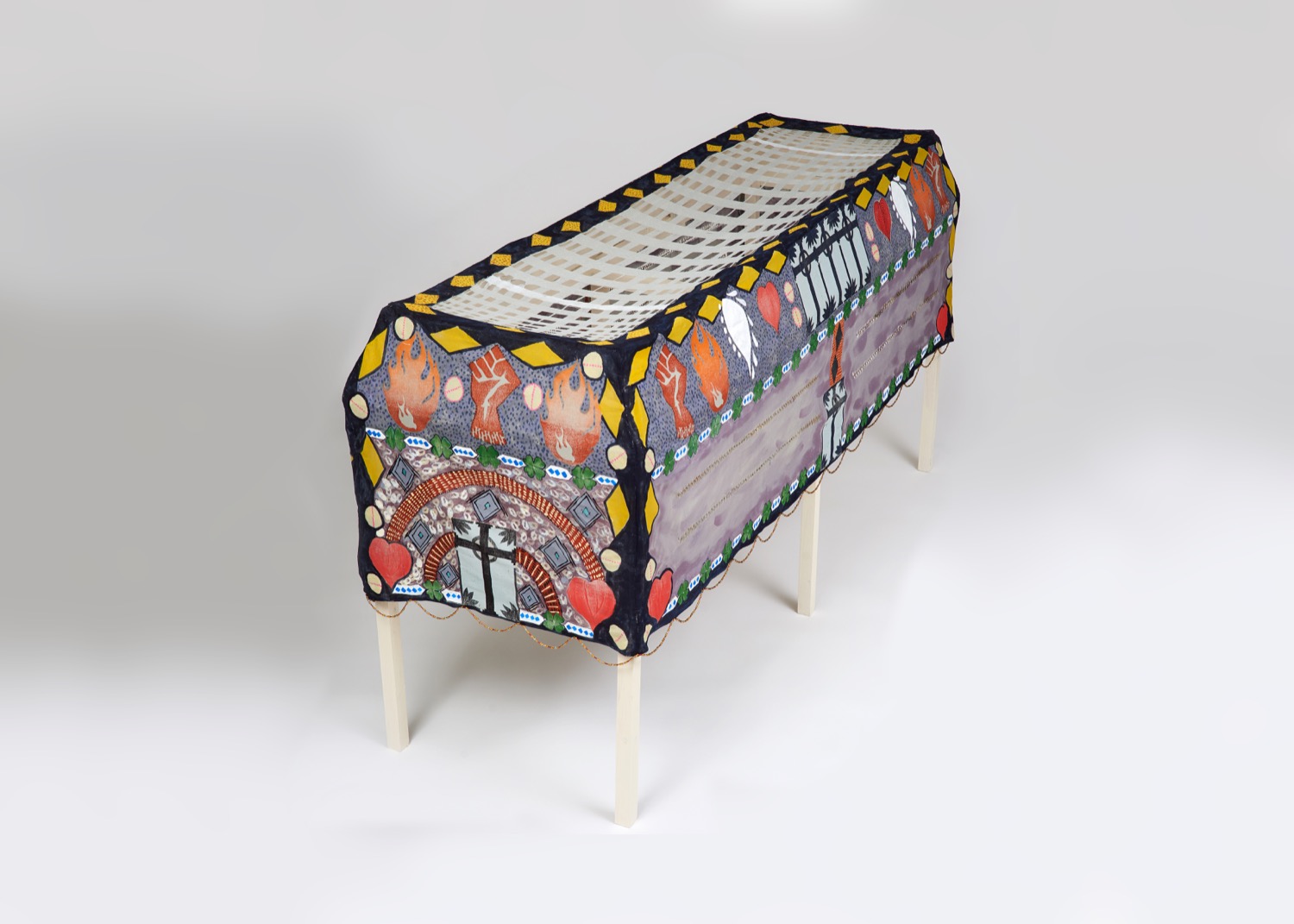
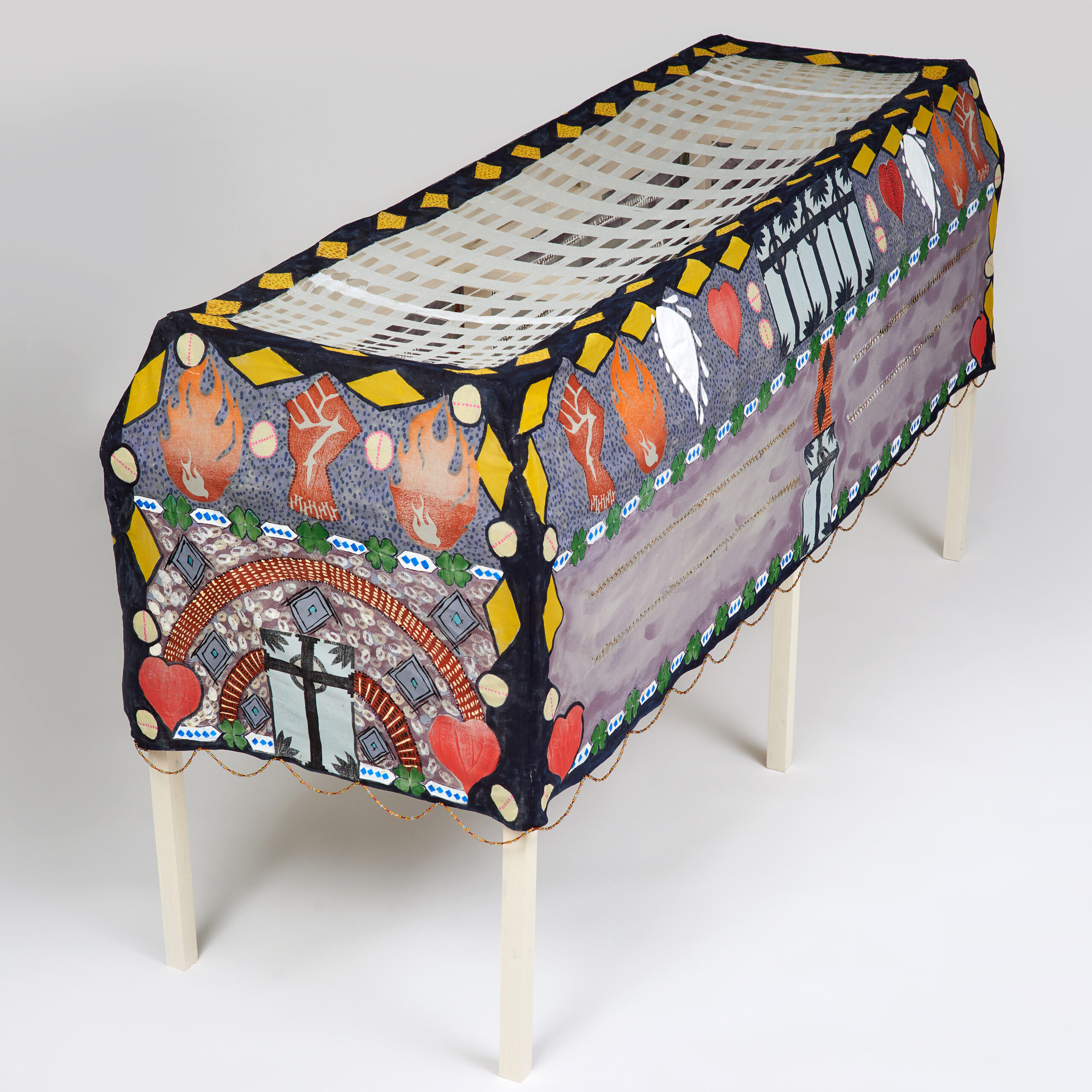
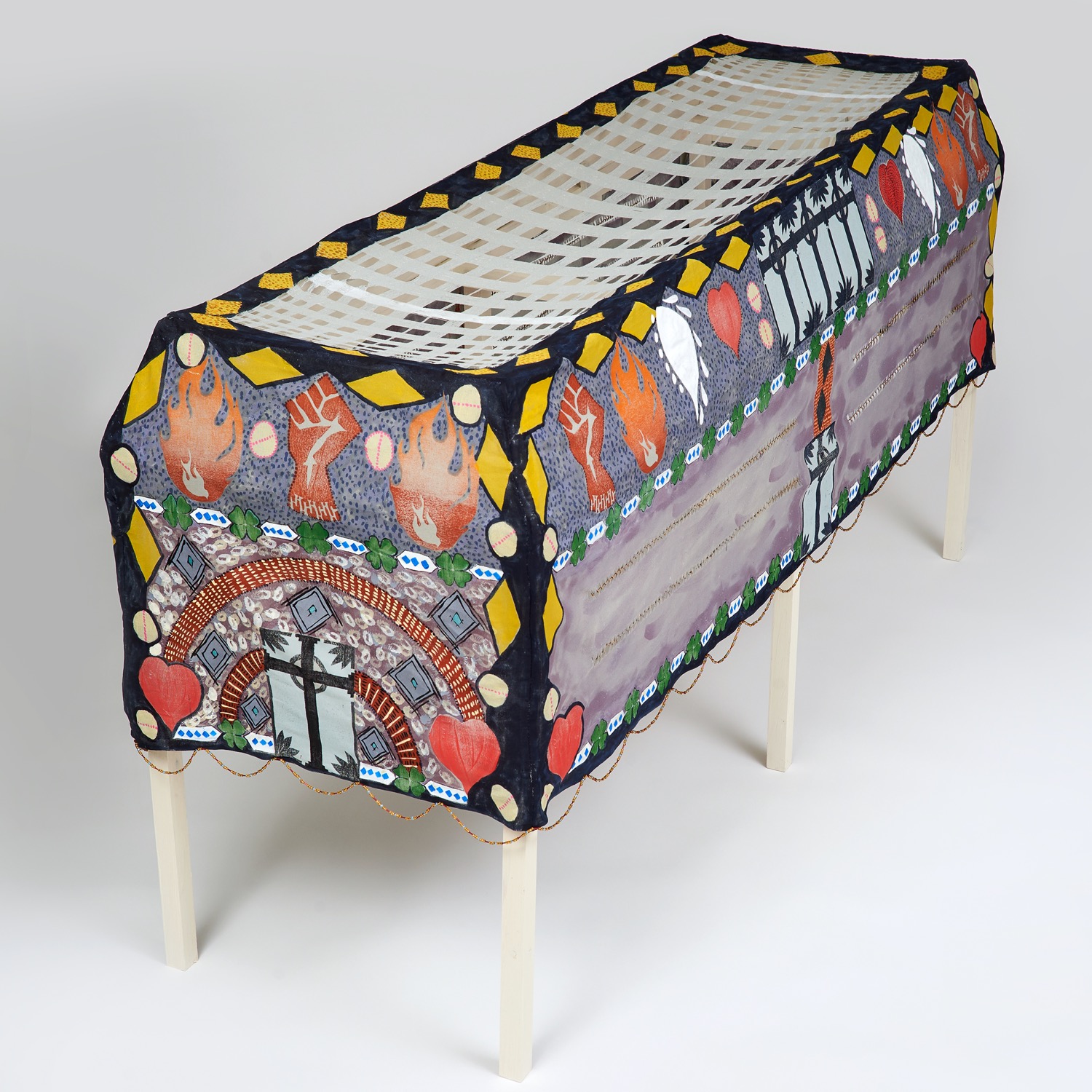
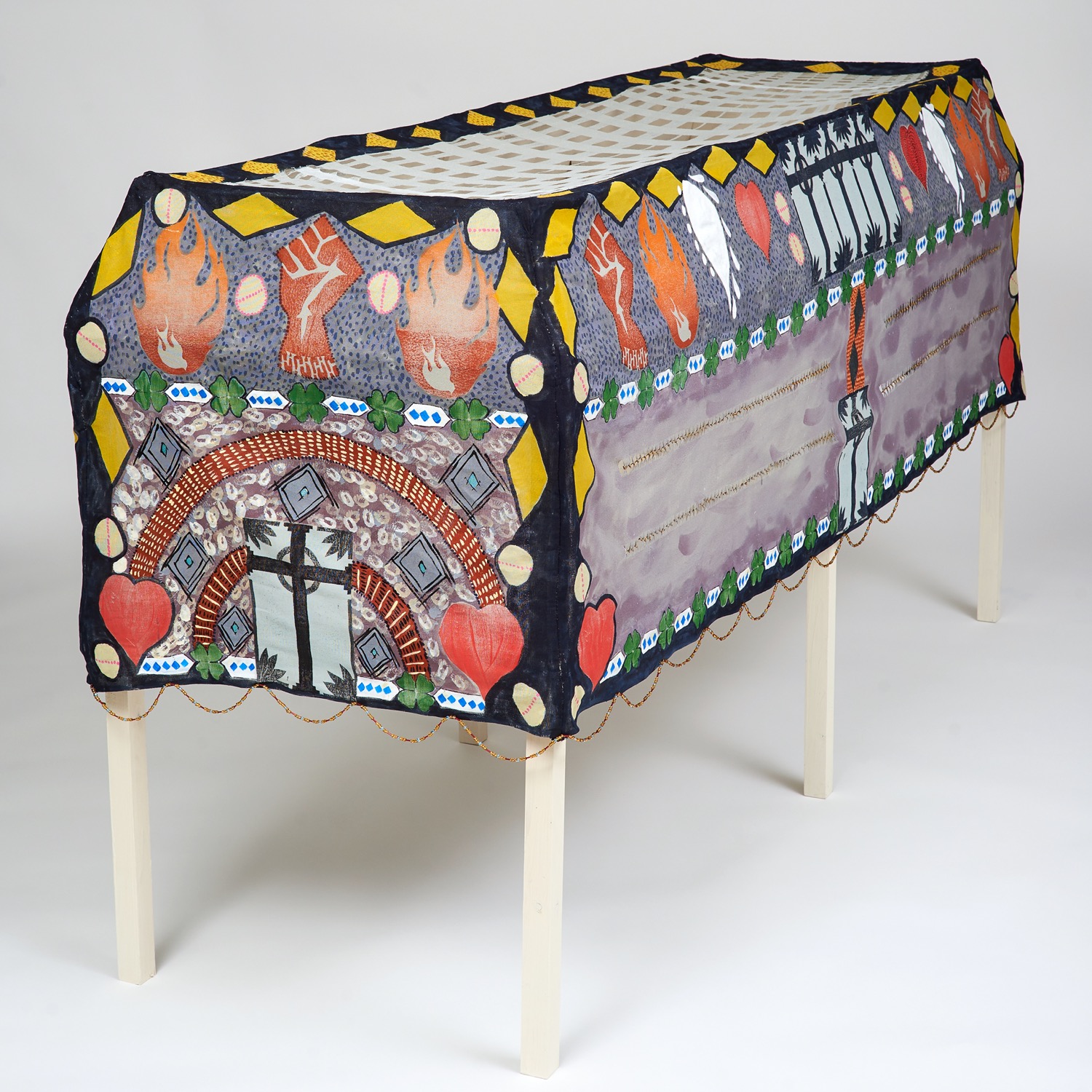
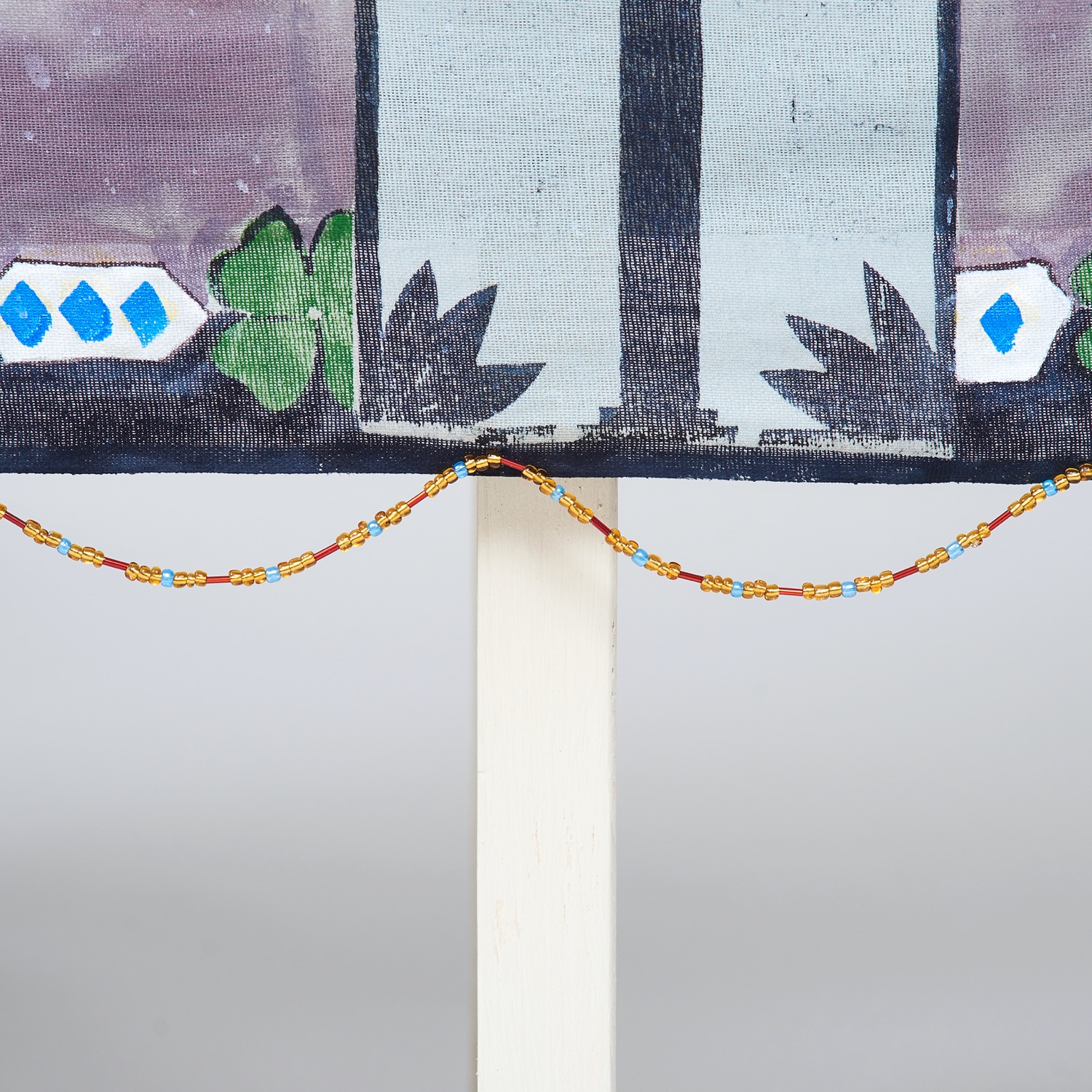
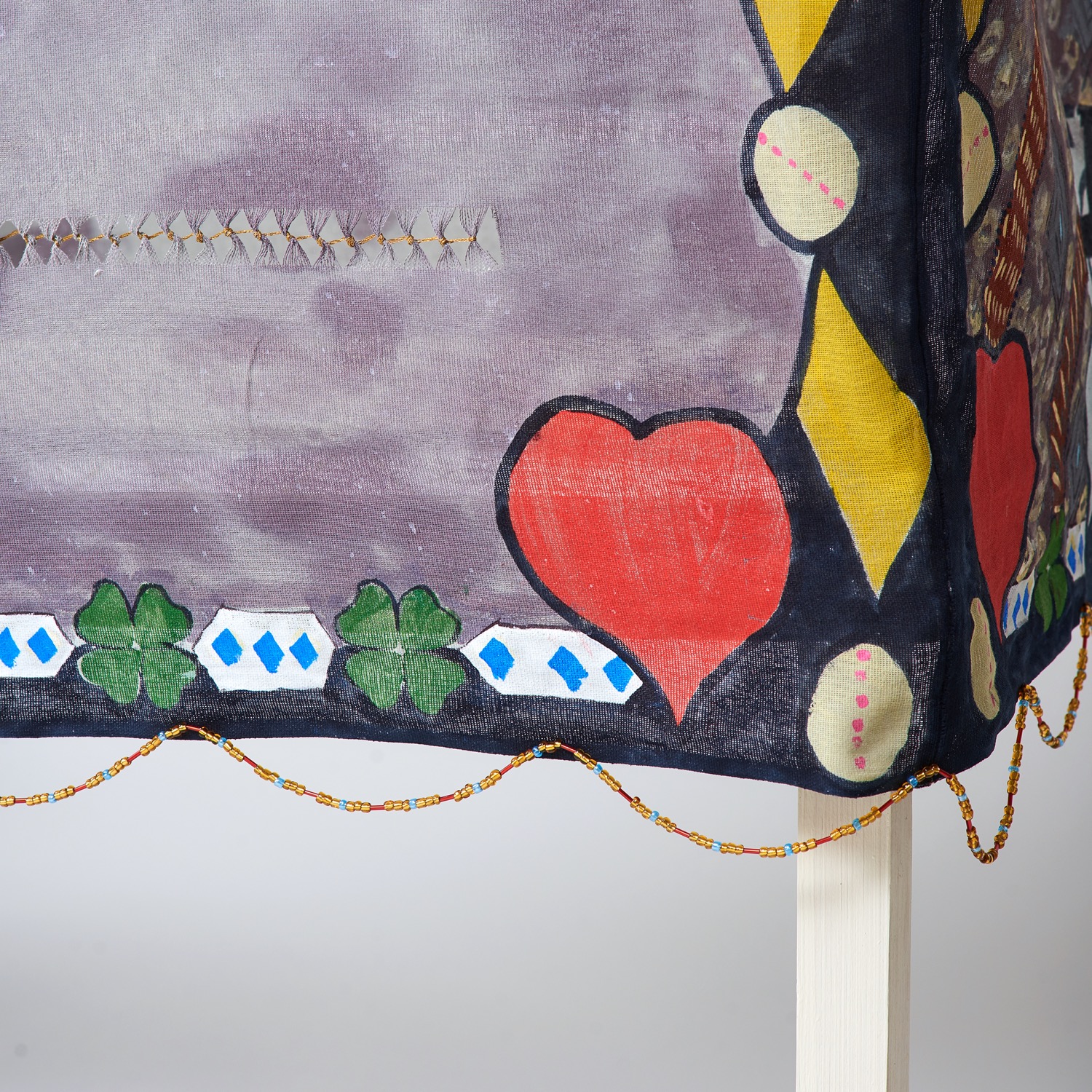
Vida, passion y muerte
2017
Acrylic, glass beads and metallic floss on muslin
27″ x 85″ x 28″
Born in Cd. Júarez, Chihuahua, México, Professor Hurtado Segovia graduated with a BA from UCLA in 2003 and an MFA in Fine Arts from Otis College of Art and Design in 2007. Their work is exhibited in various museums and galleries in the United States and is in various public collections including The Hammer Museum, The American Embassy, The Los Angeles County Department of Arts & Culture, and the La Jolla Community Foundation. Lorenzo lives in Los Angeles and teaches at OTIS College of Art and Design.
Click on the piece to learn more.
Weshoyot Alvitre, Our Sovereignty is Older Than Your Independence: A Funerary Basket of Deconstruction
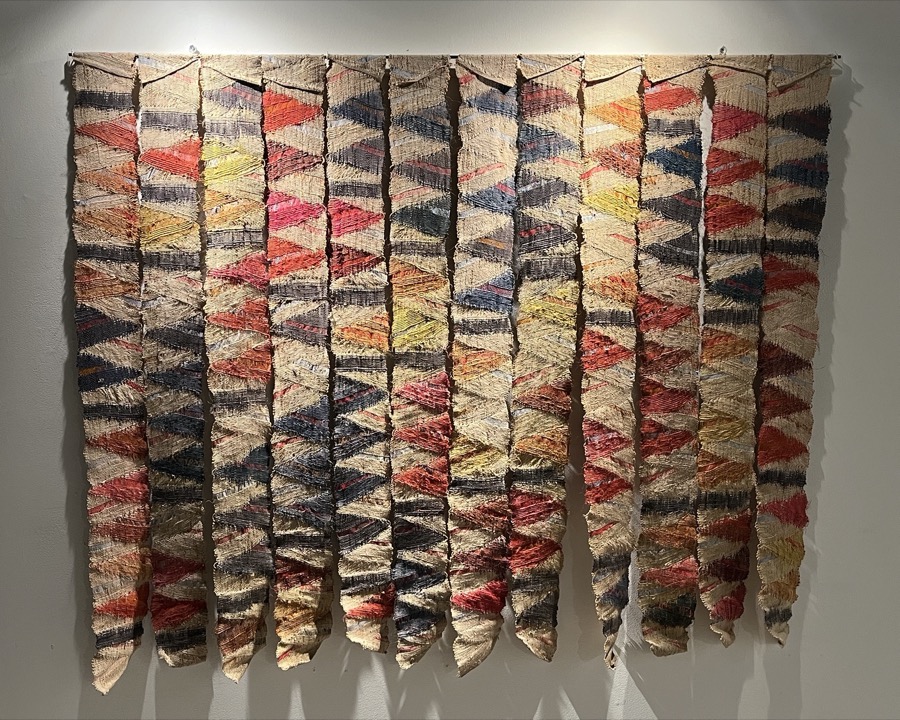
James Bassler, Wedge Weave #3
Linda Ekstrom, Hemisphere
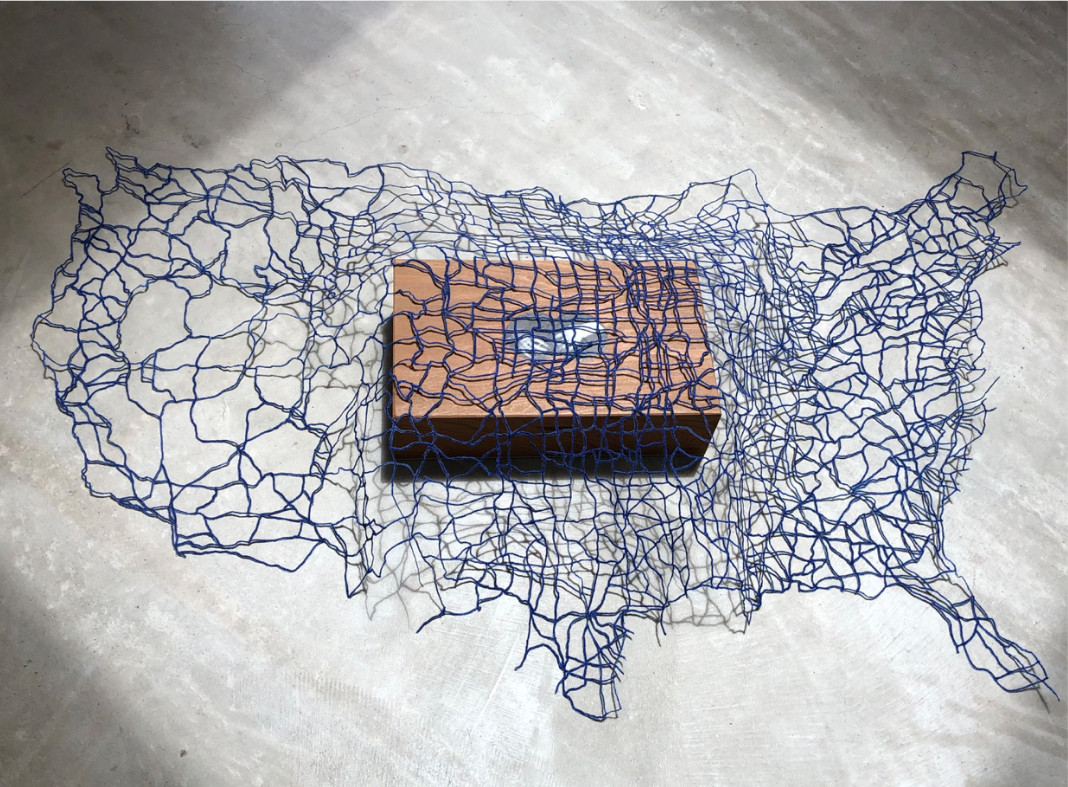
Linda Ekstrom, Day is Done
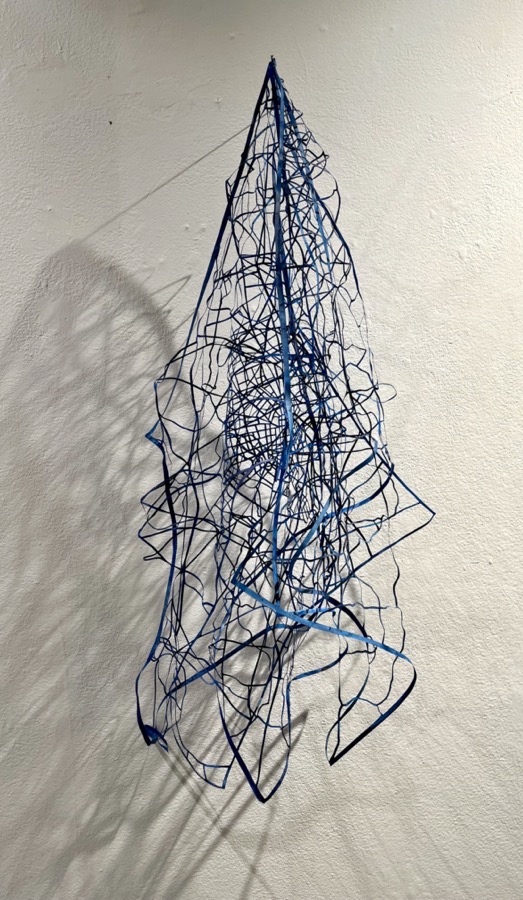
Linda Ekstrom, Traversal
Leah Mata Fragua, Sky Snake
Terri Friedman, Stay Astonished
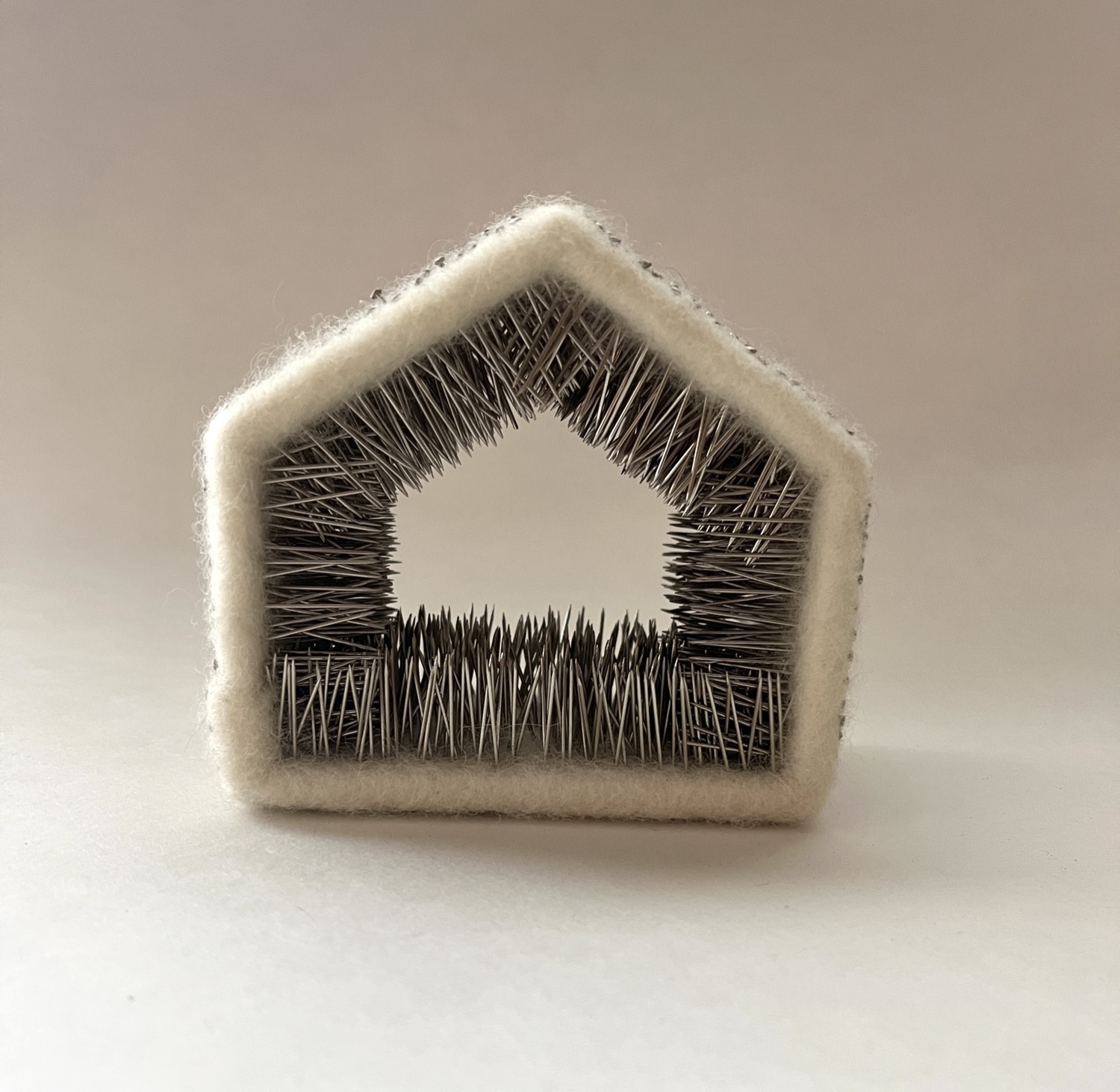
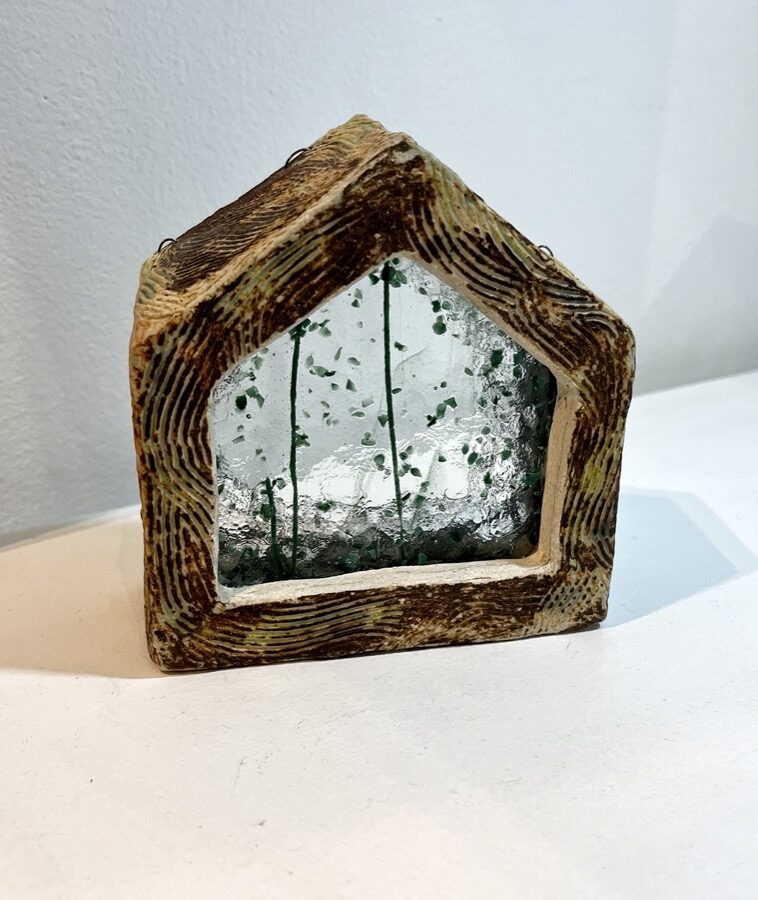
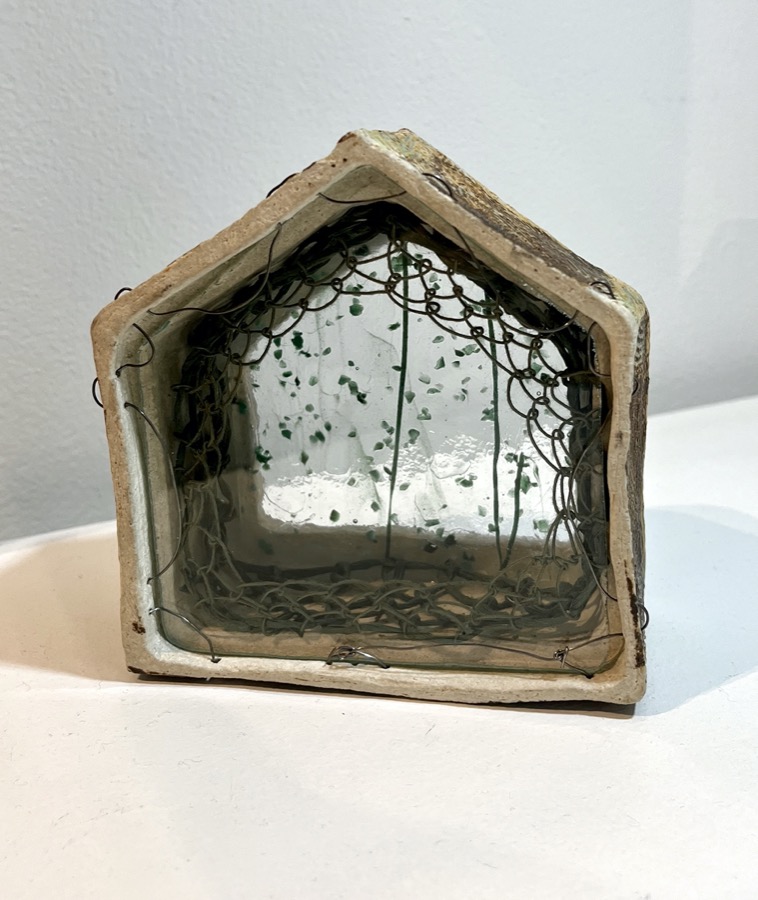
Lydia Tjioe Hall, House with Needles Inside
Lydia Tjioe Hall, Hollow House Within
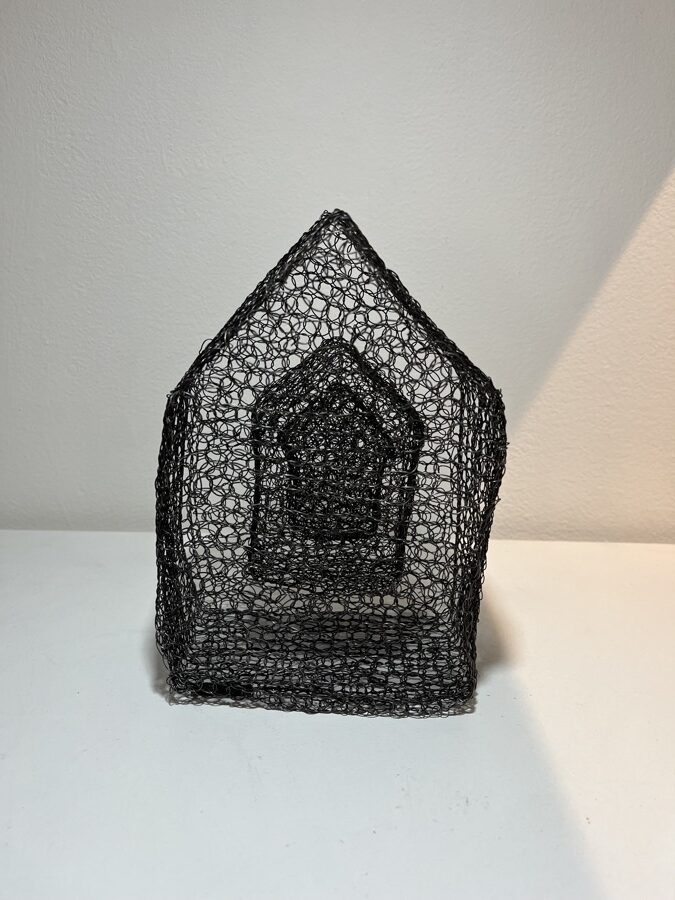
Lydia Tjioe Hall, Three Nesting Houses Within
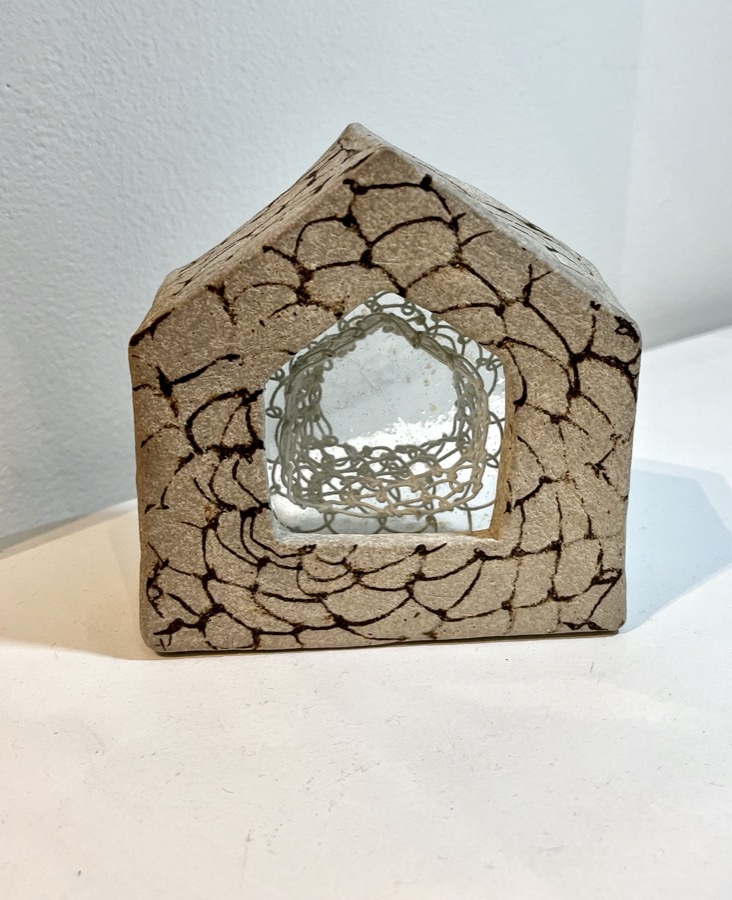
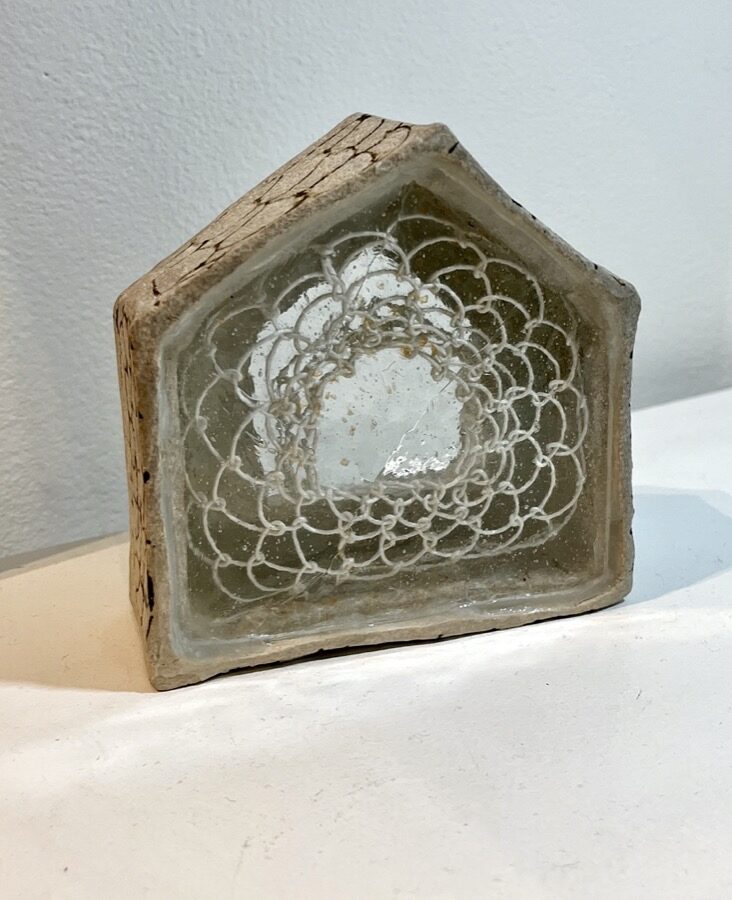
Lydia Tjioe Hall, Glass House with White Interior
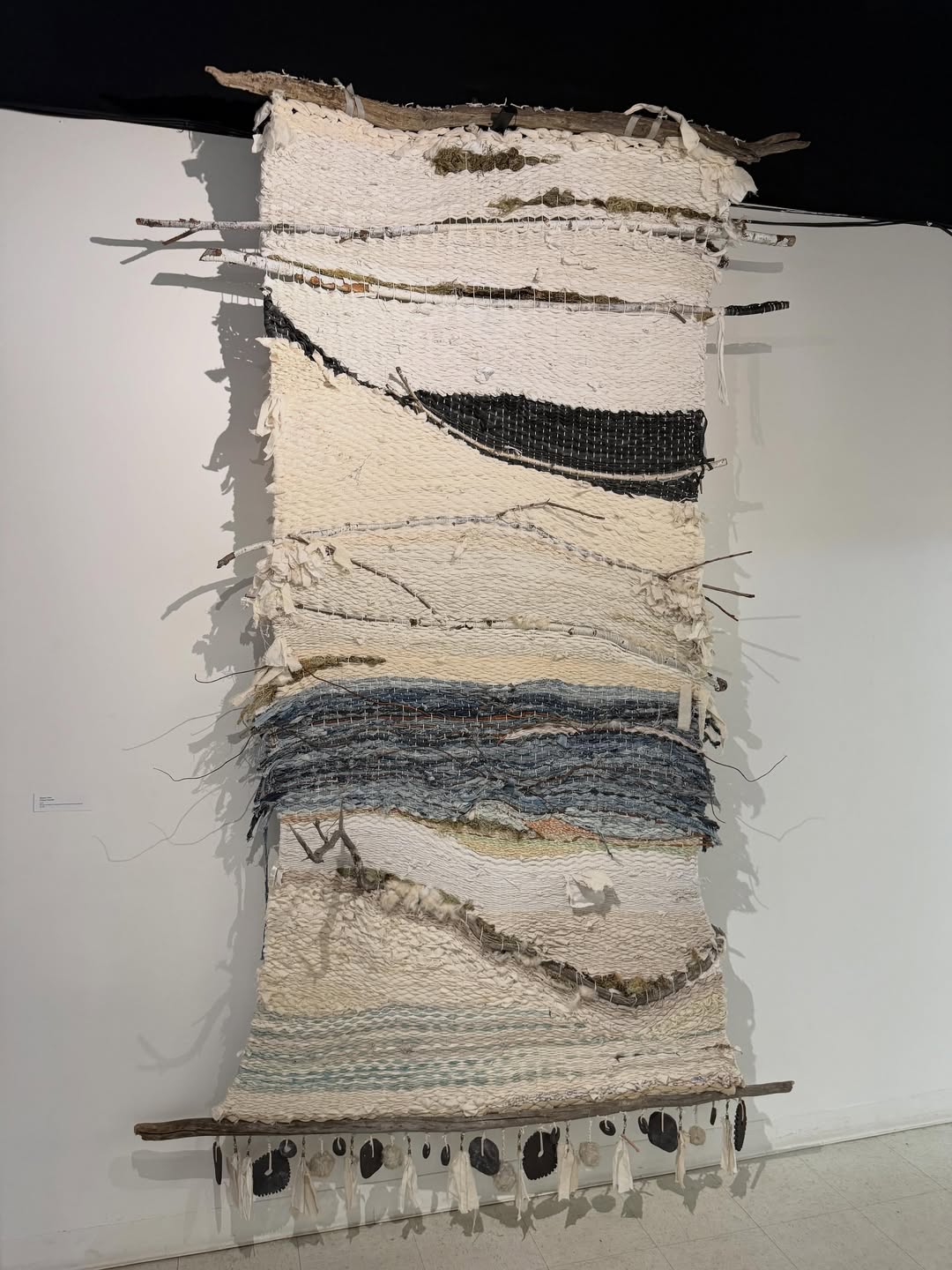
Cyrena Nouzille, Human Time
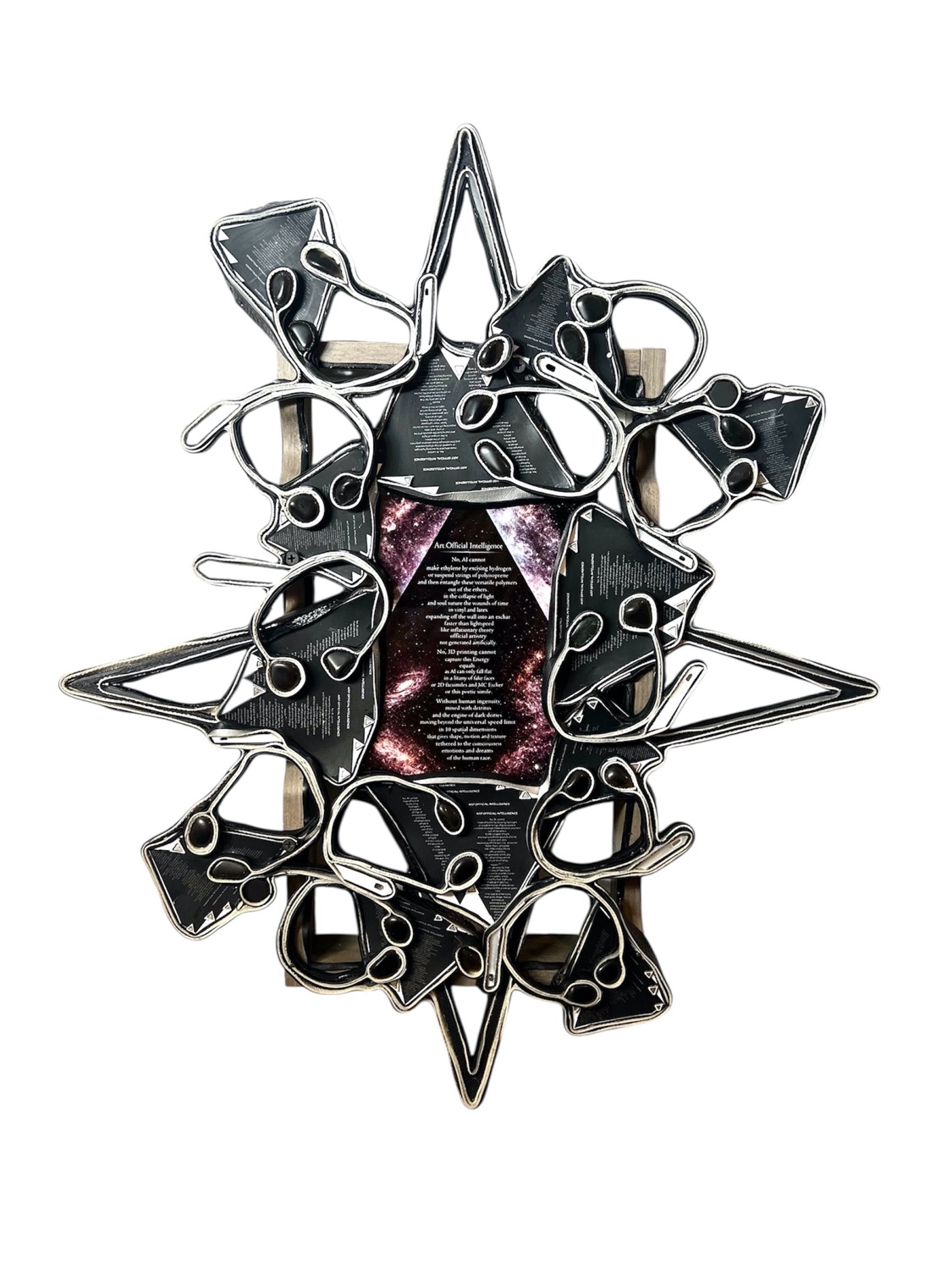
Alicia Piller, Art Official Intelligence. (Poem 2)
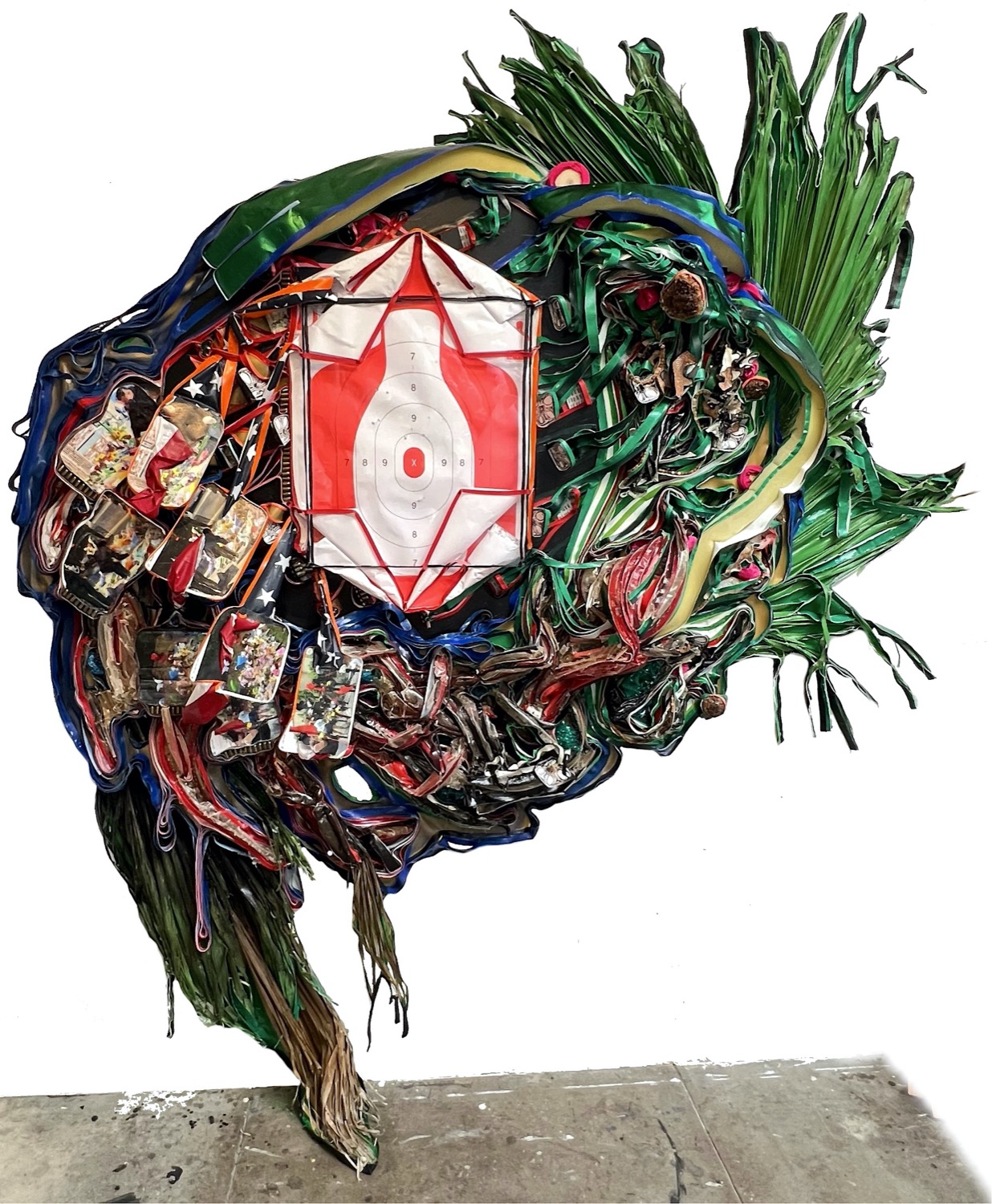
Alicia Piller, Memorials. From Sea to Shining Sea.
Alicia Piller, Remains. Tectonic forces. Vanished seas.
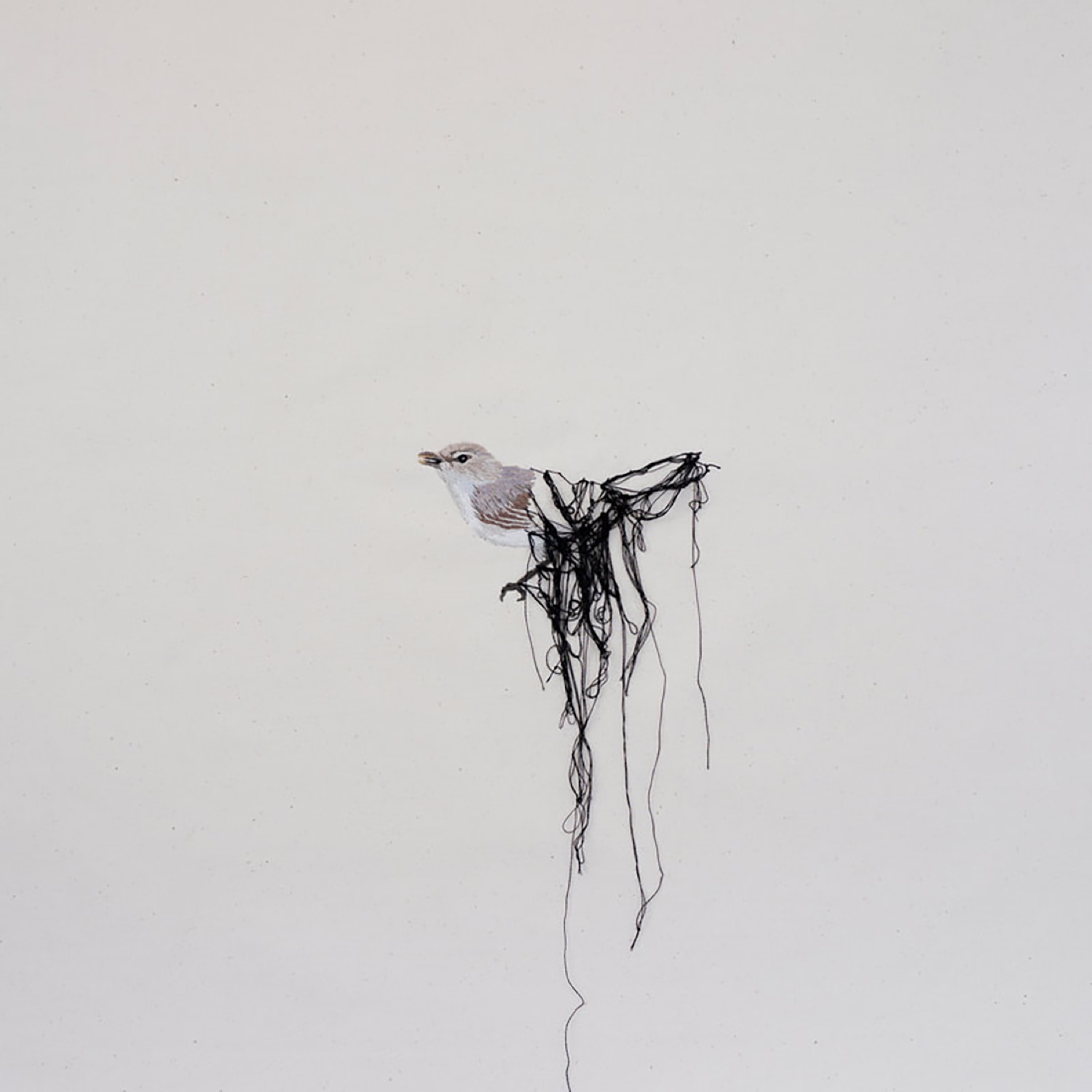
Michelle Robinson, Least Bell’s Vireo (endangered)
Michelle Robinson, Valley House 50.040
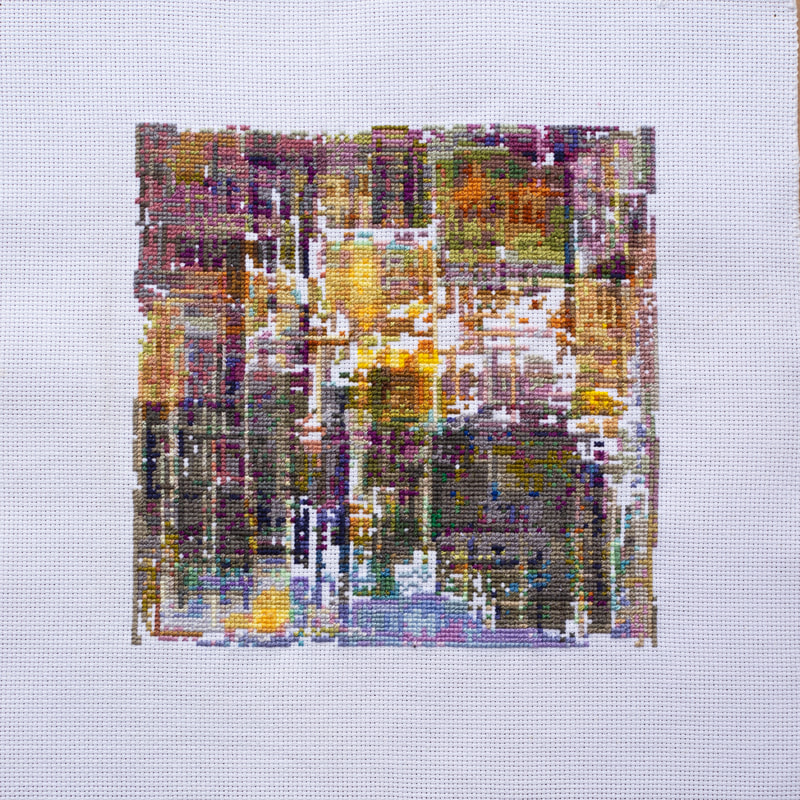
Michelle Robinson, Valley House 50.004
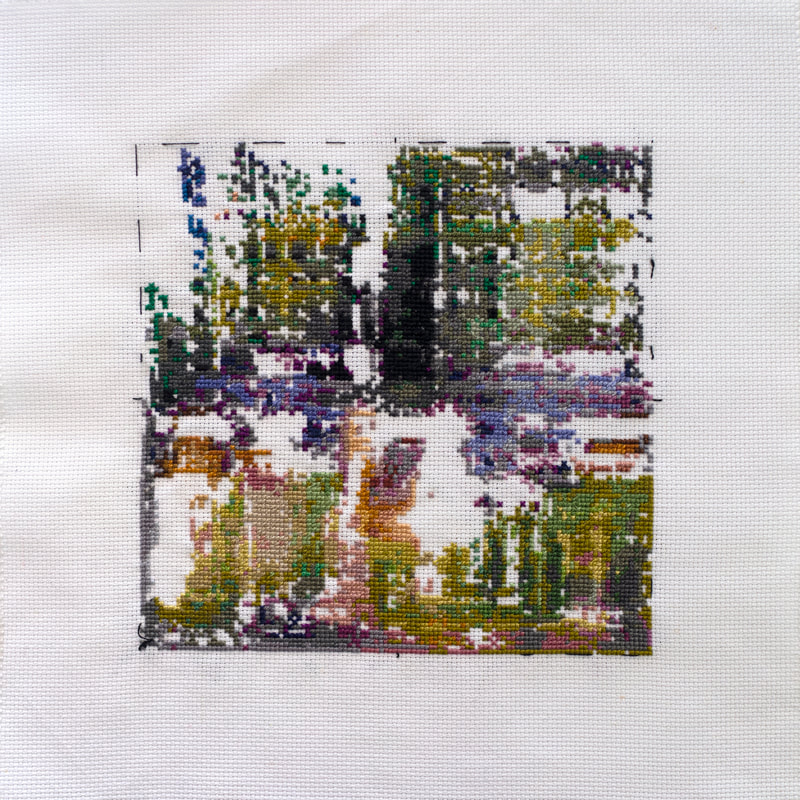
Michelle Robinson, Valley House 50.010
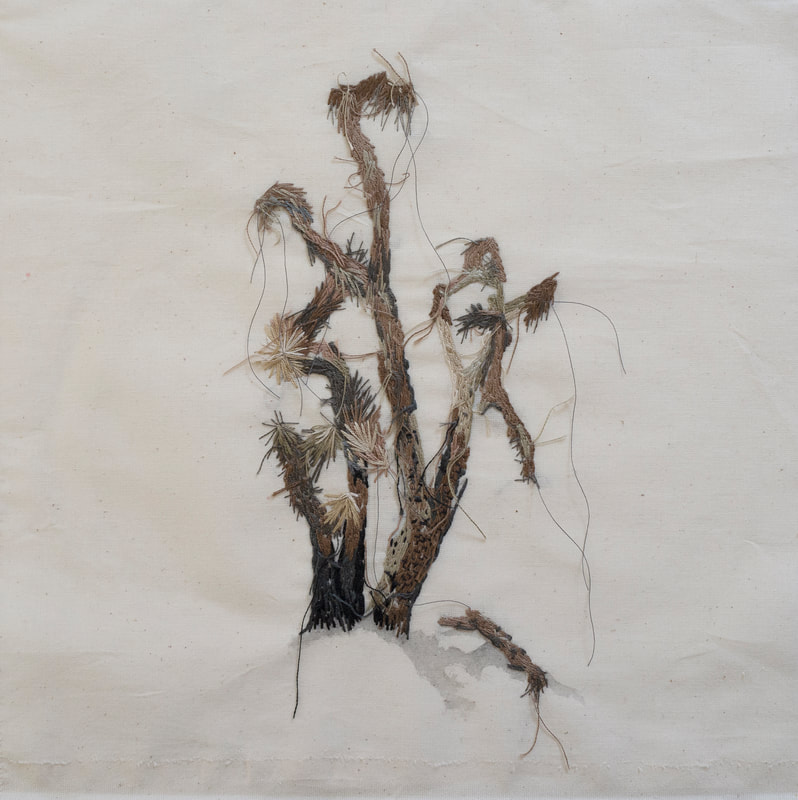
Michelle Robinson, Mourning 5
Michael F. Rohde, Dream
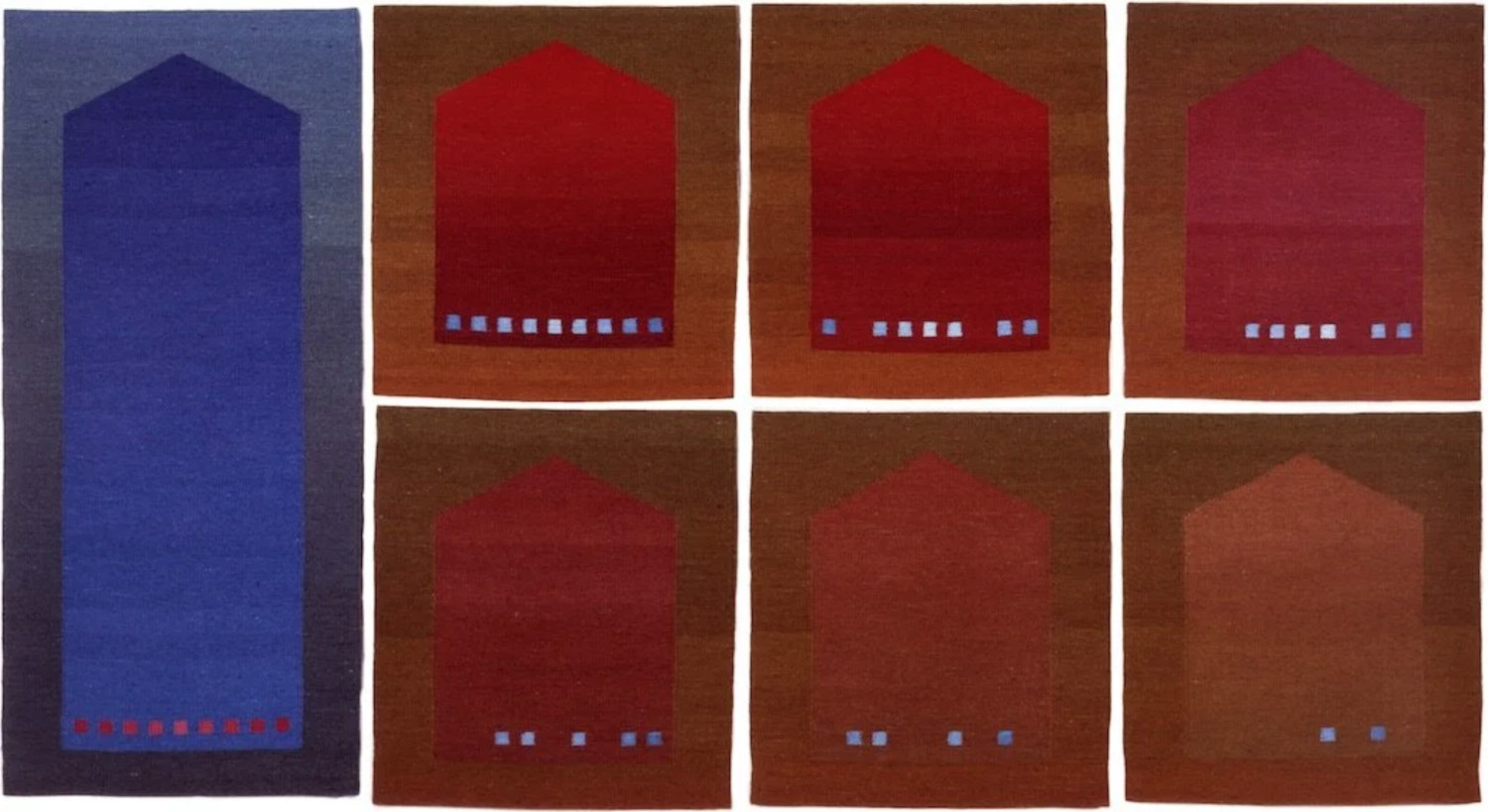
Michael F. Rohde, From My House to Your Homeland
Arturo Alonzo Sandoval, Pattern Fusion No. 20: Motherboard 11 (Blue)
Lorenzo Hurtado Segovia, Vida, passion y muerte
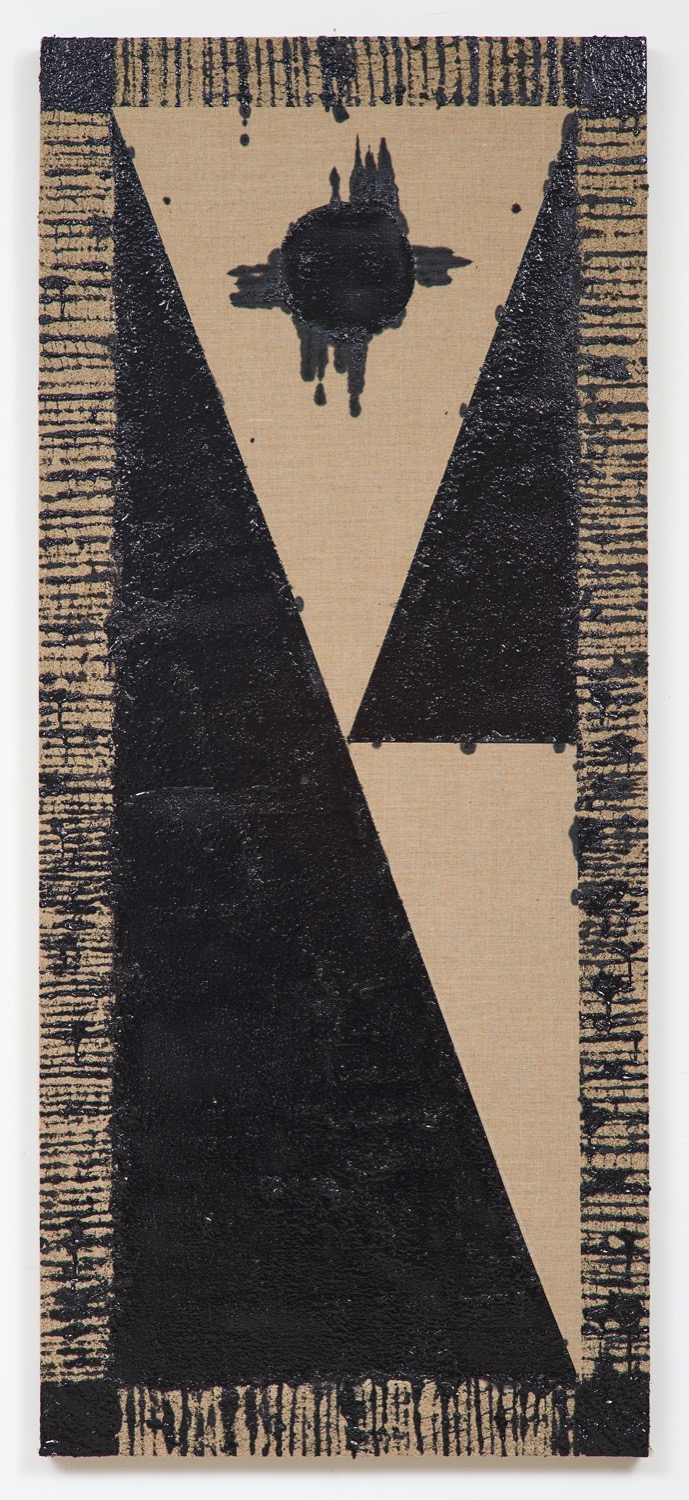
Lorenzo Hurtado Segovia, Untitled 2
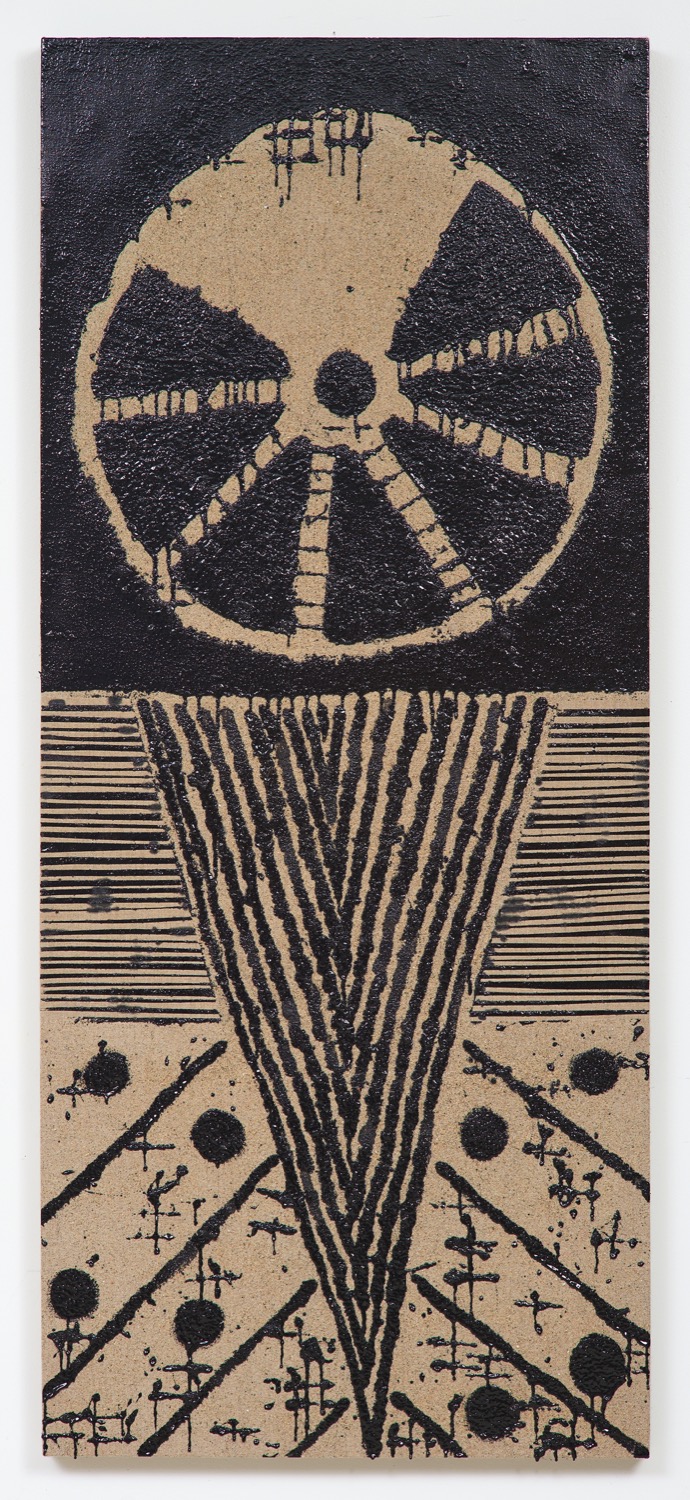
Lorenzo Hurtado Segovia, Untitled 5
James Bassler, George Washington
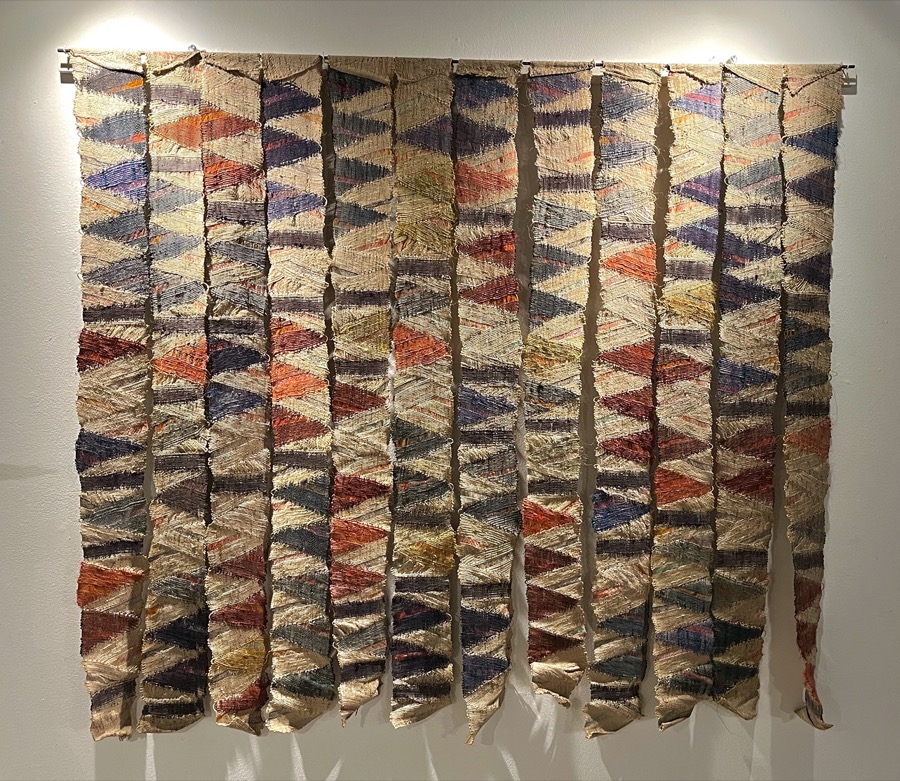
James Bassler, Wedge Weave #4
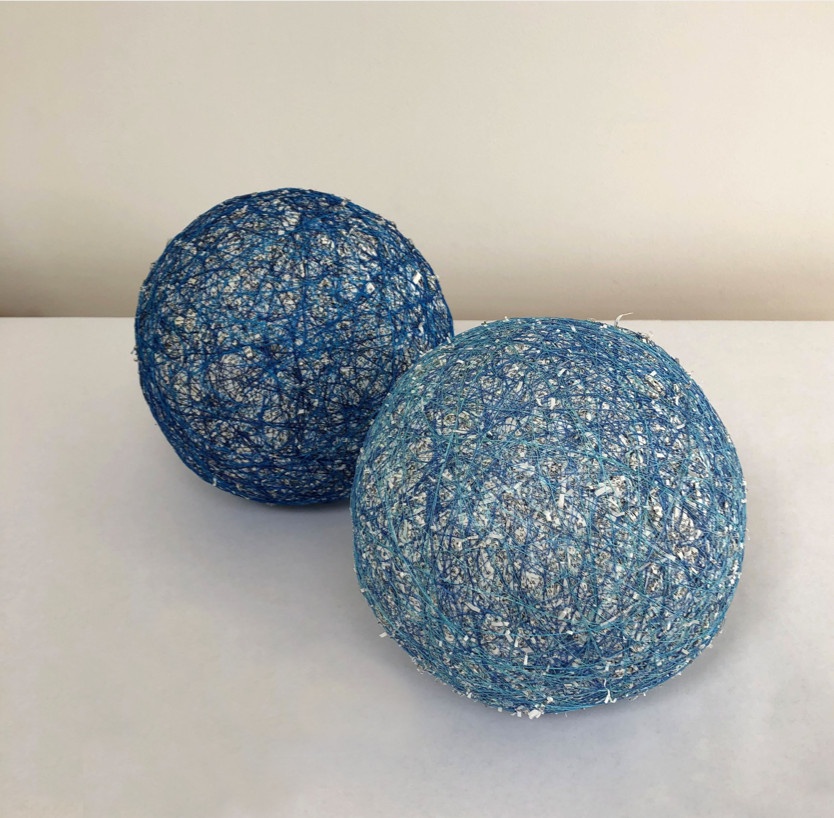
Linda Ekstrom, Thread: Day Sky & Thread: Night Sky
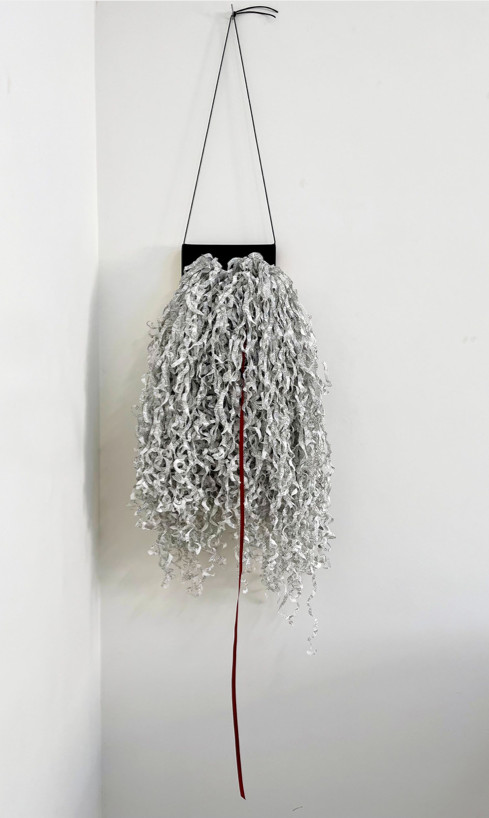
Linda Ekstrom, Effusive
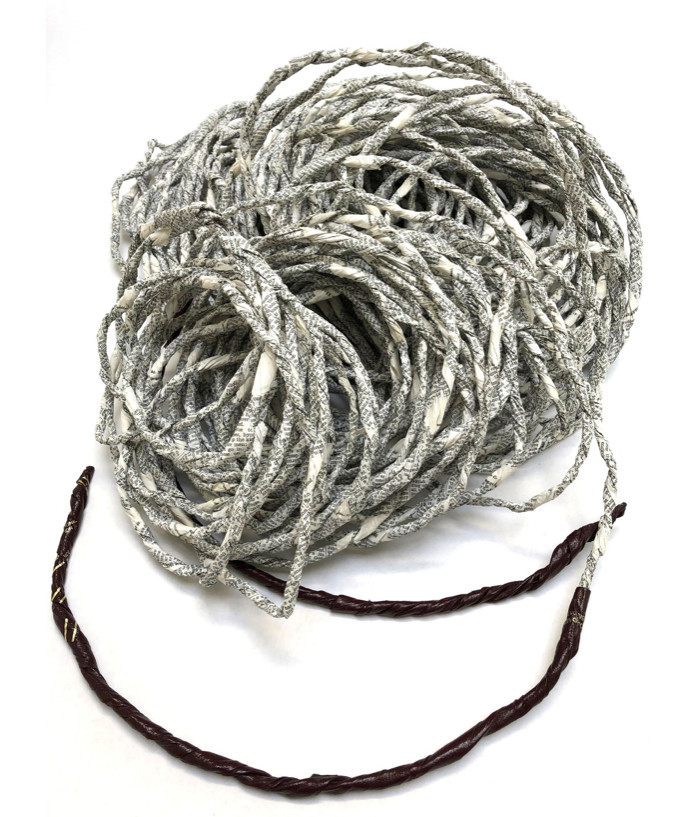
Linda Ekstrom, Tangled
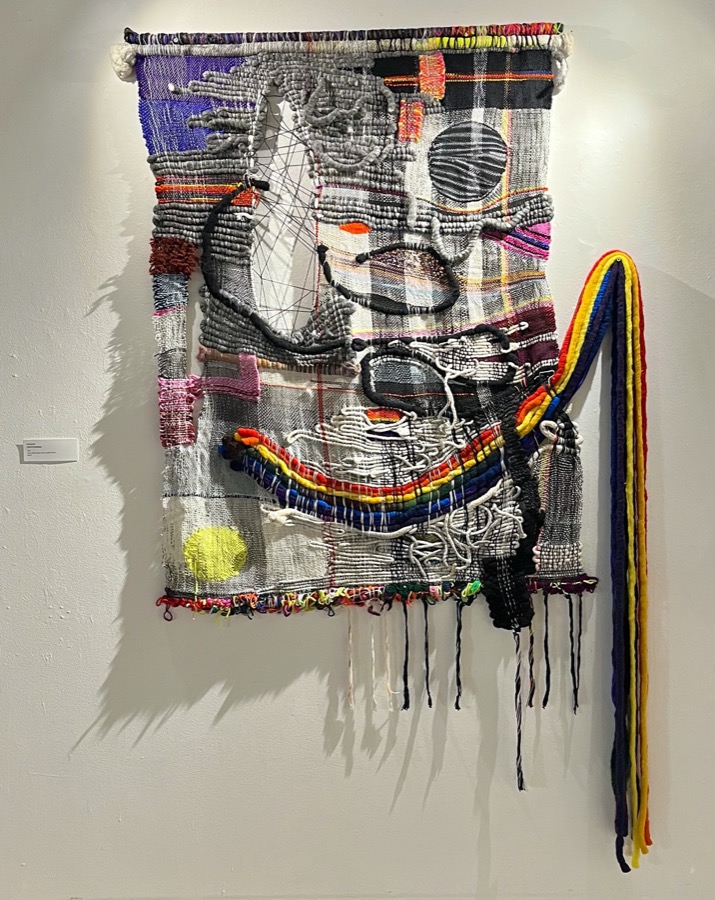
Terri Friedman, Oxytocin
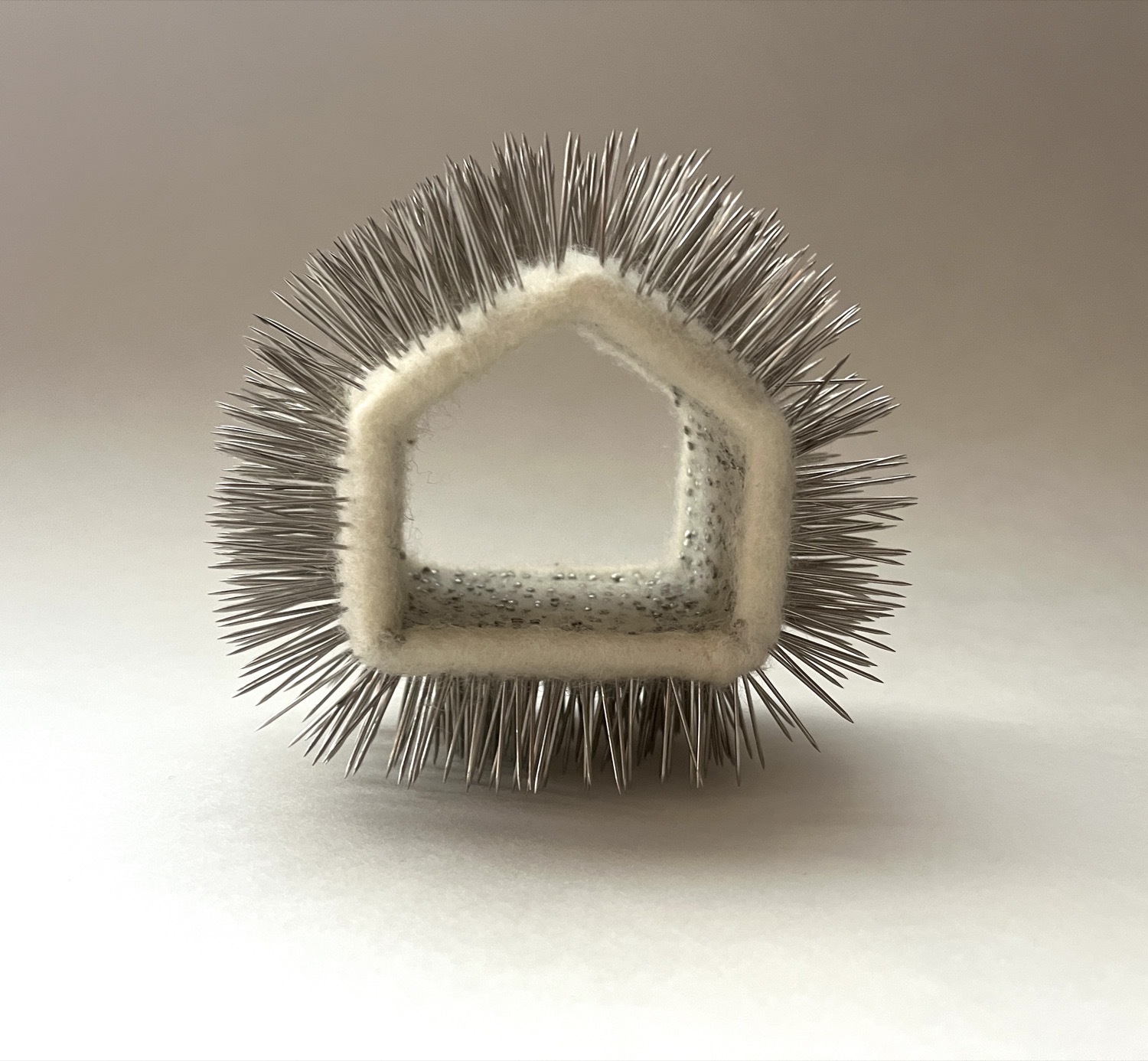
Lydia Tjioe Hall, House with Needles Outside
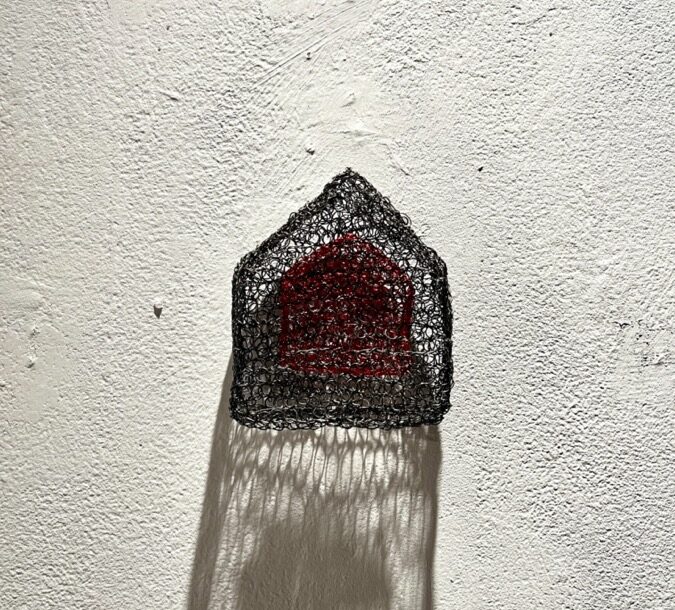
Lydia Tjioe Hall, House with Red Interior
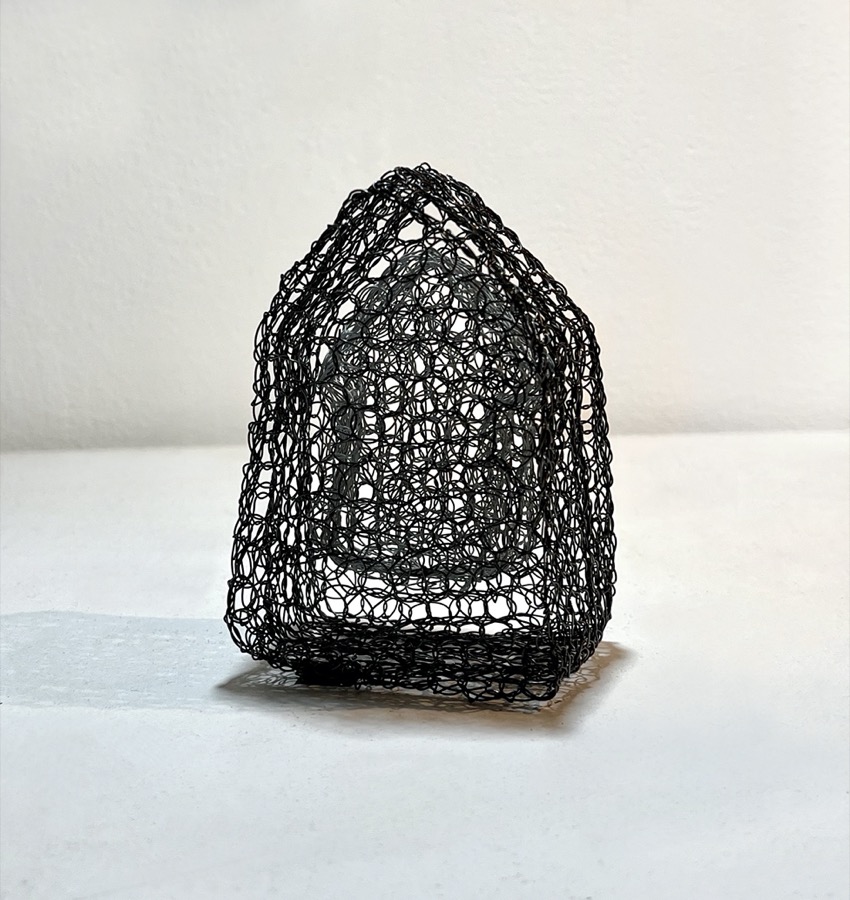
Lydia Tjioe Hall, House with White Interior
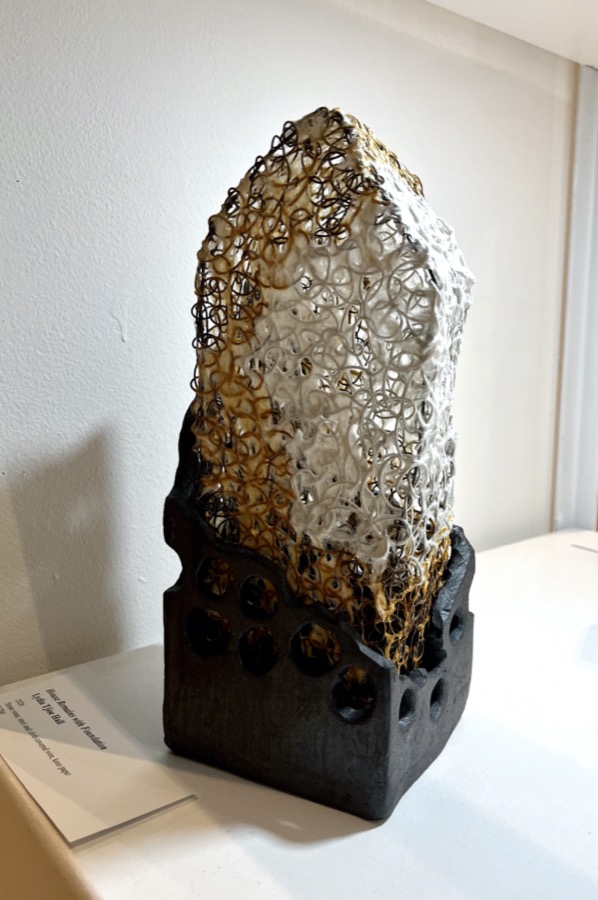
Lydia Tjioe Hall, House Remains with Foundation
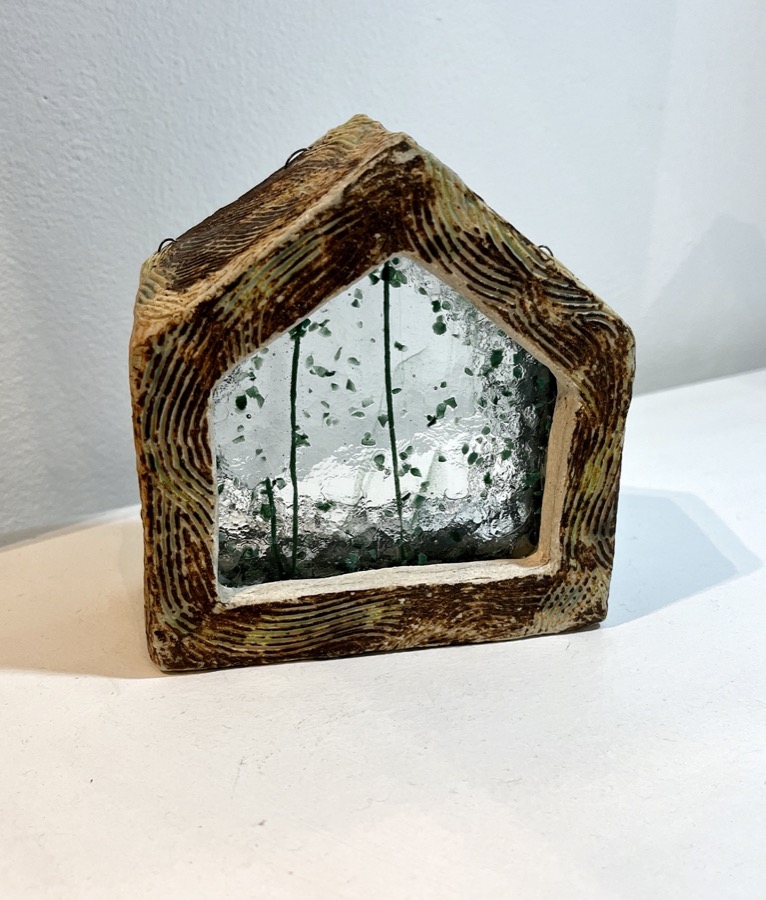
Lydia Tjioe Hall, Green Glass House
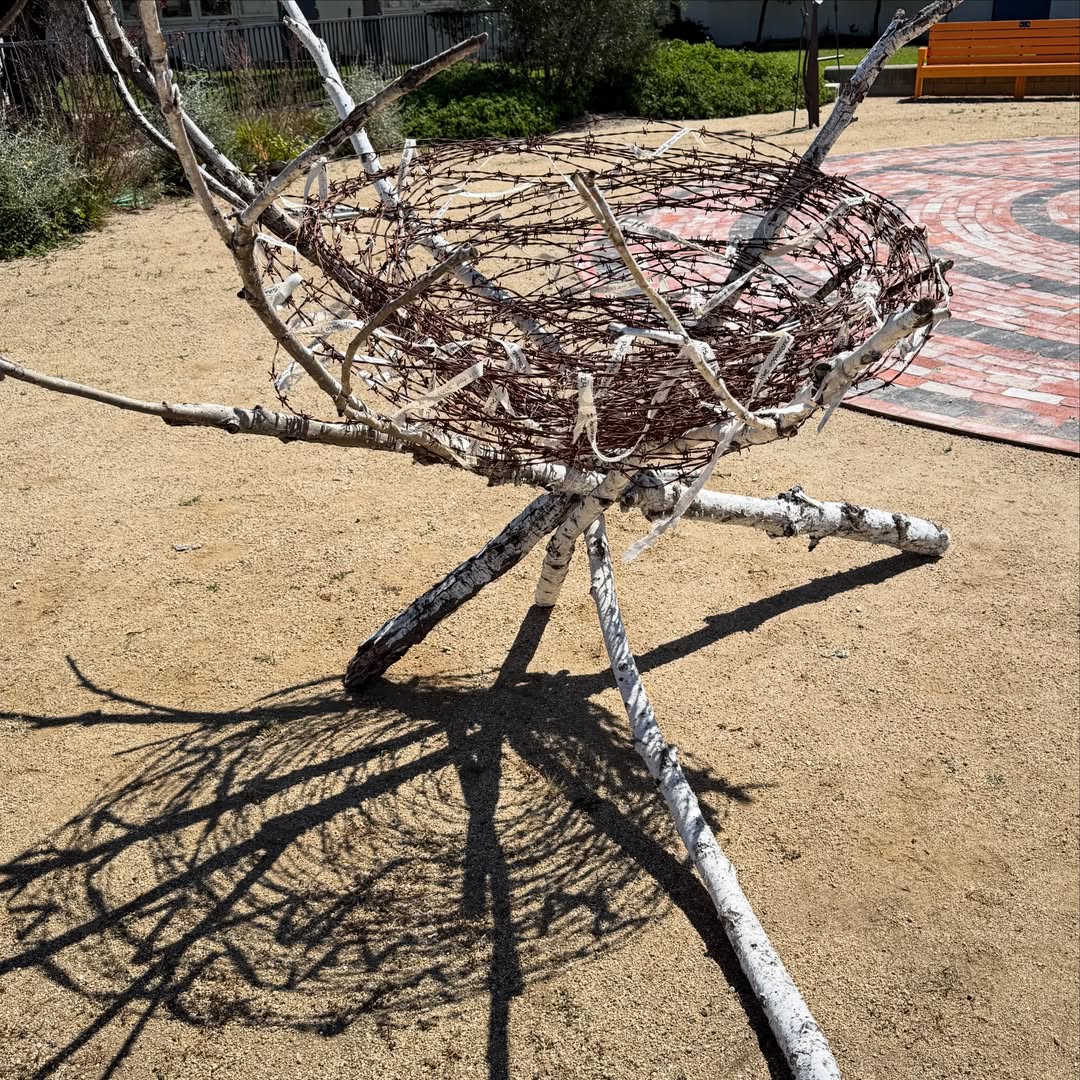
Cyrena Nouzille, U.S. Patent No.157124
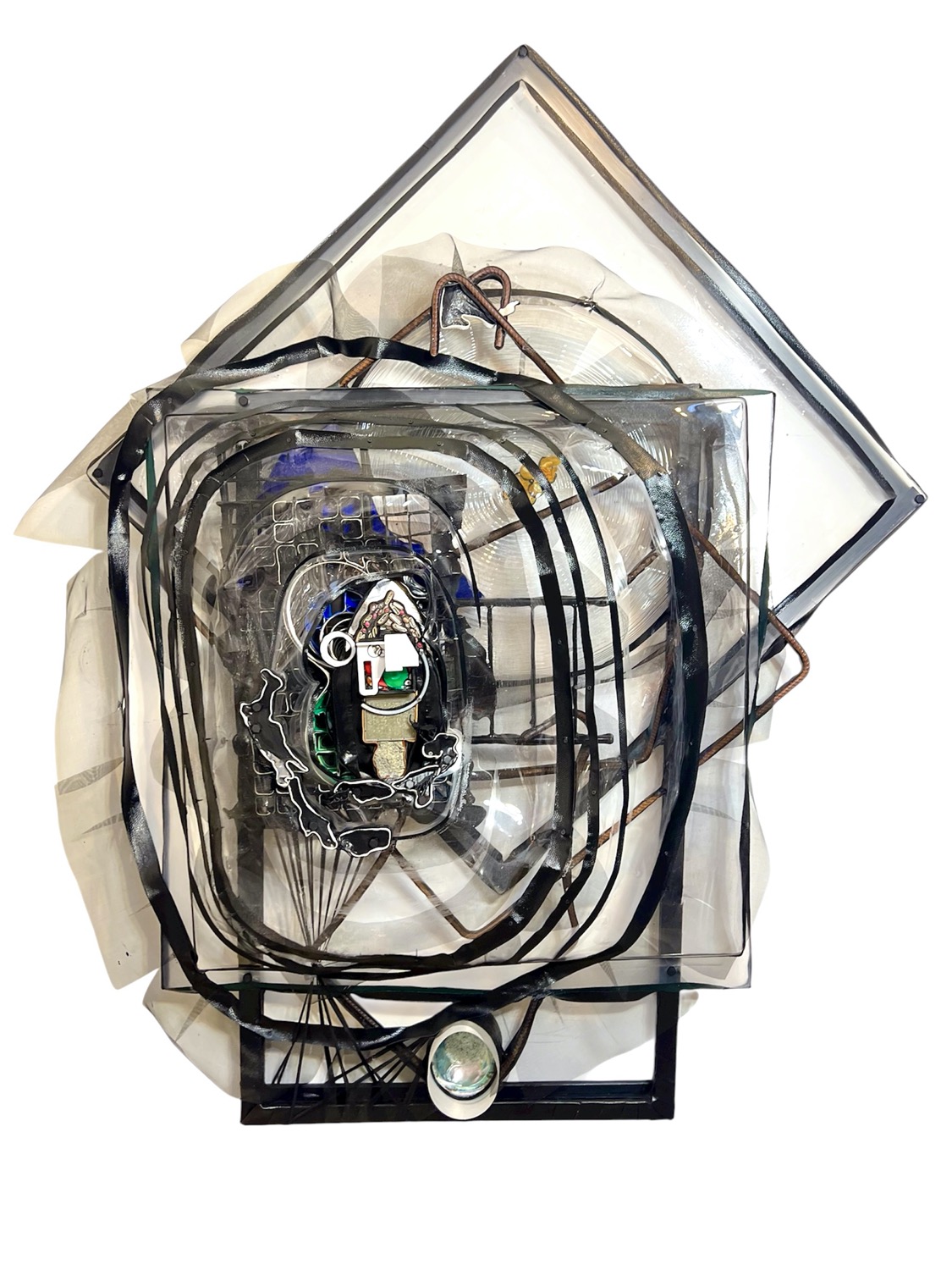
Alicia Piller, Inherited Momentum. Ongoing Ascent.
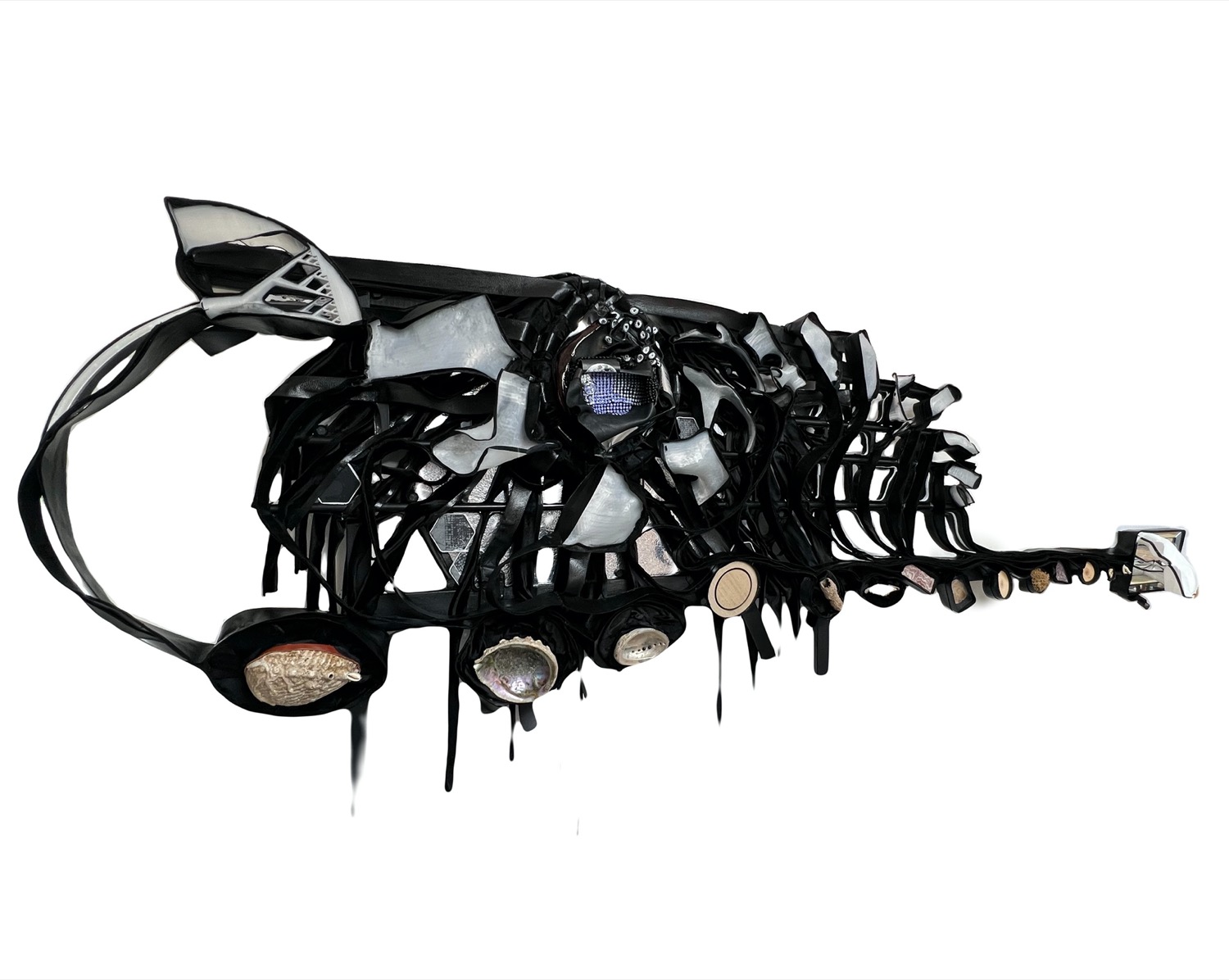
Alicia Piller, Synthetic Horizon. Fossil Future.
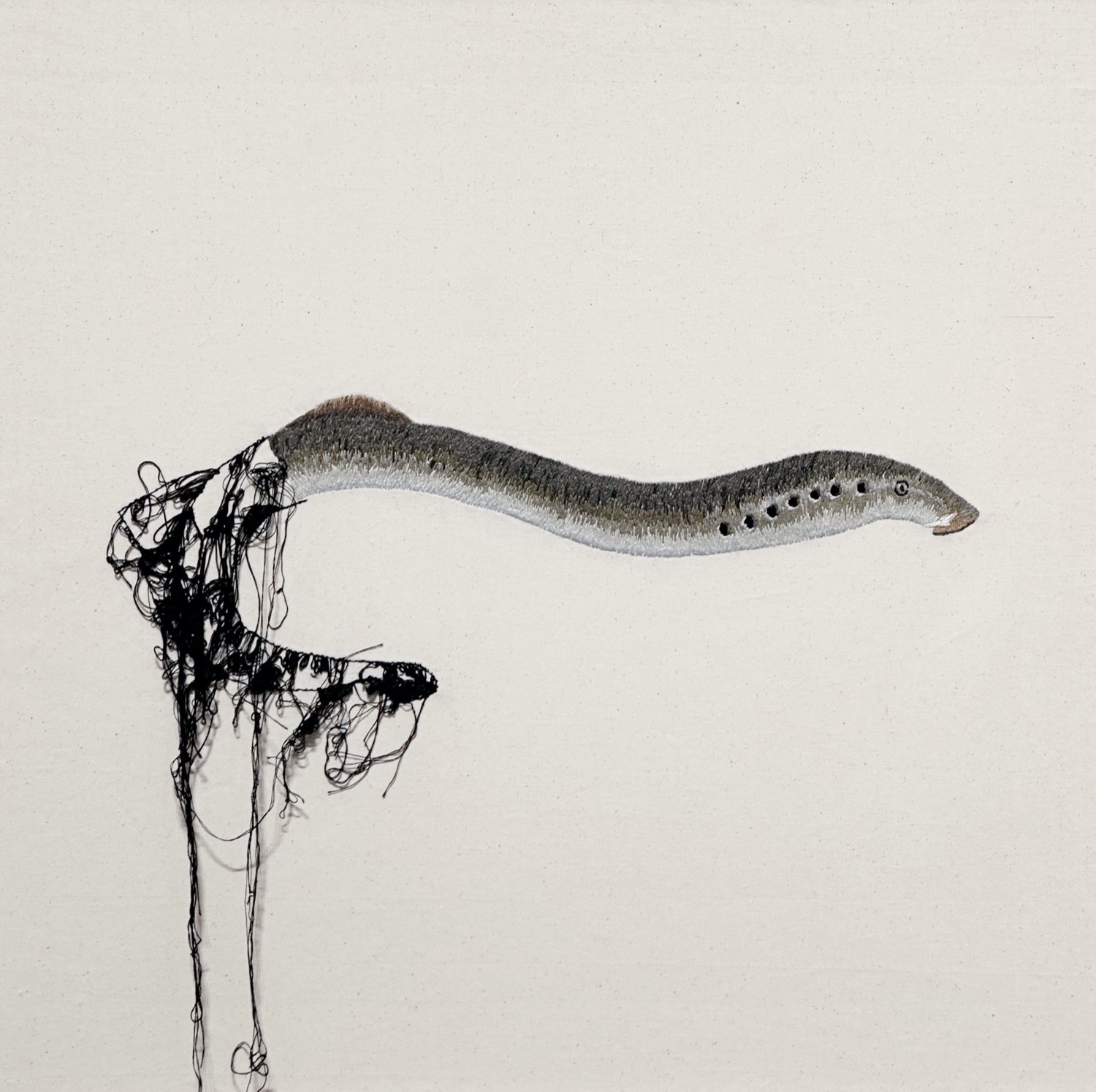
Michelle Robinson, Pacific Lamprey (threatened)
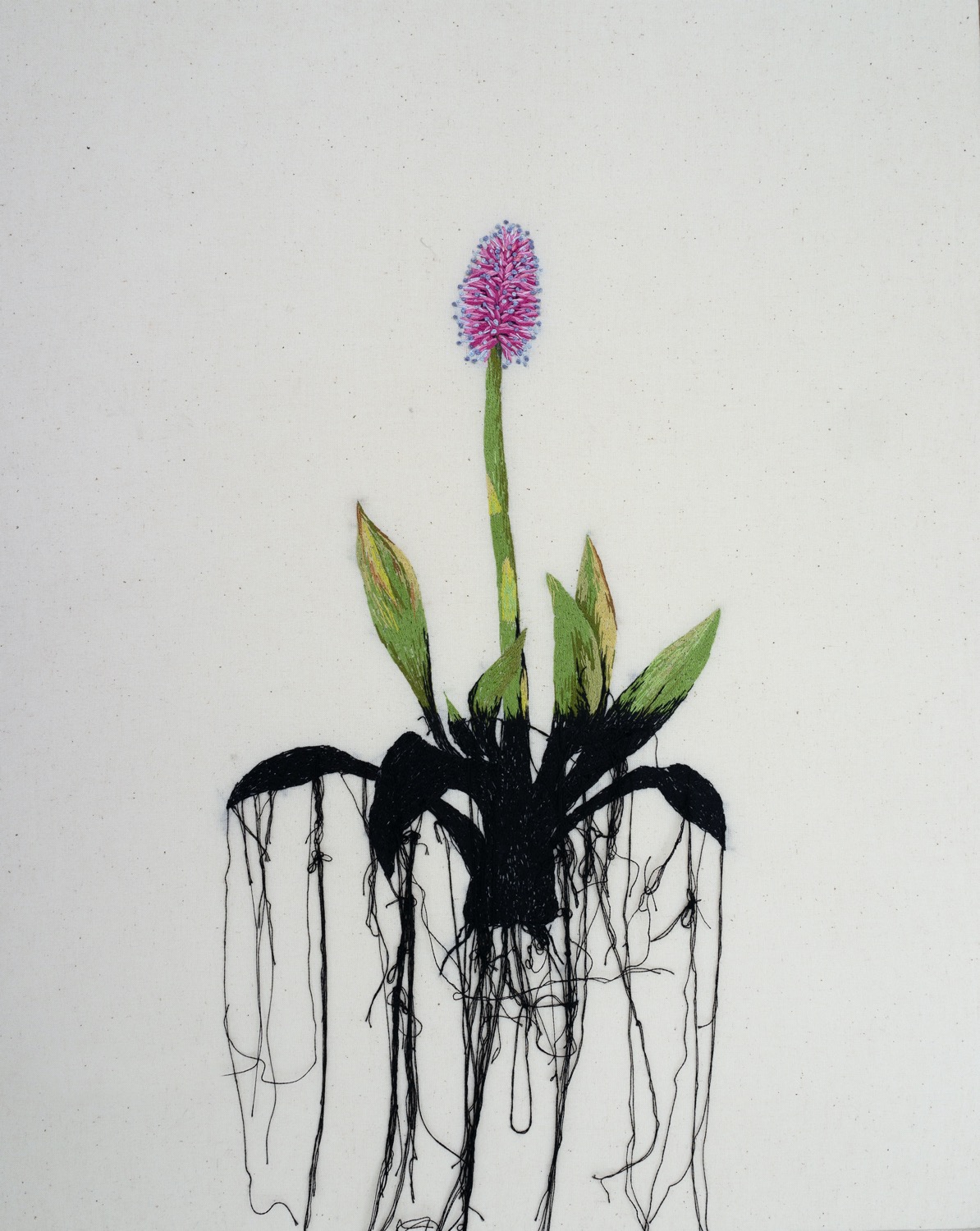
Michelle Robinson, Swamp Pink (imperiled s2)
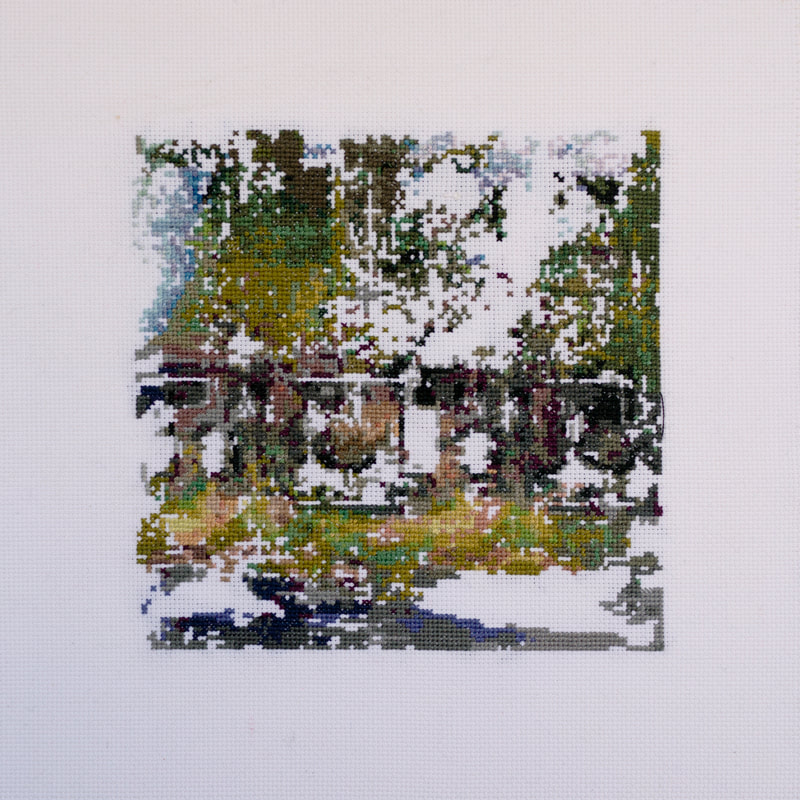
Michelle Robinson, Valley House 50.024
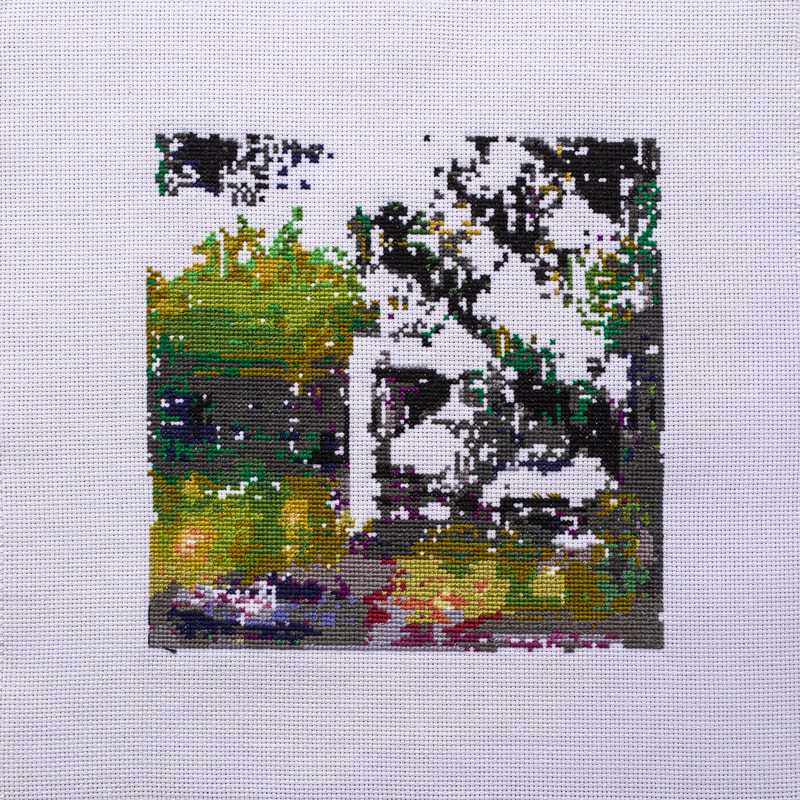
Michelle Robinson, Valley House 50.016
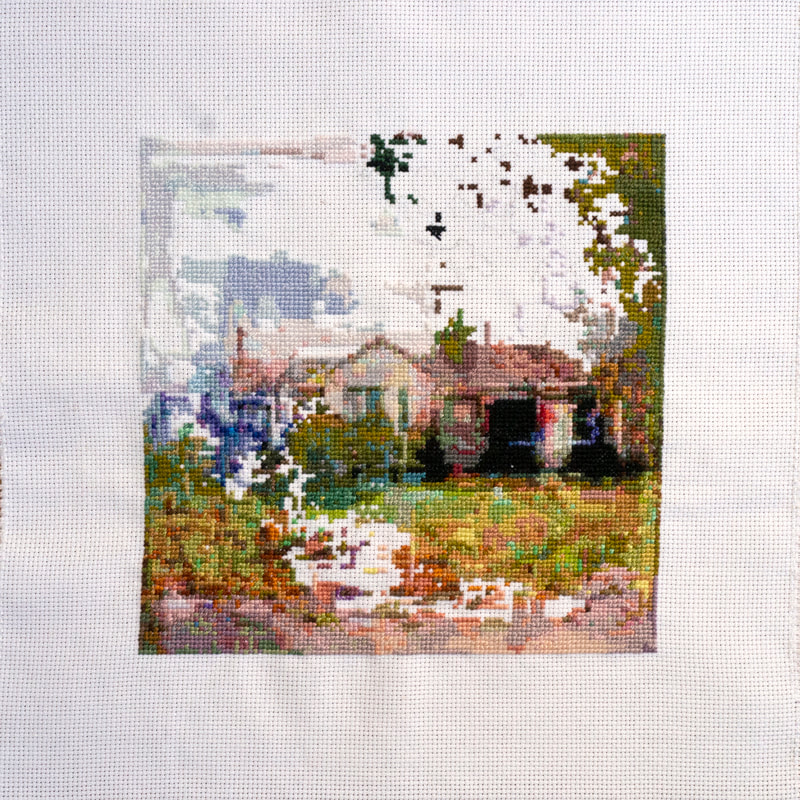
Michelle Robinson, Valley House 50.140
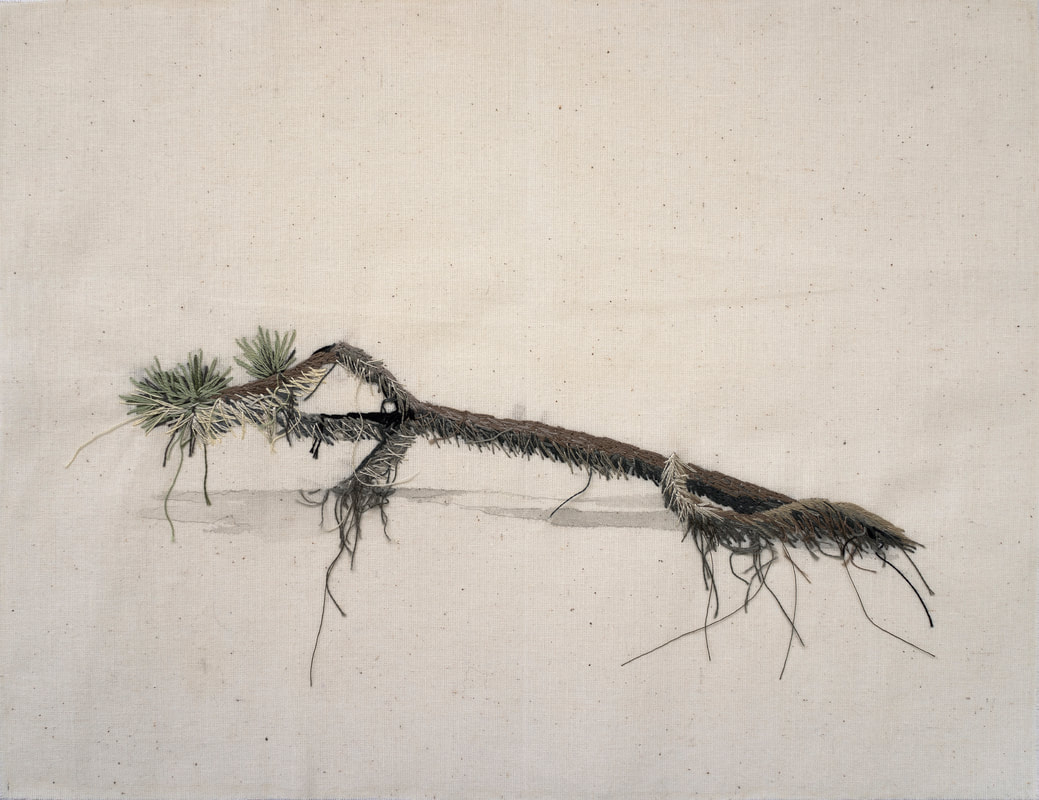
Michelle Robinson, Mourning 4
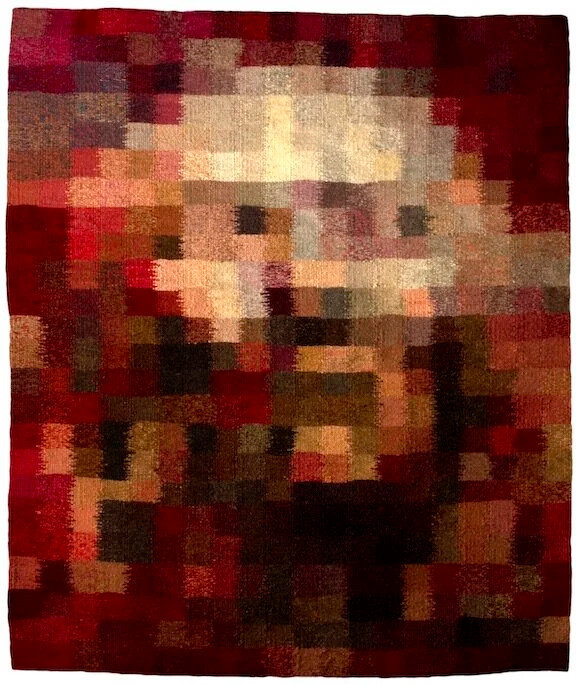
Michael F. Rohde, Balance
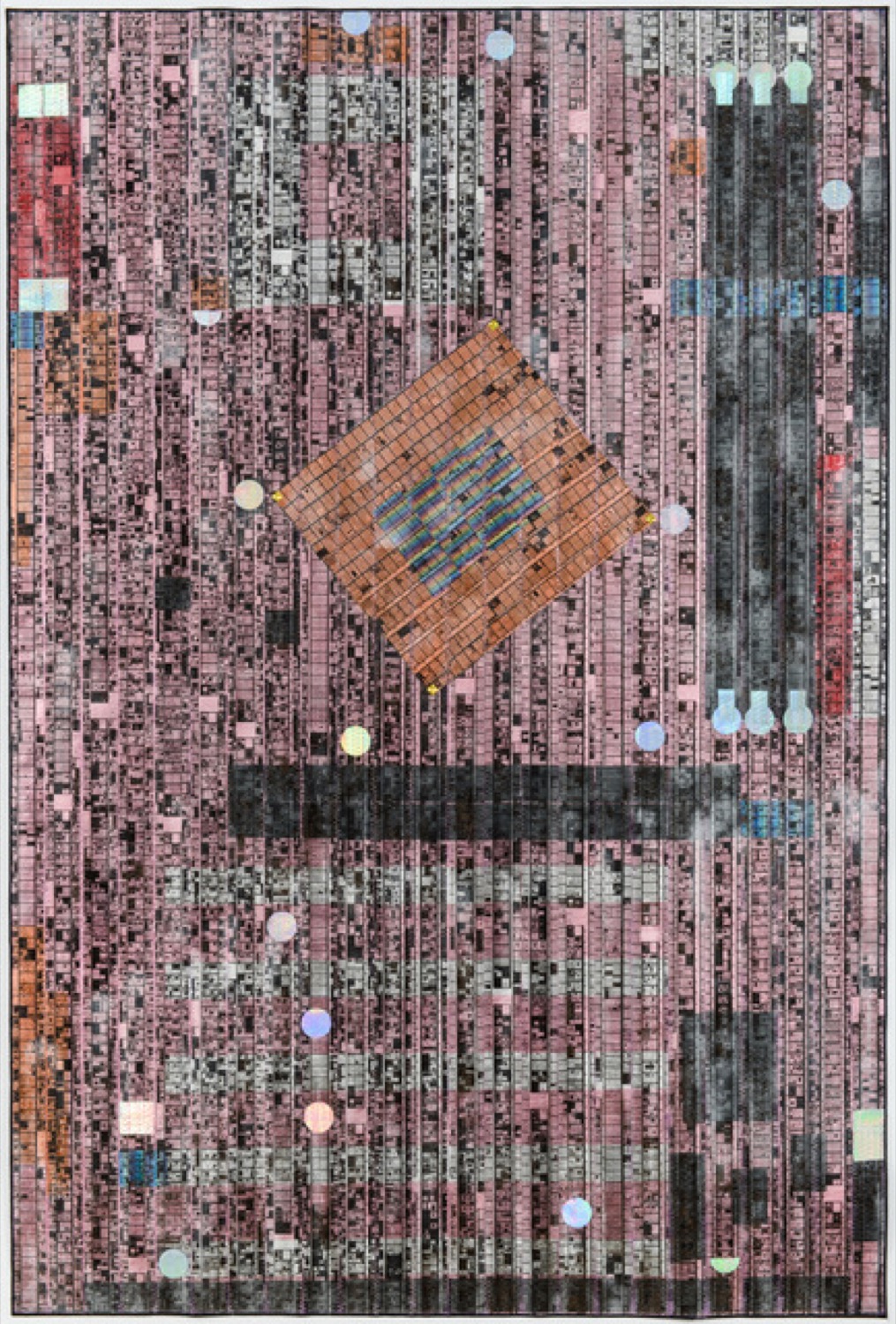
Arturo Alonzo Sandoval, Pattern Fusion No. 14: Motherboard 5 (pink)
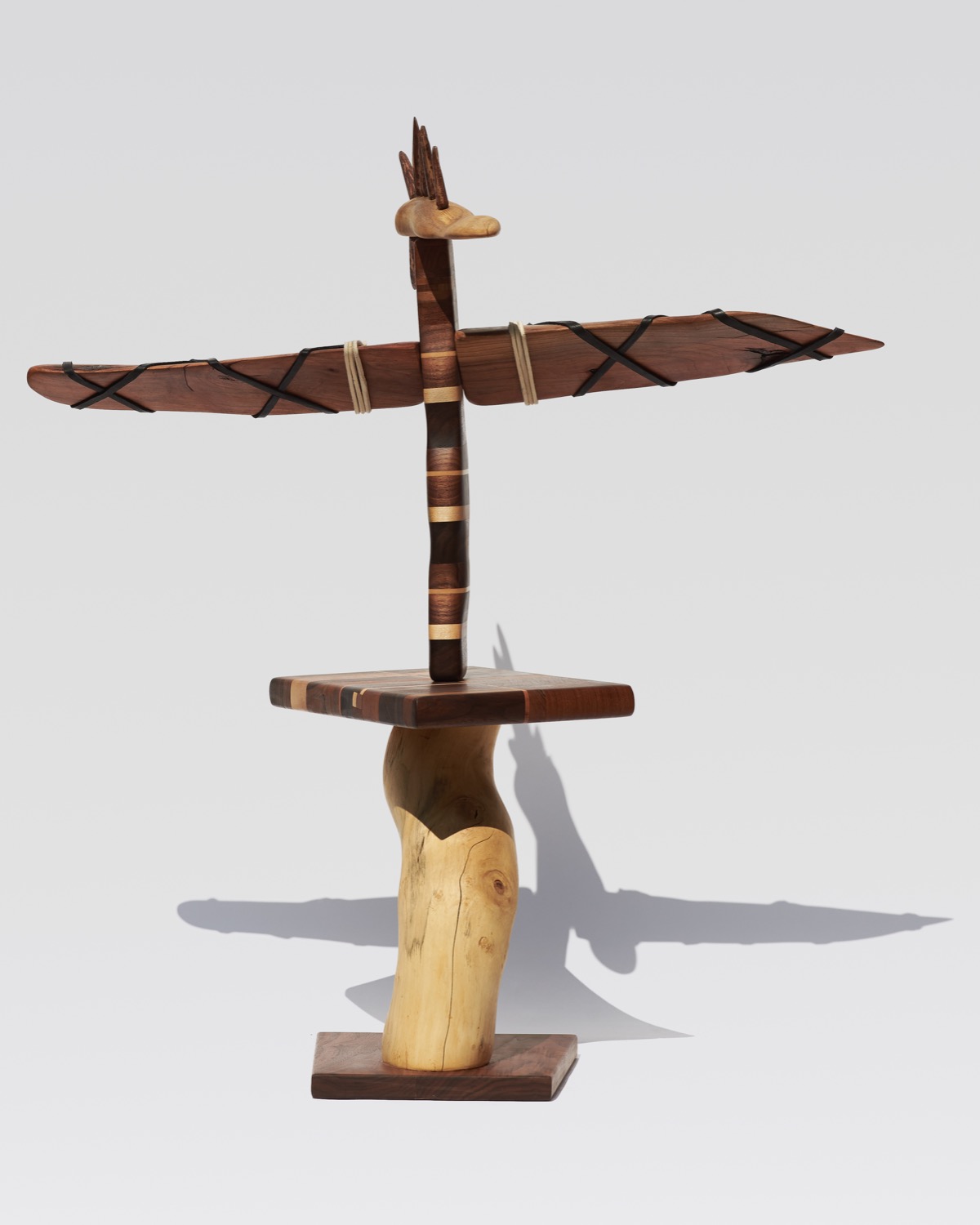
Lorenzo Hurtado Segovia, Kuntur Amaru
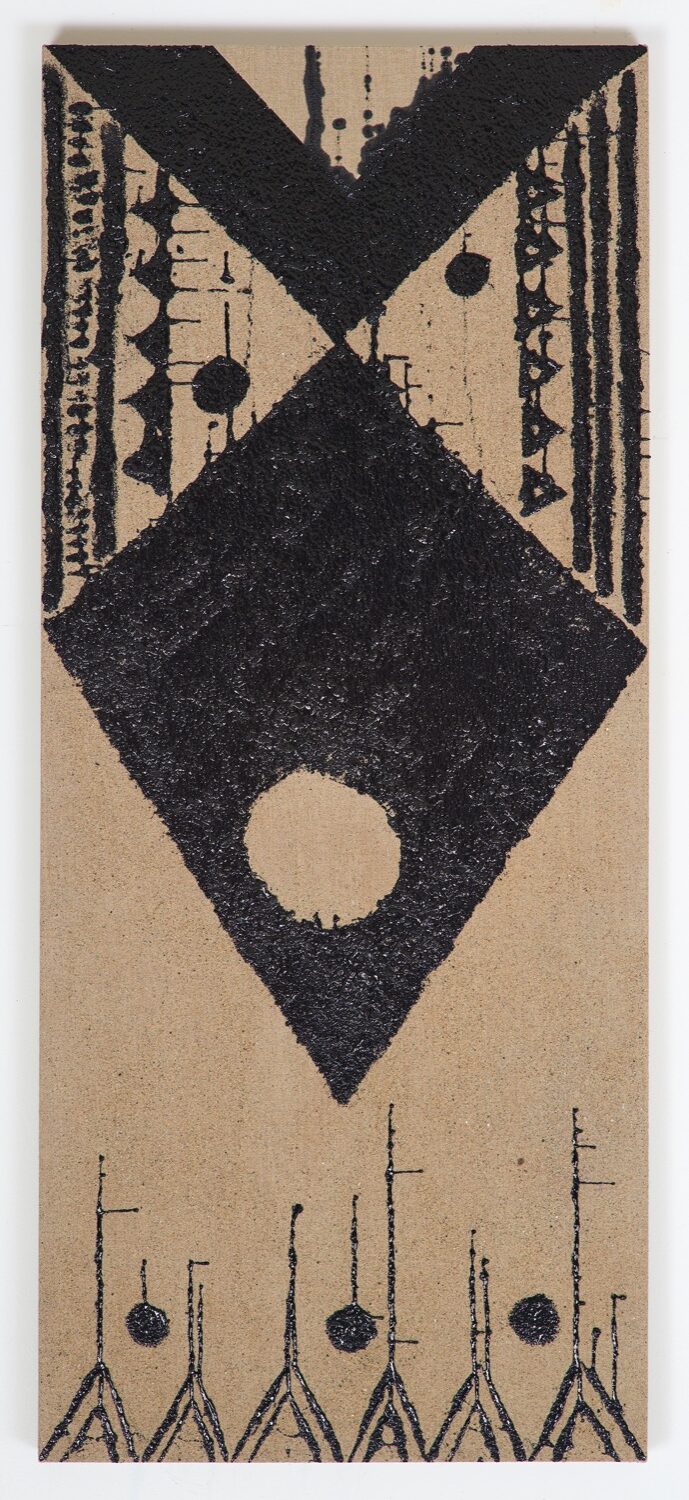
Lorenzo Hurtado Segovia, Untitled 6
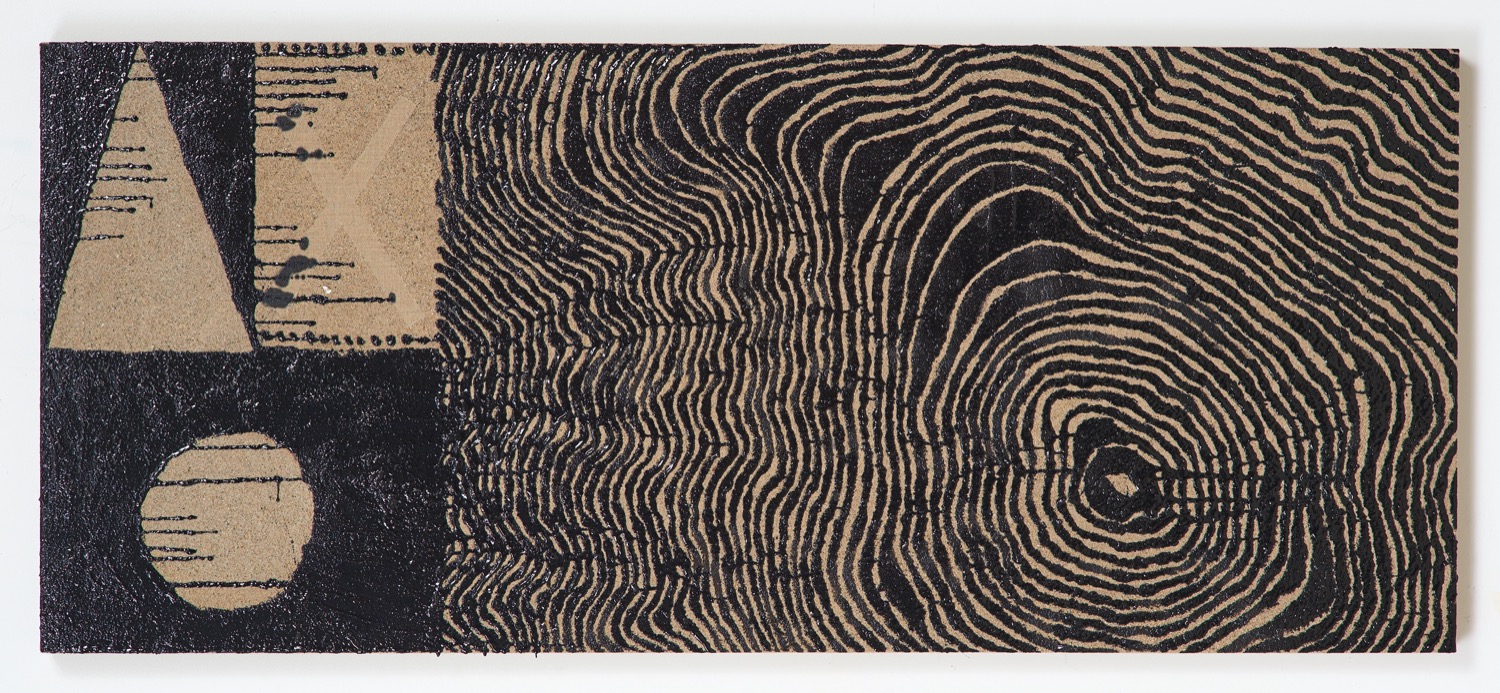
Lorenzo Hurtado Segovia, Untitled 7