Exhibition Page

OPEN25
 

August 2 – September 13, 2025


Jurors:

Taylor Bythewood-Porter

Peter Carlson

Michael Todd

Juror’s Awards

Nurit Avesar

Steffani Bailey

Ruffled

Statement

The world through blurred eyes.

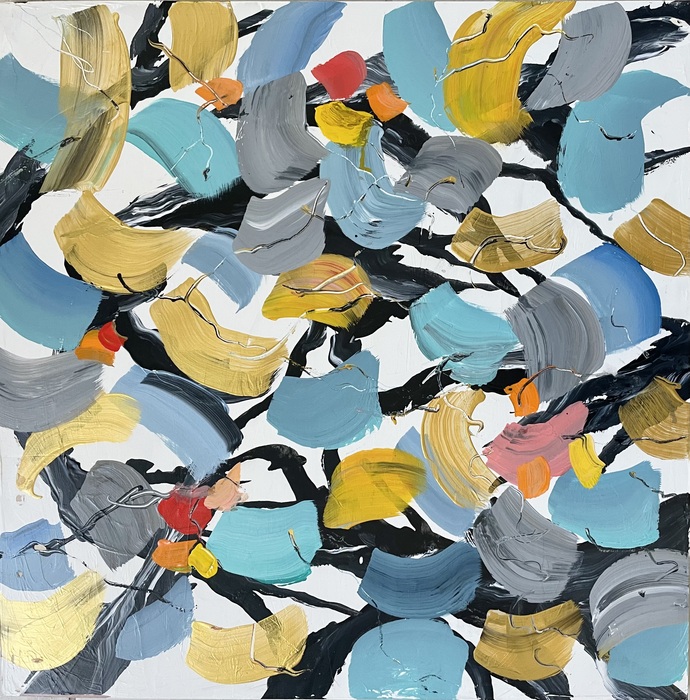
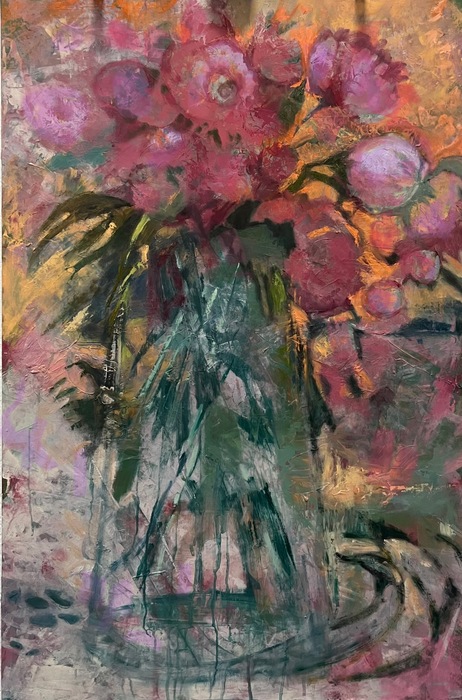
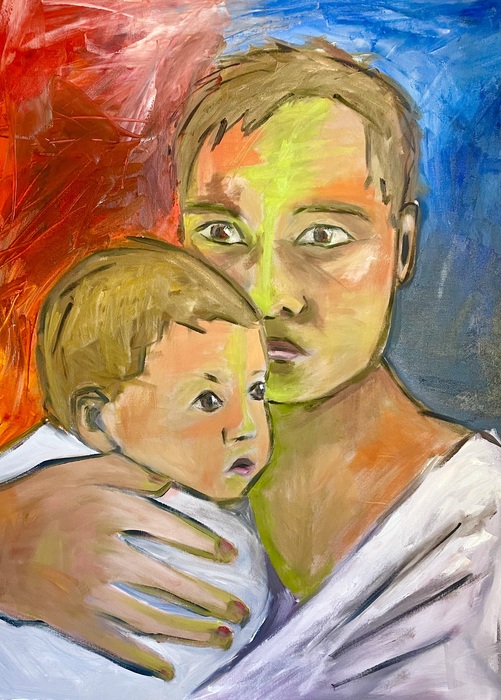
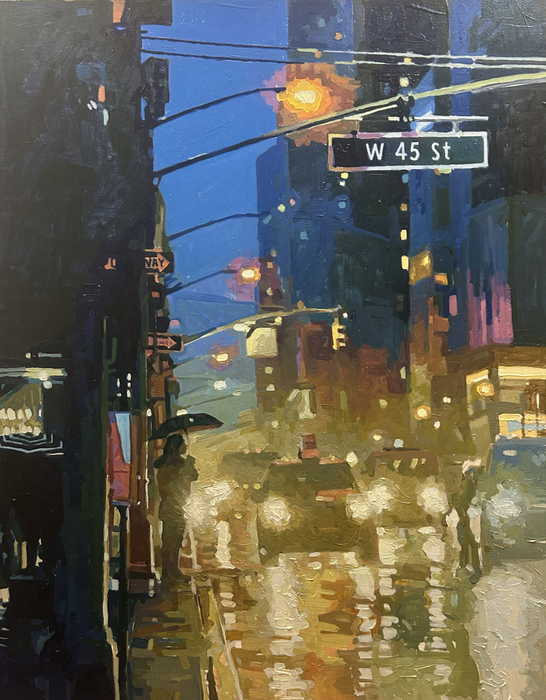
Like many painters, I see myself as a quiet observer—a voyeur of sorts—drawn to the subtle, fleeting moments that often go unnoticed. I paint to bear witness: to emotion, to tragedy, to resilience, and to the quiet beauty in both the ordinary and the extraordinary. Through my work, I try to honor the way people assert their presence simply by living- how every breath, every gesture, is a declaration: I am here. However brief, that existence leaves a mark.

Much of my painting style reflects how I first experienced the world. I was born profoundly nearsighted, a condition that went undiagnosed until I was around five years old. Before then, the world was a soft blur unless it was just inches from my face. That early visual imprint continues to shape the way I interpret and render what I see. My paintings often mirror this—up close, they dissolve into loose strokes and color; from a distance, they snap into focus. That interplay between proximity and perception is at the heart of how I see—and how I invite others to see through my work.
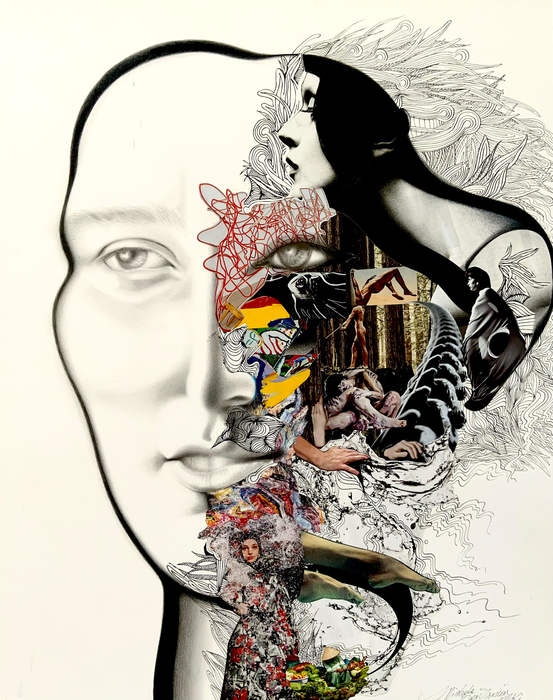
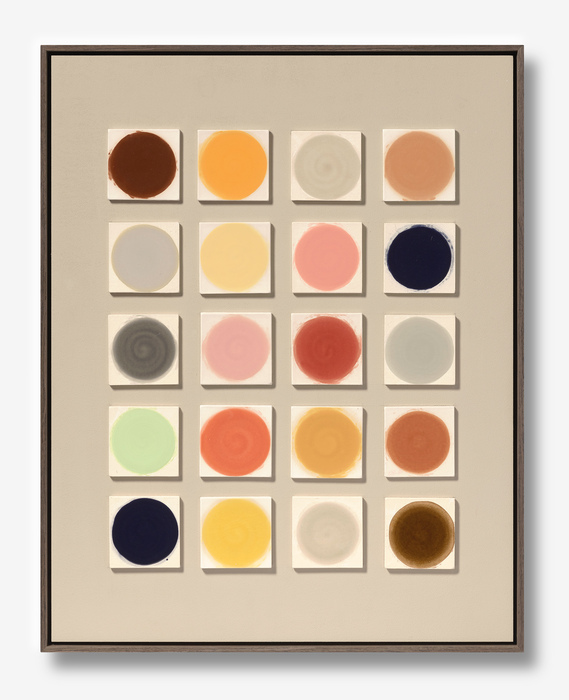
Danielle Bewer

Nancy Blemker

Carlos Briceno

Statement

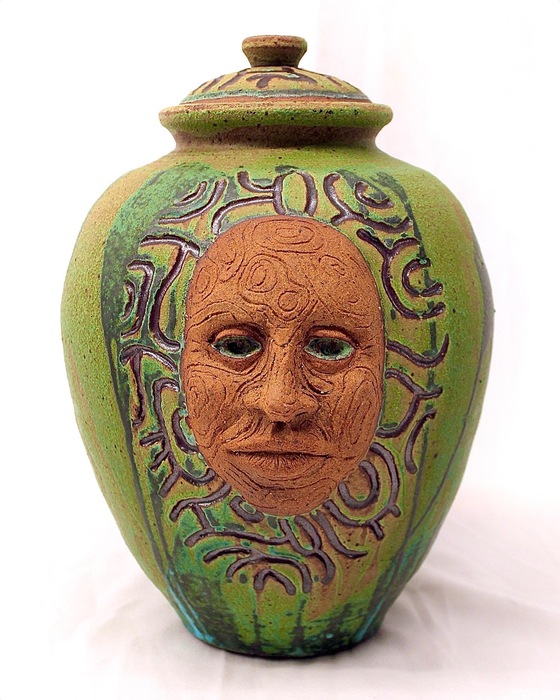
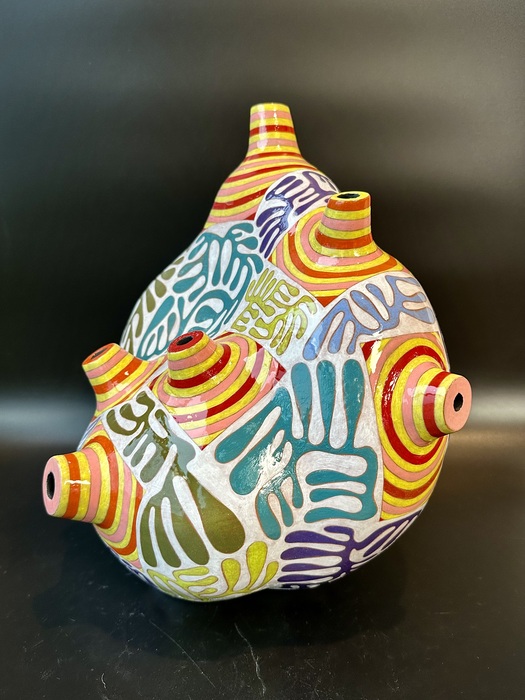
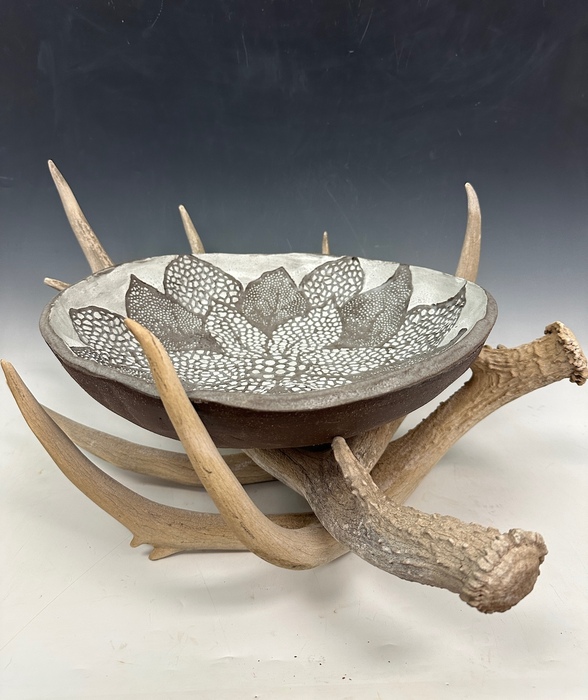
These anthropomorphic vessels are shaped for function but carry something more. They stand as quiet, enduring witnesses to the world around them. Rooted in the earthy strength of ancient ceramics, they blur the line between object and artifact, imbued with the spirit of touch, labor, and elemental change. Each piece bears the imprint of the hand and the transformative power of fire.

There’s a comfort in clay’s permanence. At the heart of this work is a desire to embody the human experience in a material that will outlast me. These vessels begin to feel almost sentient—timeless beings, strong and ancient, like ceramic forms that speak across centuries with silent strength.

Each sculpture is approached like a diary entry. The faces and eyes reflect emotional states, while surface patterns act as traces of identity and fingerprints of a specific moment. These forms are not just vessels but presences. Through them, I aim to hold memory, labor, and the deeply human urge to leave something behind.

Biography

Roxanne Casas is a ceramic artist based in Piru, California. A Ventura County native, she grew up in Fillmore and earned her Bachelor of Arts in Studio Art with a concentration in Ceramics from California State University Channel Islands in 2020, following her studies at Ventura College.

She currently serves as the Instructional Lab Technician for Ceramics at Ventura College and leads workshops through the ceramics program at the Cole Creativity Center, part of the Santa Paula Art Museum. Her practice is rooted in a deep, ongoing exploration of the ceramic process, with an emphasis on technical refinement and artistic growth.

Ler Chang

CUT

Michael Chesler

Marc Chicoine

Eric Conrad

Jessica Damsky

Cassandra Dias

Statement

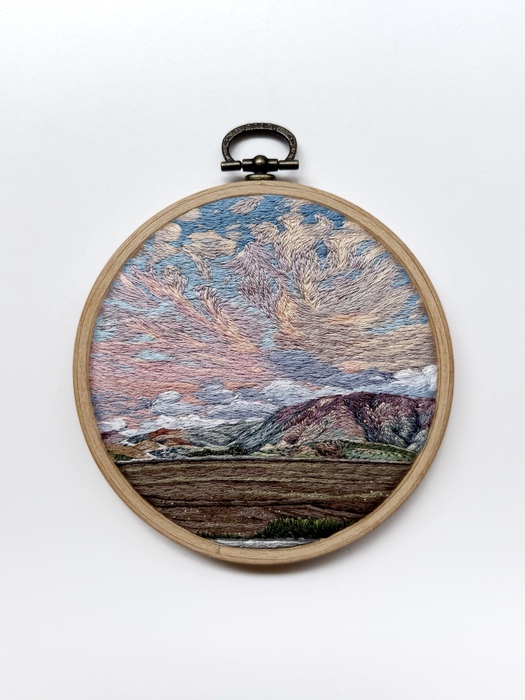
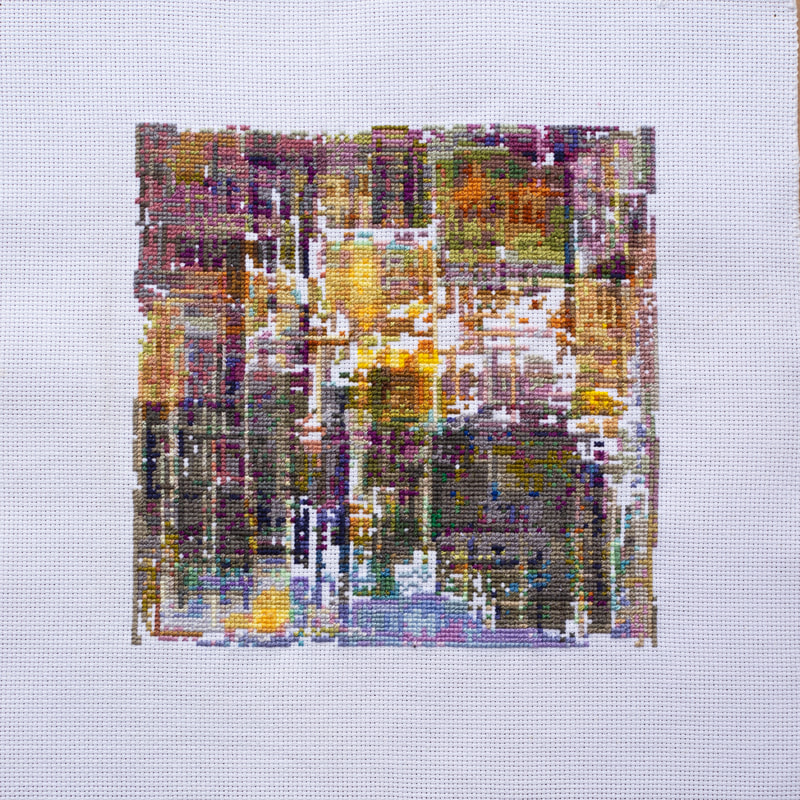
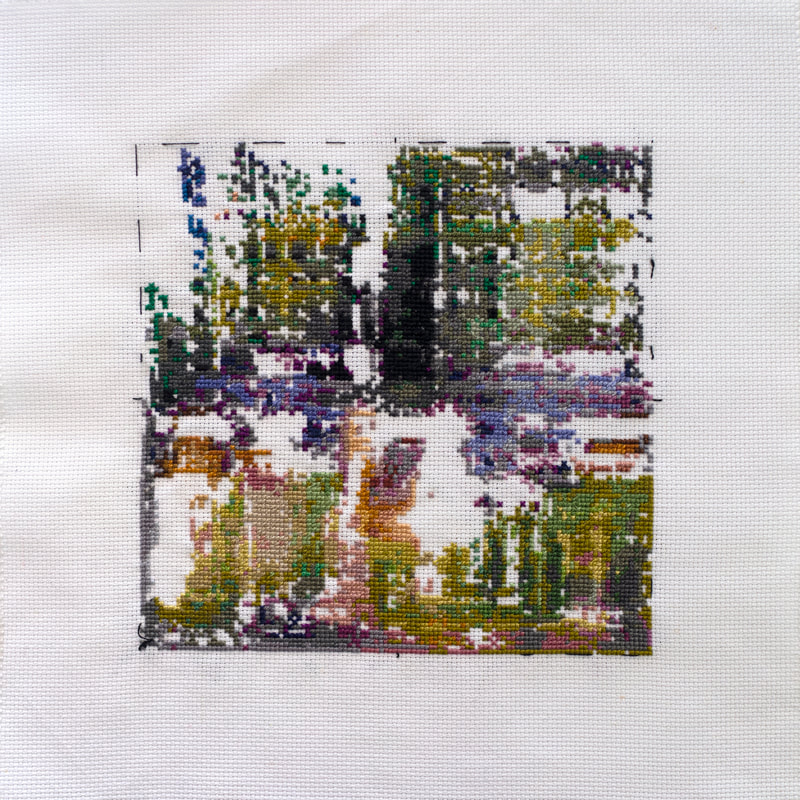
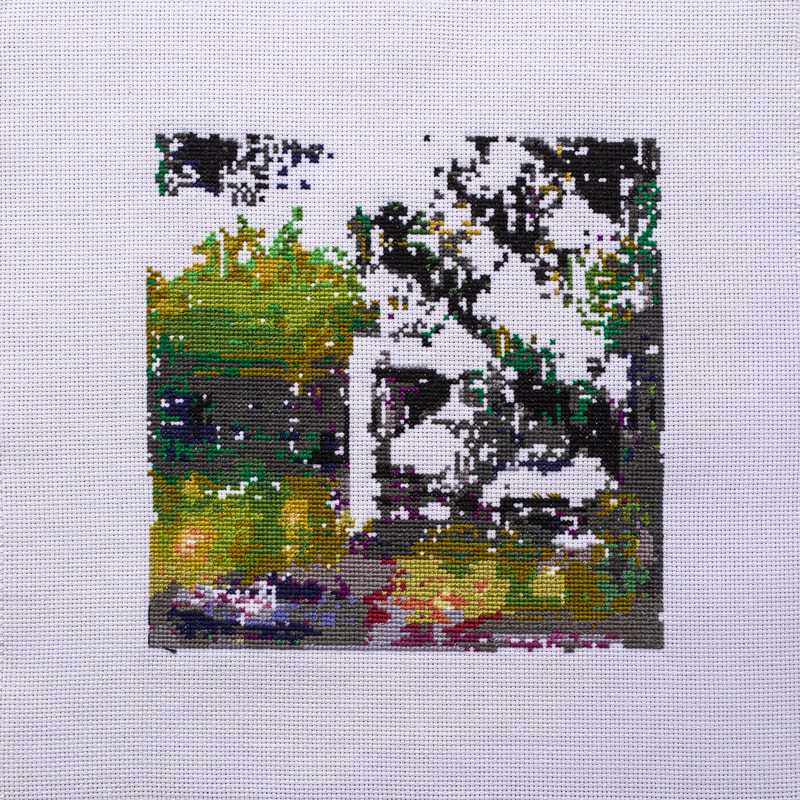
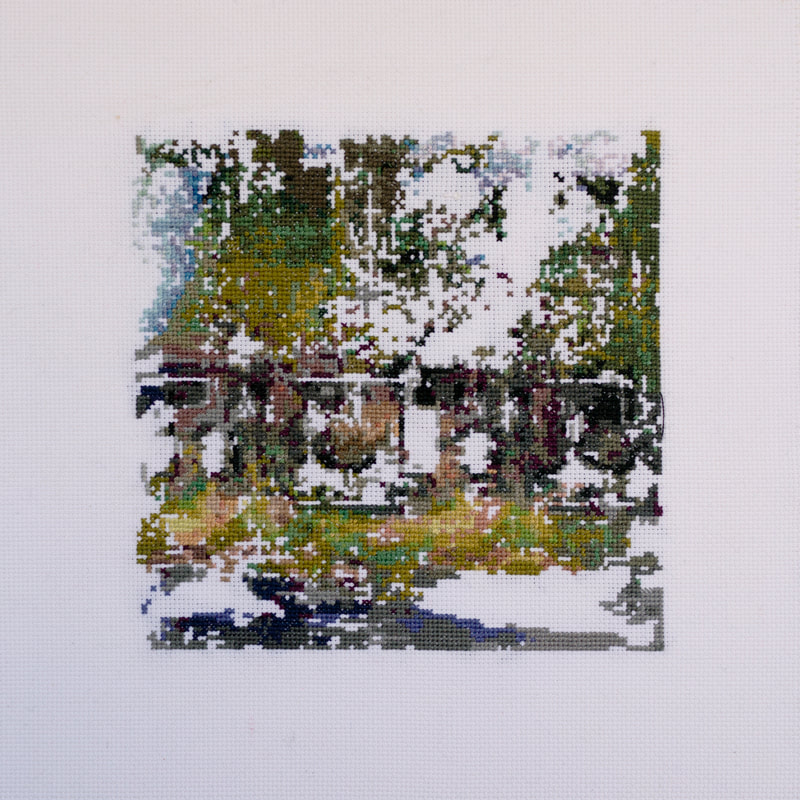
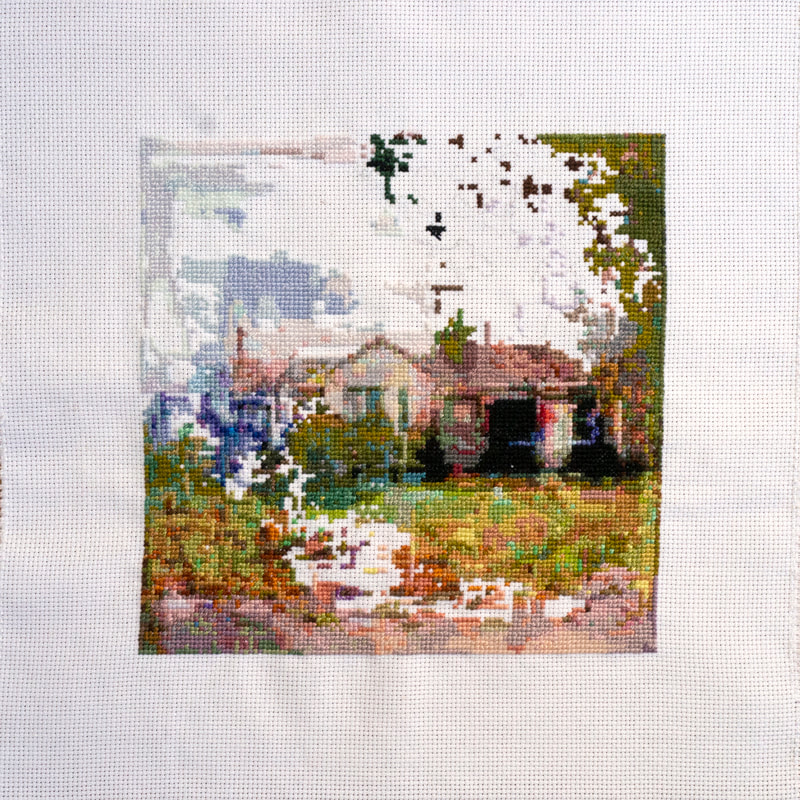
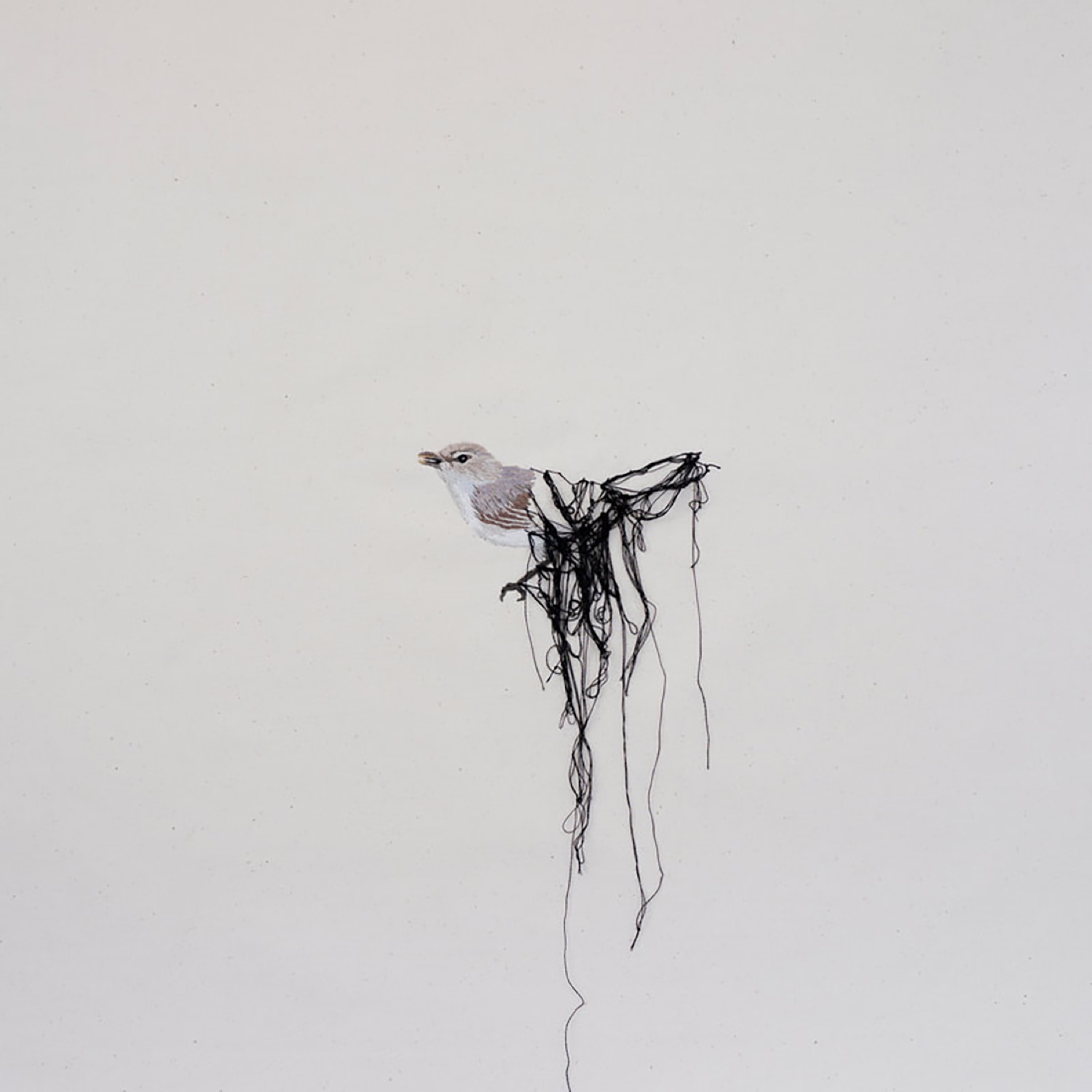
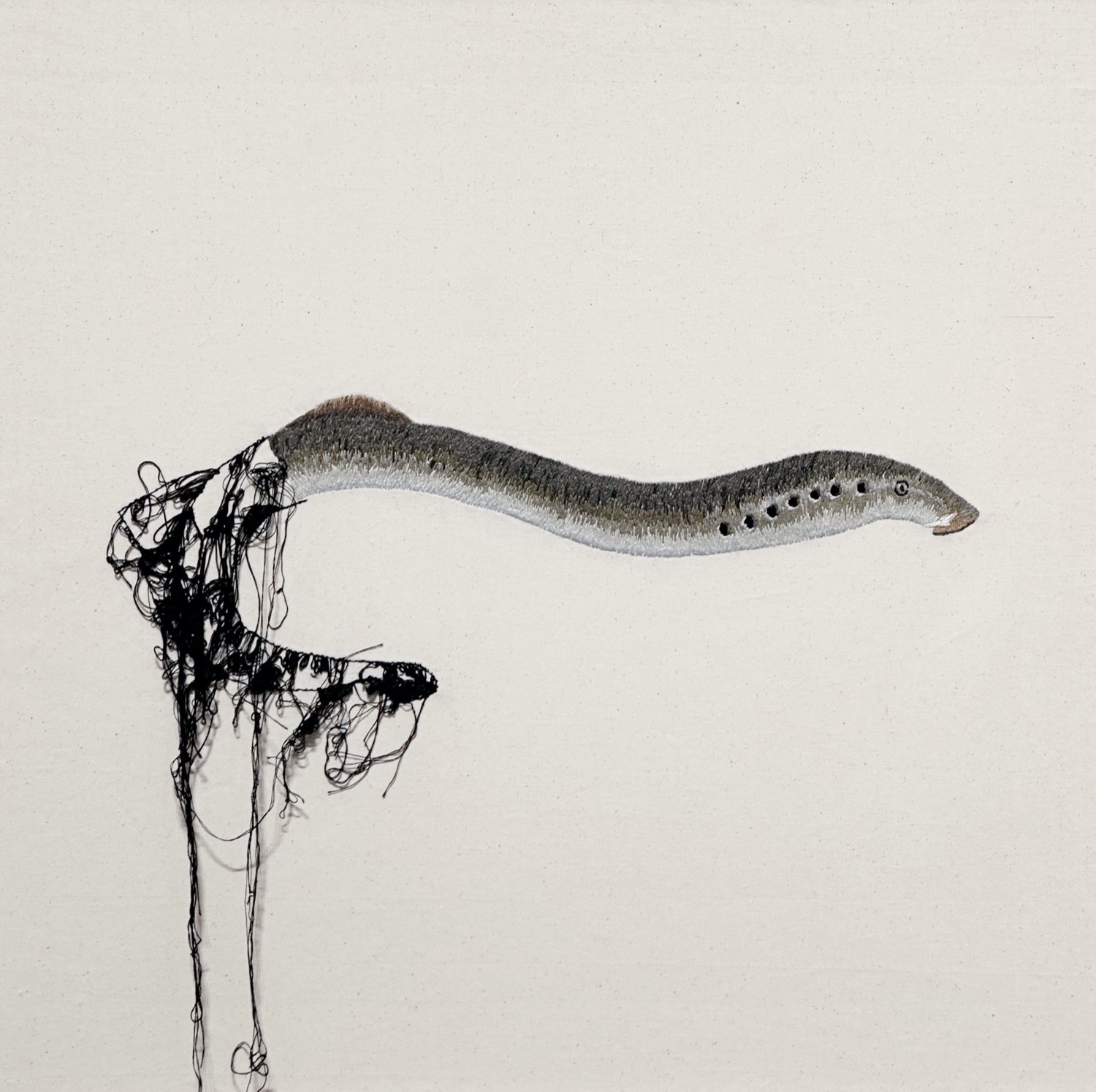
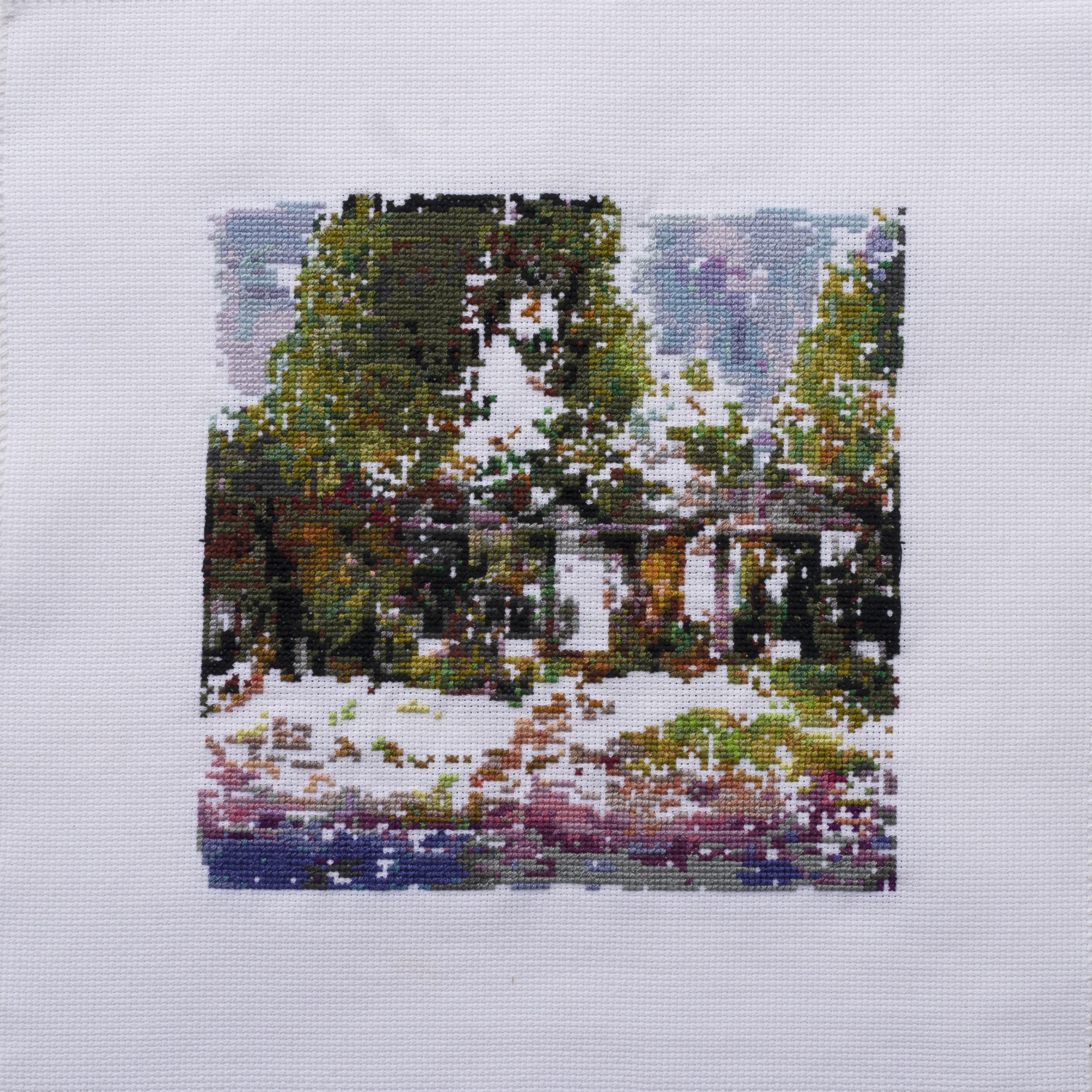
My artwork is inspired by those peaceful places that capture the essence of the memories that remind me of home. For me, embroidery is therapeutic. It goes deeper than simply just drawing fiber through fabric. The process of stitching is a lesson in mindfulness, which also provides a means of channeling my memories and emotions and allows their expression through layers of color. My completed works are tangible translations of my own feelings of nostalgia, places that remind me of home, and places I’ve traveled to and sometimes feel “homesick” for. And perhaps, by creating these landscape pieces, the viewers of my art will also be reminded of their own pleasant experiences in similar scenes.

Mollie Doctrow

Statement

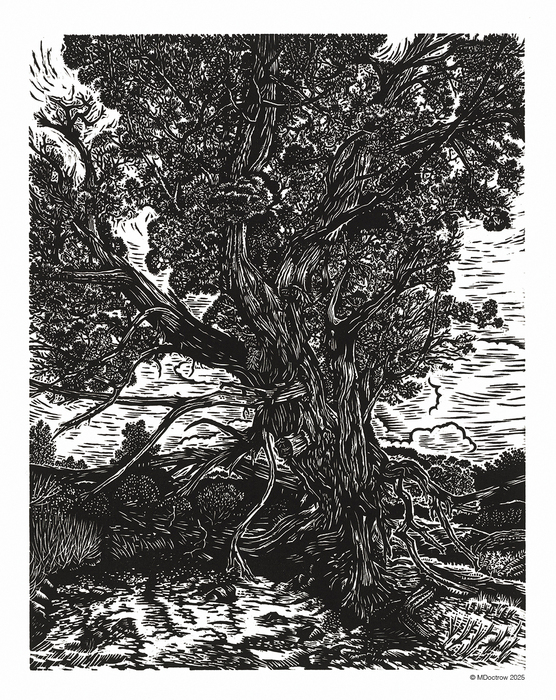
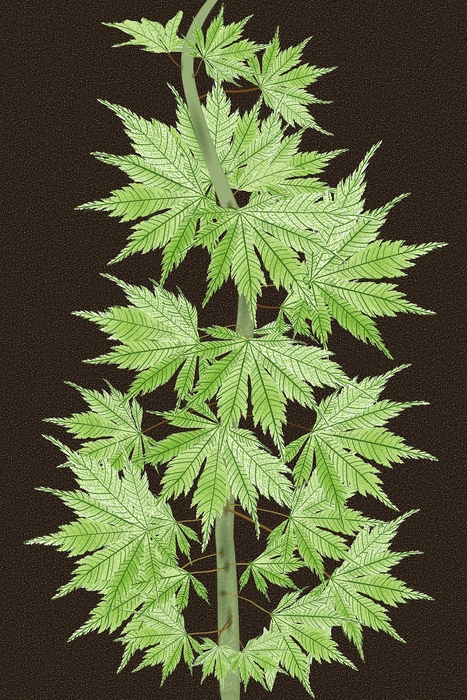
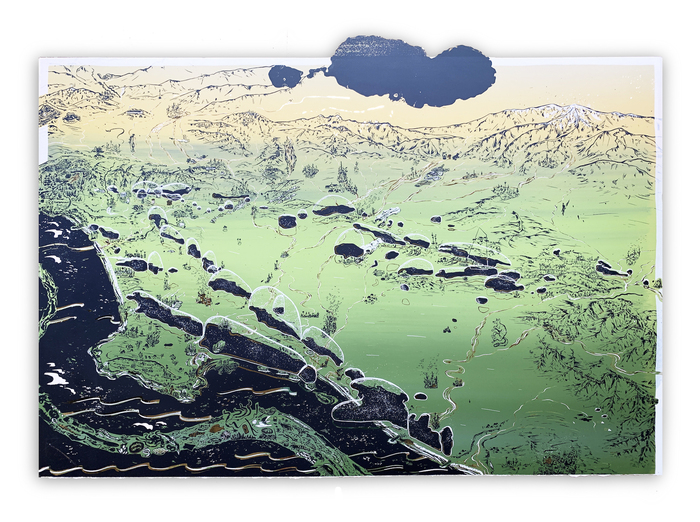
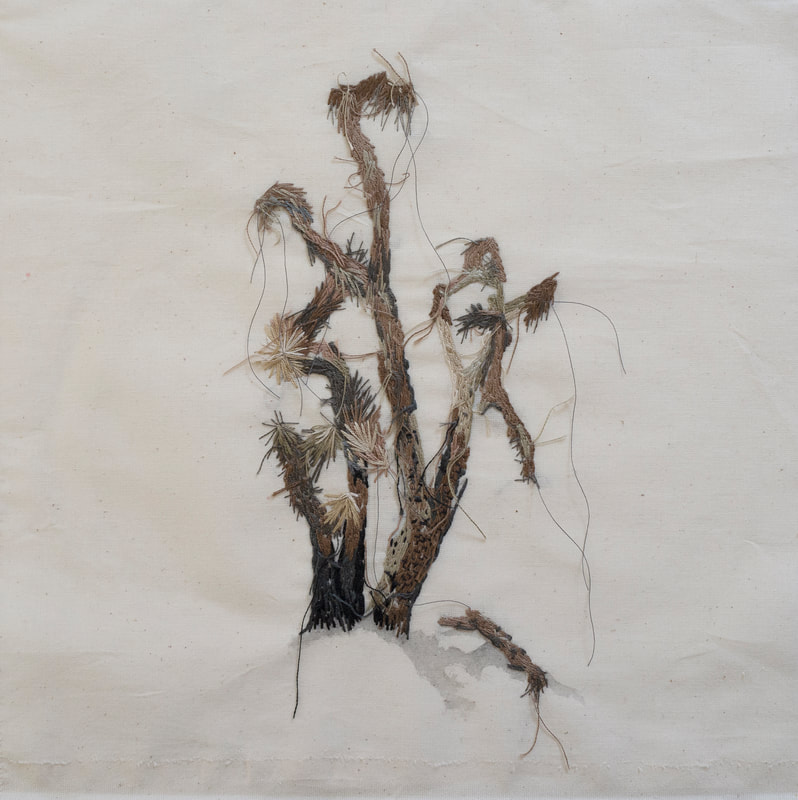
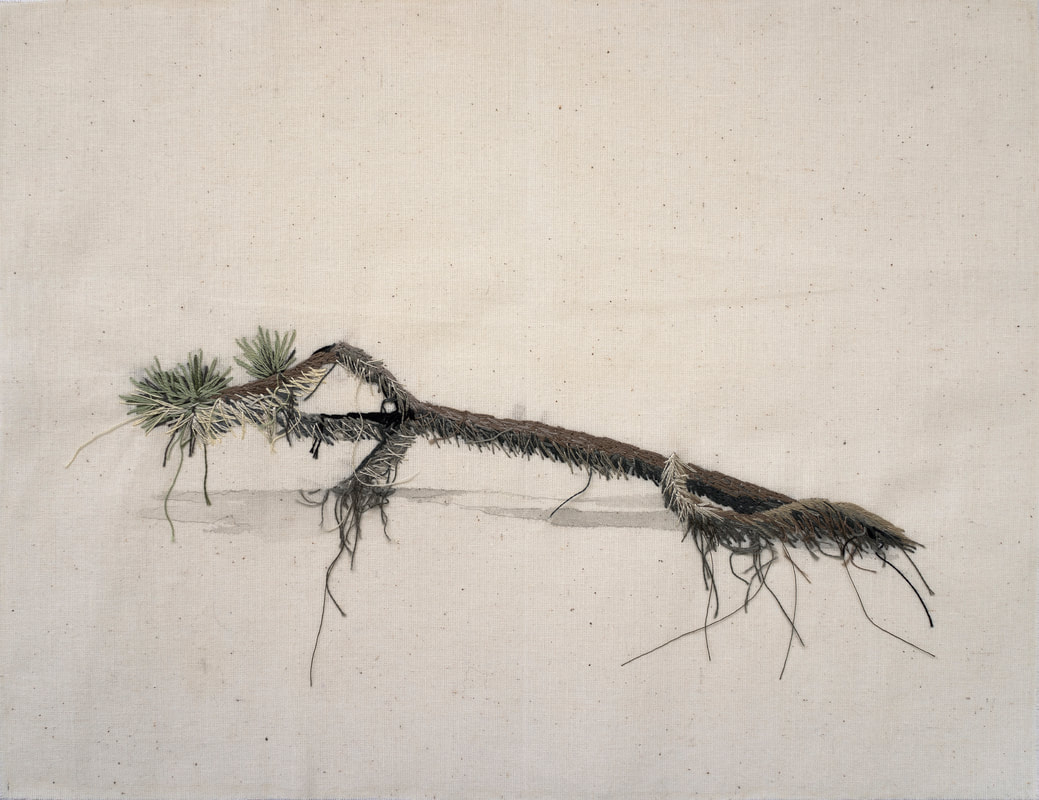
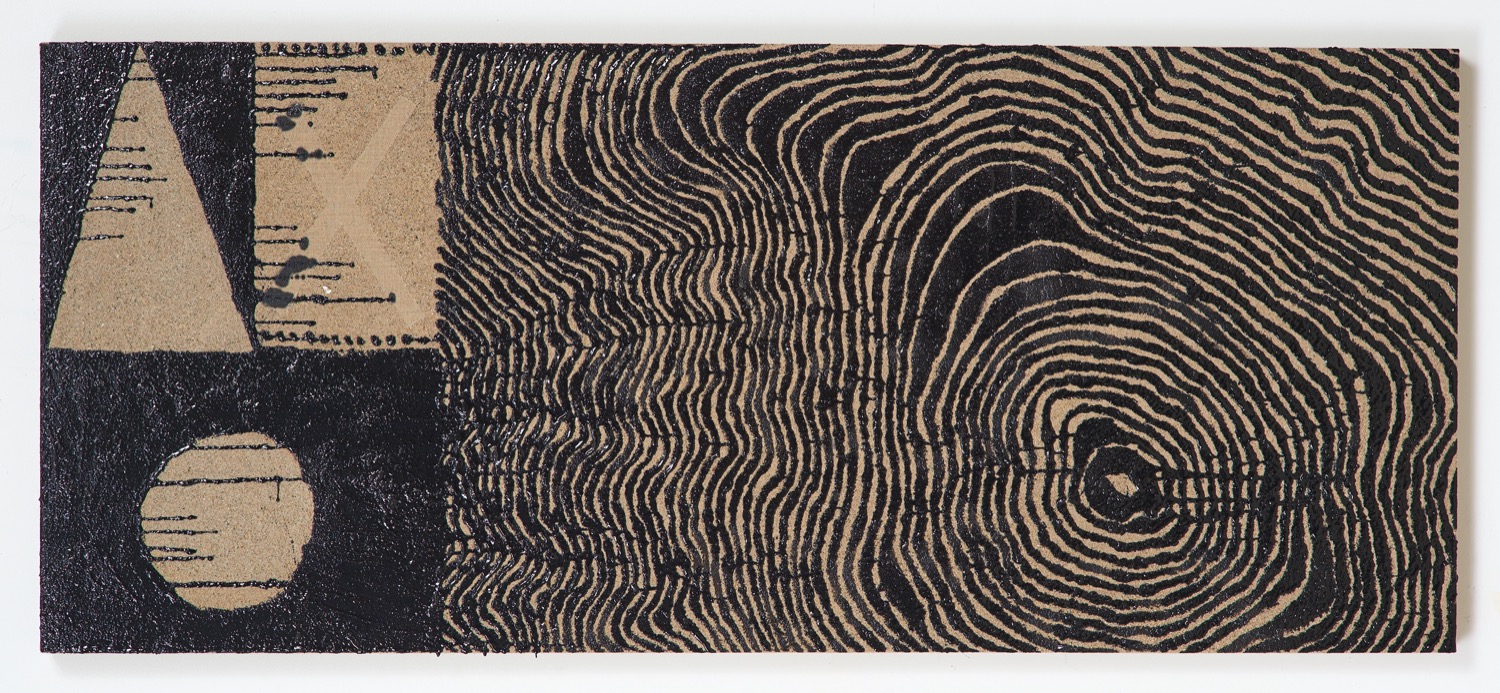
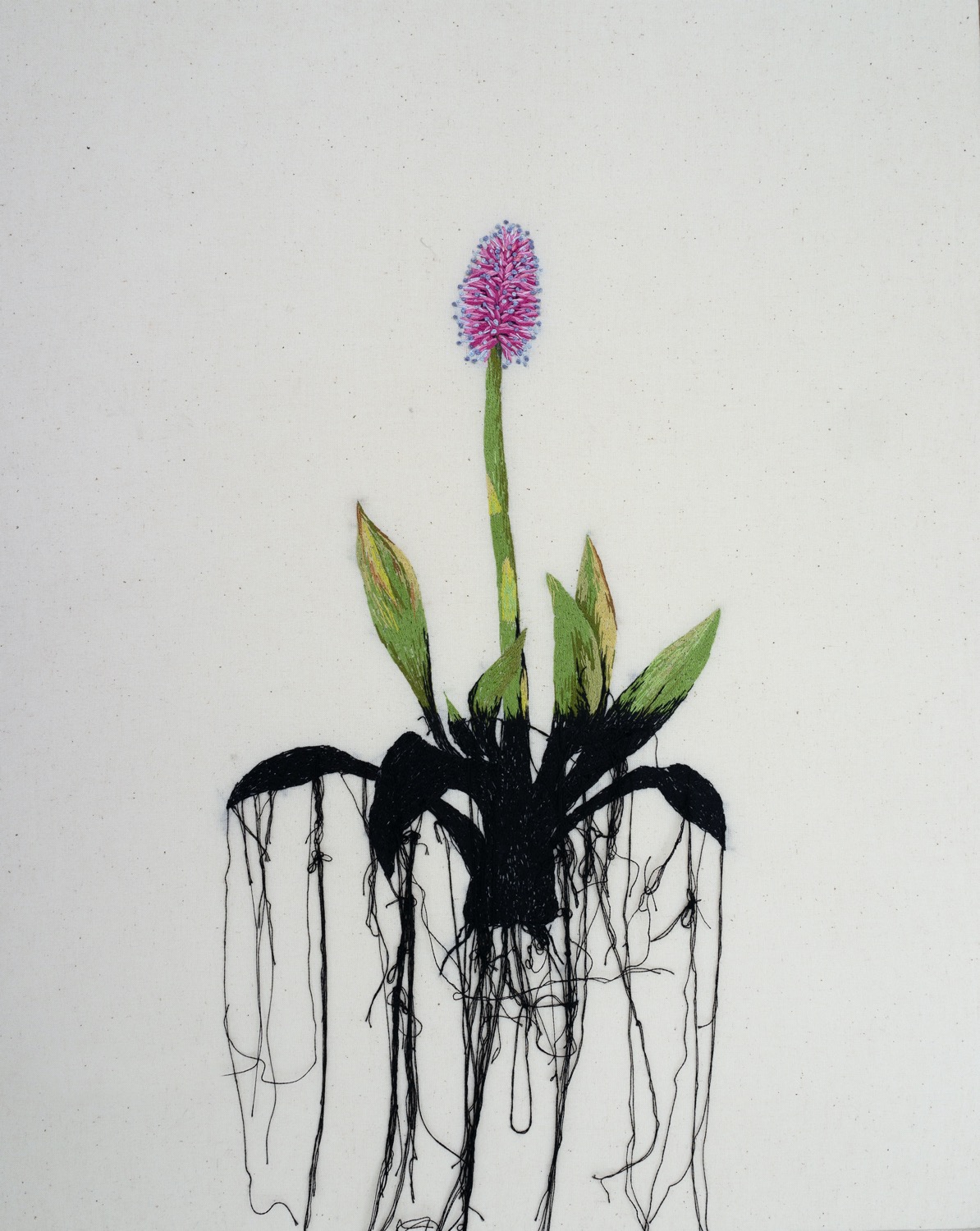
Slogging through swamps, wading through weeds, and getting off the beaten path, I sketch native habitats and make environmental woodcuts. These woodcuts are portraits of plants and plant communities; some endemic, rare, and endangered.

I have held art residencies at Mojave National Preserve, Petrified Forest National Park, Big Cypress National Preserve, Everglades National Park, and Archbold Biological Station. May 2026 I will be an artist-in-residence at Joshua Tree National Park. These residencies provide access to remote and pristine areas, inspiring much of her recent work. Her work has been exhibited nationally and internationally. She is the recipient of many awards and grants.
Doctrow, MA, is Curator emerita, Museum of Florida Art and Culture, South Florida State College. Her studio is located at Studio Channel Islands, Camarillo, CA.

Lynn Dodge

Kevin Frech

Statement

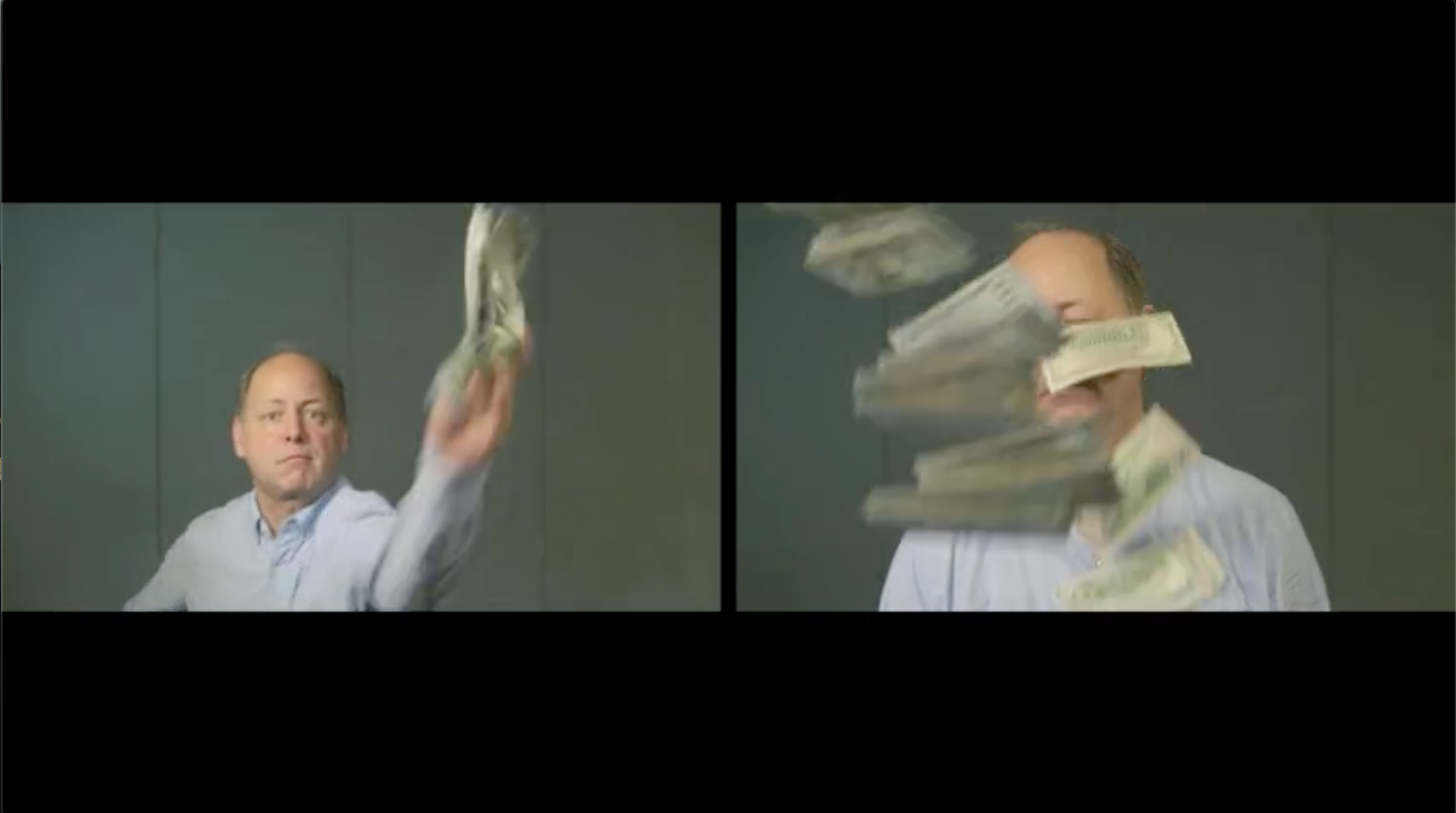
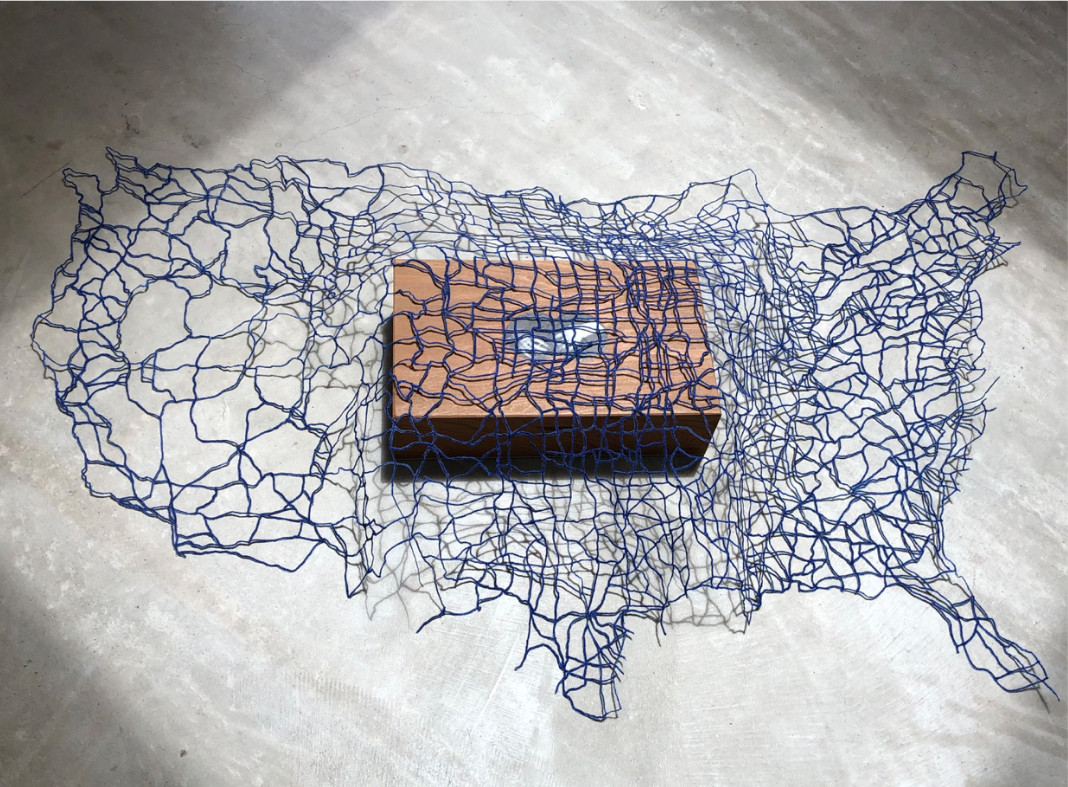
Kevin R. Frech (USA, lives/works New York City) is an award-winning artist and filmmaker whose uncompromising but humor-filled work examines the contradictions of society: interconnectivity vs. alienation, plentifulness vs. scarcity, immediacy vs. dislocation, and consumption vs. conservation. He focuses on explorations of “value,” not merely in the sense of “price,” but as a shared ideal: What do we as human beings value today? And how do we assign those values? His work thrives in the disconnect between the way we hope to see ourselves and how we actually exist.

Richard Gilles

Barry Goldstein

Juan Granados

Honorable Mention

Statement

As a visual artist, I am interested in imagery that both embraces, but denies… entices yet disgusts. I find, from personal observation and lived experience, that the vile and the exquisite are a cyclical continuum that encompasses all of human experience. I strive to bring visual representation to not merely human events (sex, death, birth, consumption), but to reveal the ephemeral, un-mentionable quality of such experiences.

While it is true that these events are part of every being’s existence, it would be wrong to assume the banality of such incidents. From birth to death, these events mold the individualistic nature of every human. However, it is also because of these shared experiences that one can identify with another outside of the self. Sex, death, birth, and consumption are not exclusive events encapsulated in time, but temporal experiences that ebb and flow. My artwork is a testament to this fact of existence in a cycle.

My practice is not limited to one medium, but is spread across numerous visual means in order to properly express itself. I employ drawing, photography, and bookmaking alongside video and interactive animation. I do not make arbitrary distinctions between classical or contemporary, high or low modes of making art. I do however, work in such a way that projects proceed along a gradually expansive path that begins usually with drawing and ends with digital media. The history and physicality of drawing enriches and expands my video and interactive work.
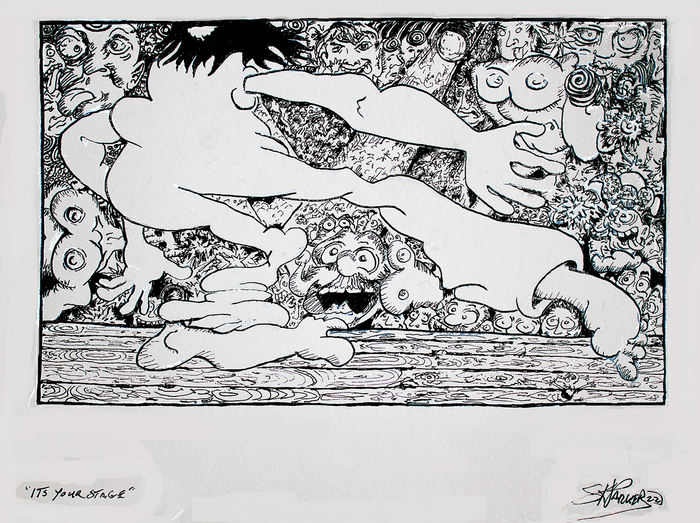
Digital media, specifically I feel, performs best under artistic guidance when used as a vessel for multiple mediums and histories. Through this conglomeration of the material and the digital, I am also able to encompass and engross the viewer through the dimension of time as well as space, thereby engaging the viewer in a more expansive visual connection. Since the content of my work deals with the ephemeral nature of the body and human perception, I must work in a medium that allows me the possibility of truly absorbing the viewer into the concepts and visuals of the work. Digital media has provided me such an answer.
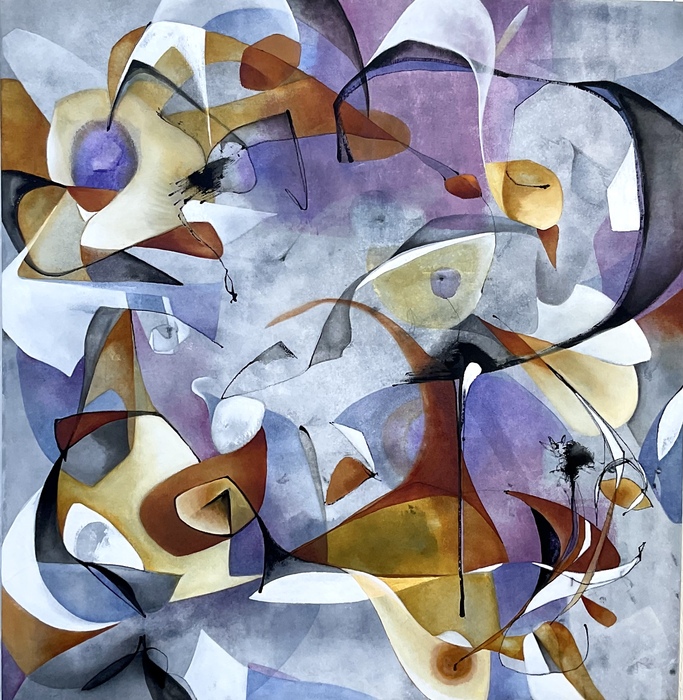
Life is not a binary experience. One does not simply experience happy/sad or calm/angry. Human experience is complex, subtle, and above all fleeting. My work strives to embody this, and reflect this essence back upon the viewer. By enacting the grotesque realities of life within the pictorial beauty of the hyper natural, I hope to encapsulate the transient idea of shared humanity.

Biography

Erin Robinson Grant is a multimedia artist currently residing in Portland, Oregon. Originally from Indiana, Grant earned her BFA from the Cleveland Institute of Art and MFA from Indiana University. She has also attended the University of Tasmania in Hobart, Australia and The Burren College of Art in Ballyvaughan, Ireland.  Her work deals with birth, death, and our abject responses to it. She explores these themes through an amalgamation of video, animation, drawing, installation, and performance. Grant has exhibited nationally at The Kinsey Institute, the Museum of Contemporary Art Cleveland (MOCA), SPACES Gallery, and at the Yellowstone Art Museum. Additionally, she has participated in several international residency programs such as Spark Box Studio in Canada and Arts Itoya in Japan. Grant has exhibited at a variety of venues throughout the West Coast including Gallery 114, University of Portland, the Umpqua Valley Arts Center, Blackfish Gallery, PUNCH Projects, The Arts Center, Verum Ultimum, Lower Columbia College, Central Washington University, and the Sanchez Art Center.

Mary Grisey

Statement

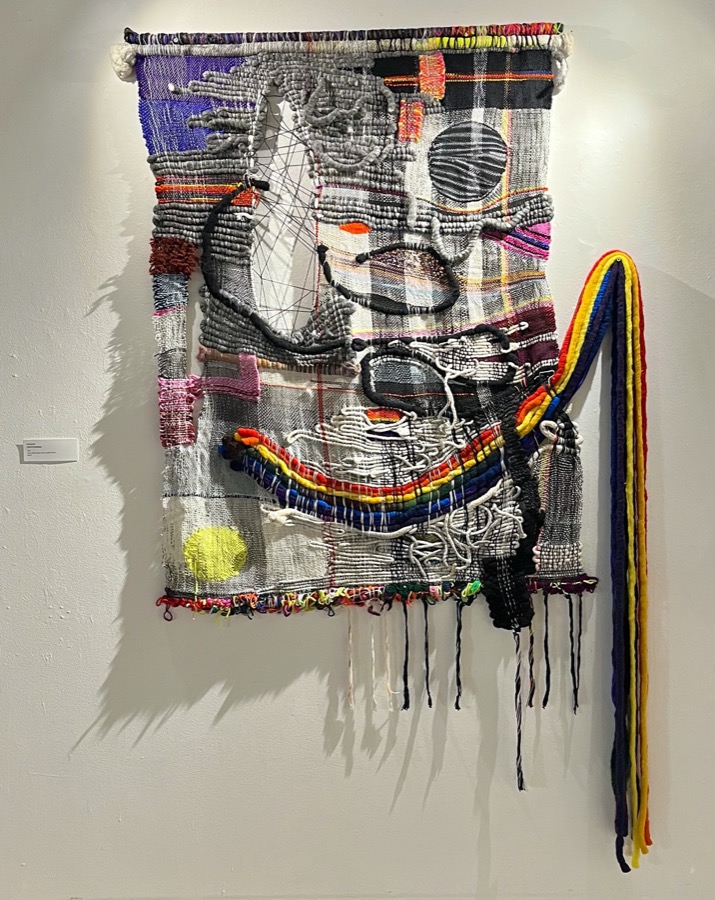
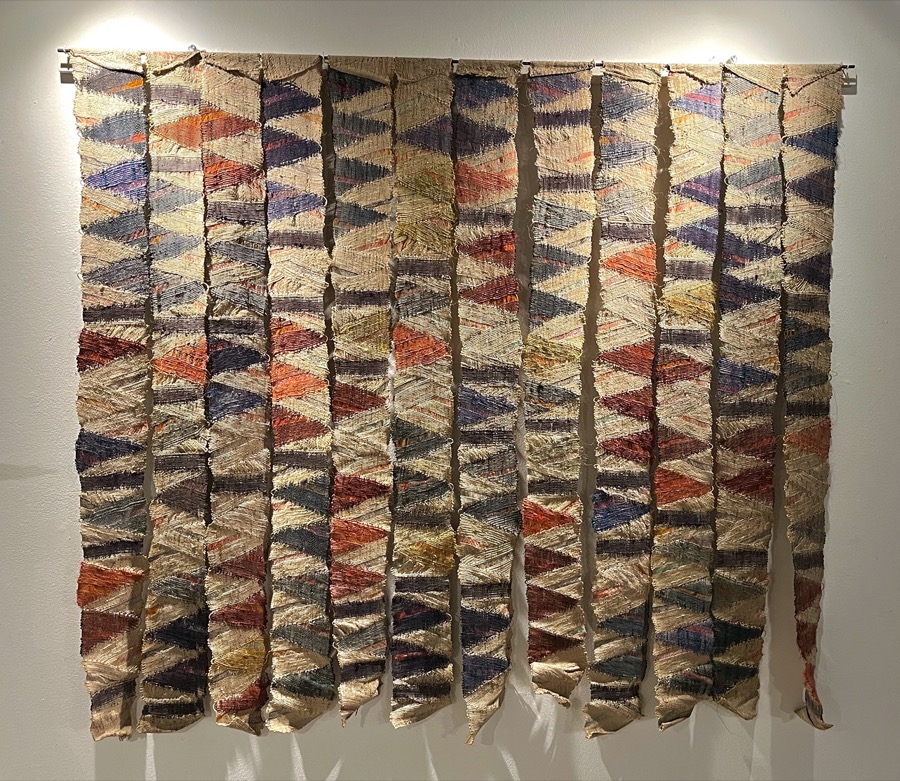
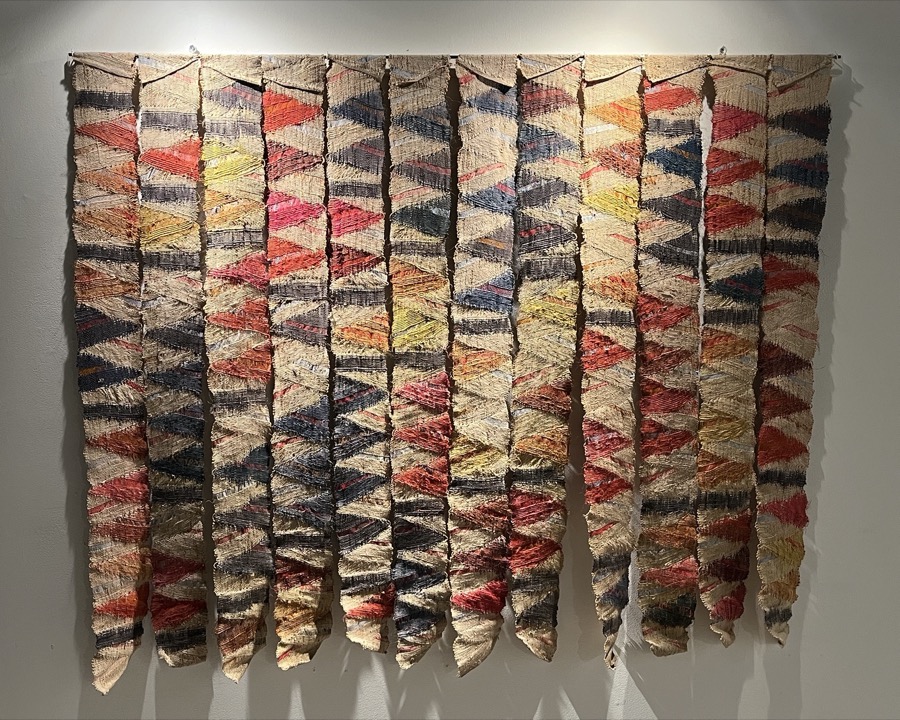
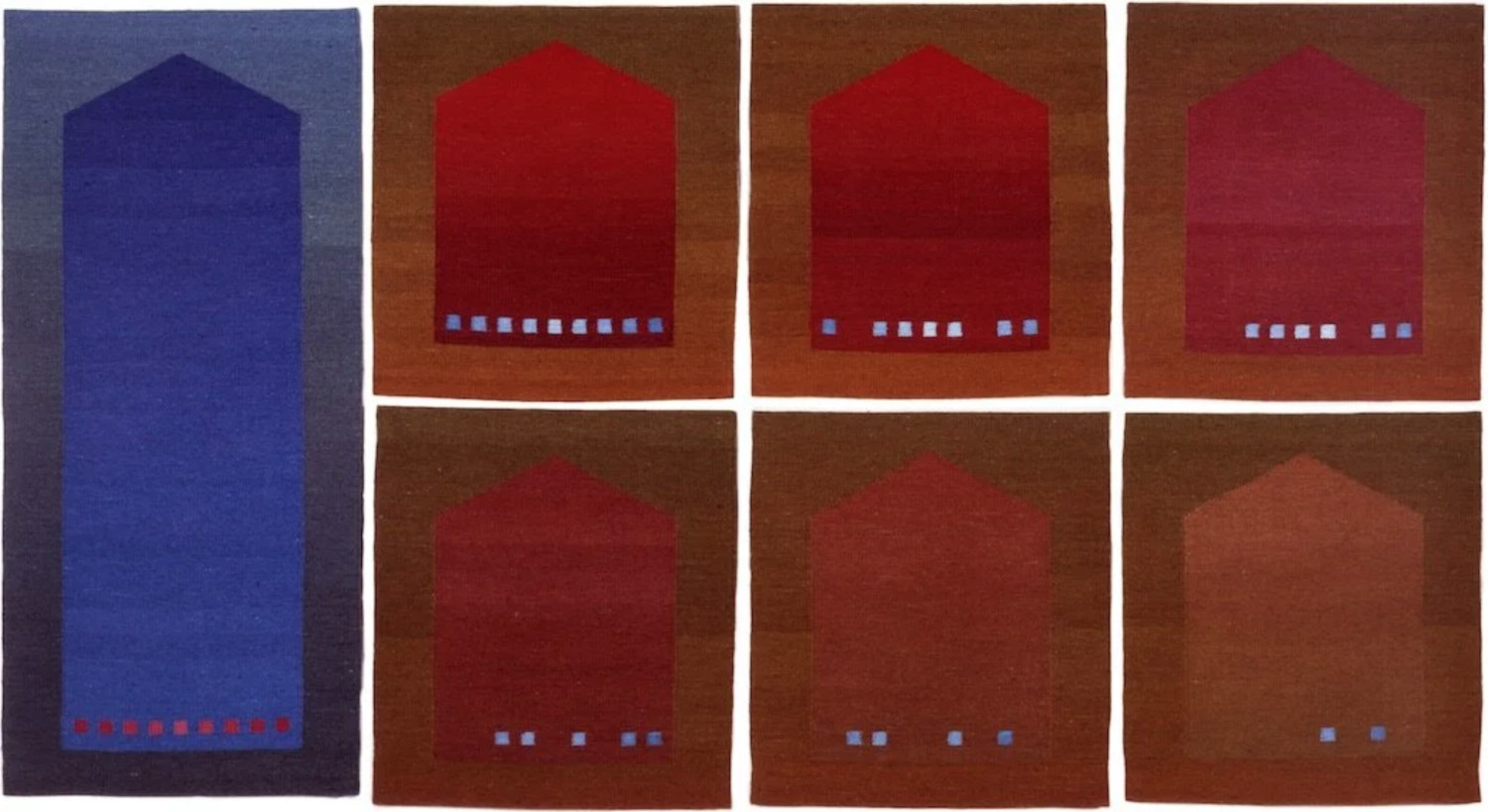
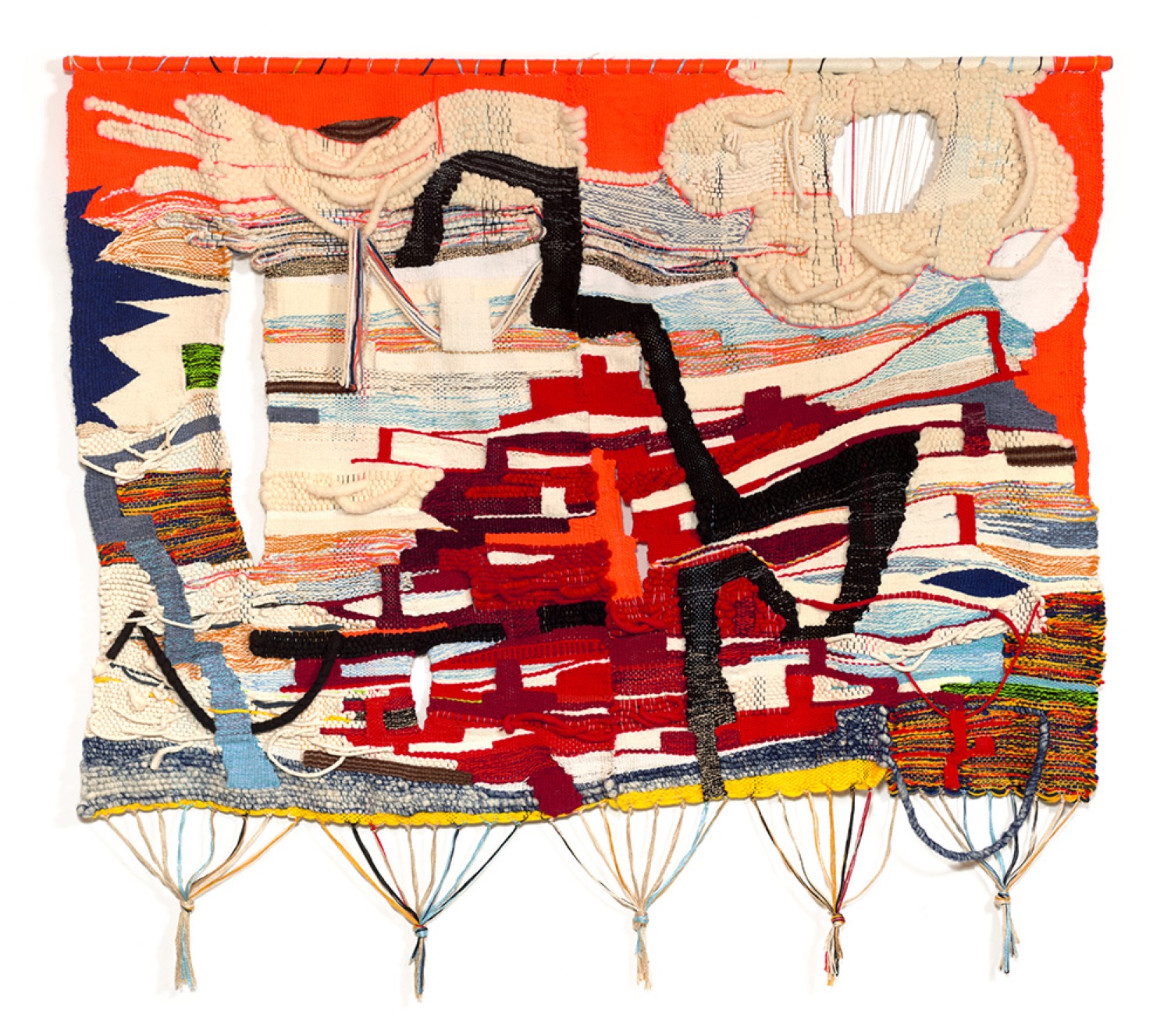
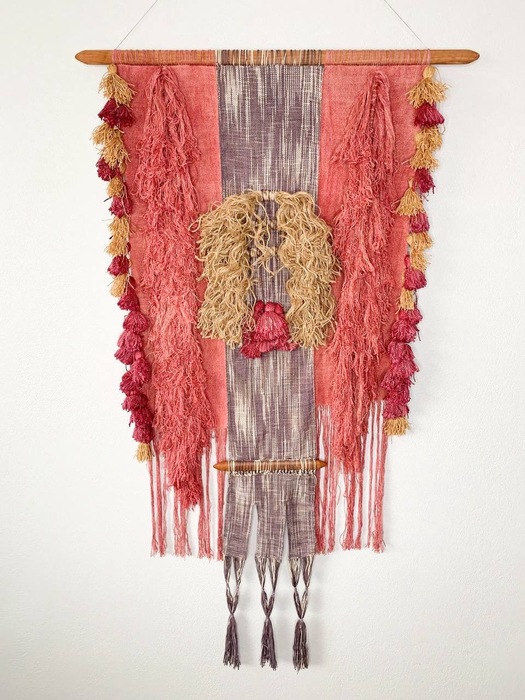
Mary Grisey is a textile artist based in Long Beach, California. She has exhibited her work across the United States and Canada including Los Angeles, New York, Chicago, San Francisco, Toronto and Quebec.

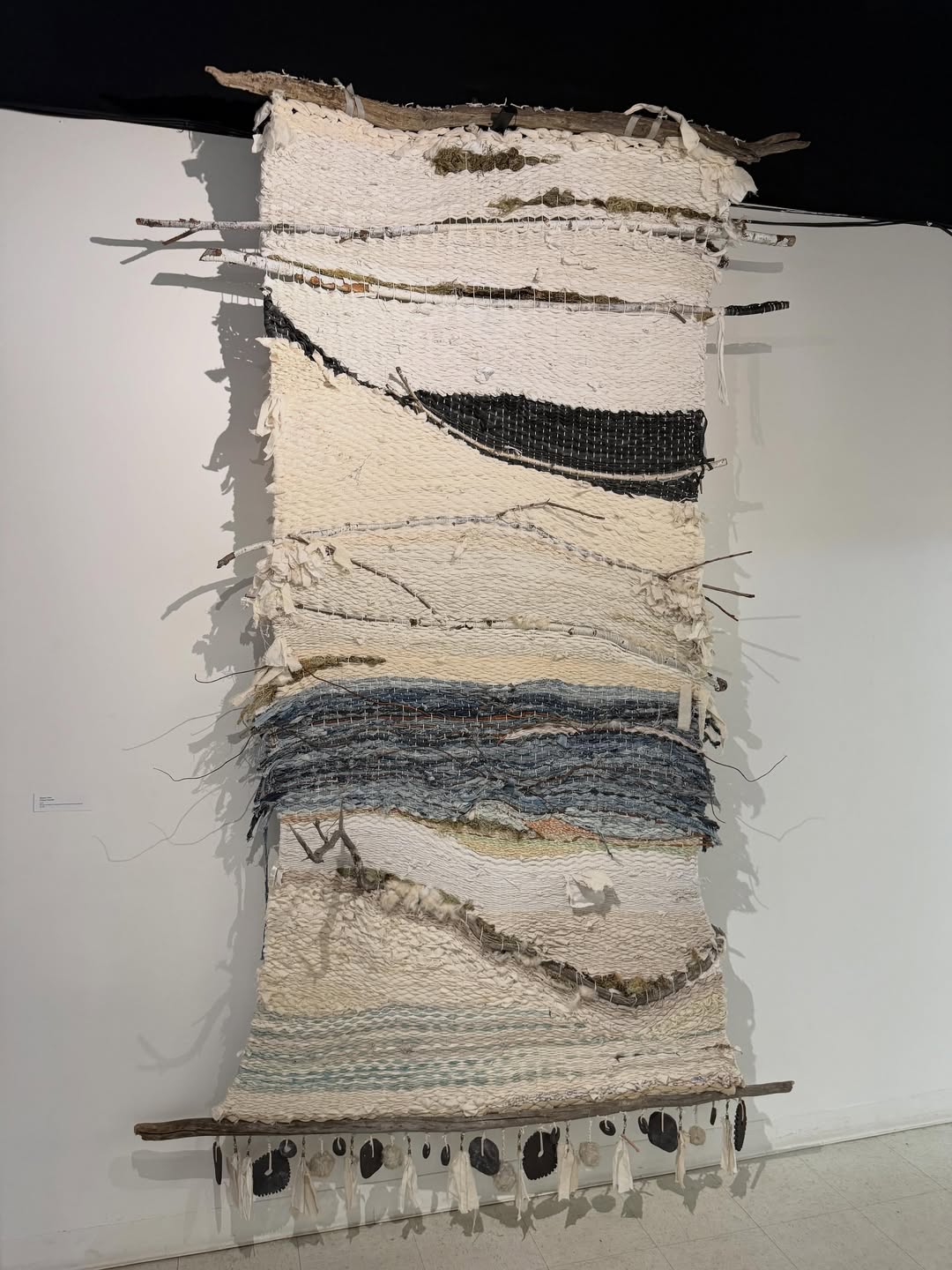
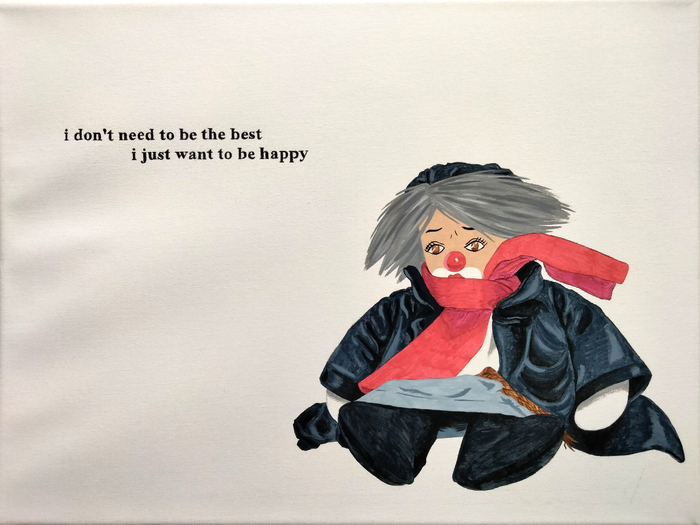
Inspired by the power of spirit within us all, Mary’s weavings evoke a totemic reminder that our life is a sacred act of love and an impermanent experience of both life and death. She is endlessly inspired by her soul’s remembrance of ancient civilizations, spirit worlds and the human condition as catalysts for her work. Her work bears visible traces of the hand—bits of imperfect warp and weft—and the inexact results of hand-dyeing. Transformation is central to her practice: a metamorphosis that explores the ruin and beauty of the human form to reveal our infinite Spirit.
James Gunderson

Brent Hanson

Joseph Heffernan

Alexis Jimenez

Statement

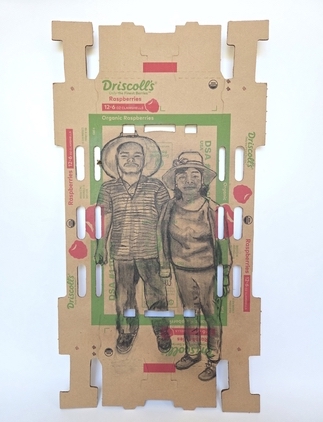
My paintings done on produce boxes are a testament to resilience and unseen labor that keeps this country running. I depict immigrant farm workers throughout their day working under tents; covered from head to toe to protect from the sun; on Driscoll boxes that carry the fruits of their labor. The boxes marked by dirt, labels, and time, become the foundation of their portraits, and still life symbolizing how society often treats both the workers and their sacrifices as disposable.

Immigrants risk everything to get to this country in search of a better life, only to endure hardship and take on the most grueling jobs just to survive. My work seeks to make their struggles visible, long working days, meager pay and fear of deportation are just a few struggles illegal immigrants constantly face in a society that renders them invisible. I honor their humanity in a system that often exploits them; within these portraits, there is defiance, strength, and dignity.

I depict this type of work to show “Who feeds us? At what cost?”. These people are not just workers; they are mothers, fathers, sons and daughters; people who left everything behind in search of something better. By painting them on the fragile, temporary surfaces of produce boxes, I confront the viewer with the fragility of their existence in America, while also insisting that their stories endure hardships the basis on which this country was founded under.

Tom Kimbrell

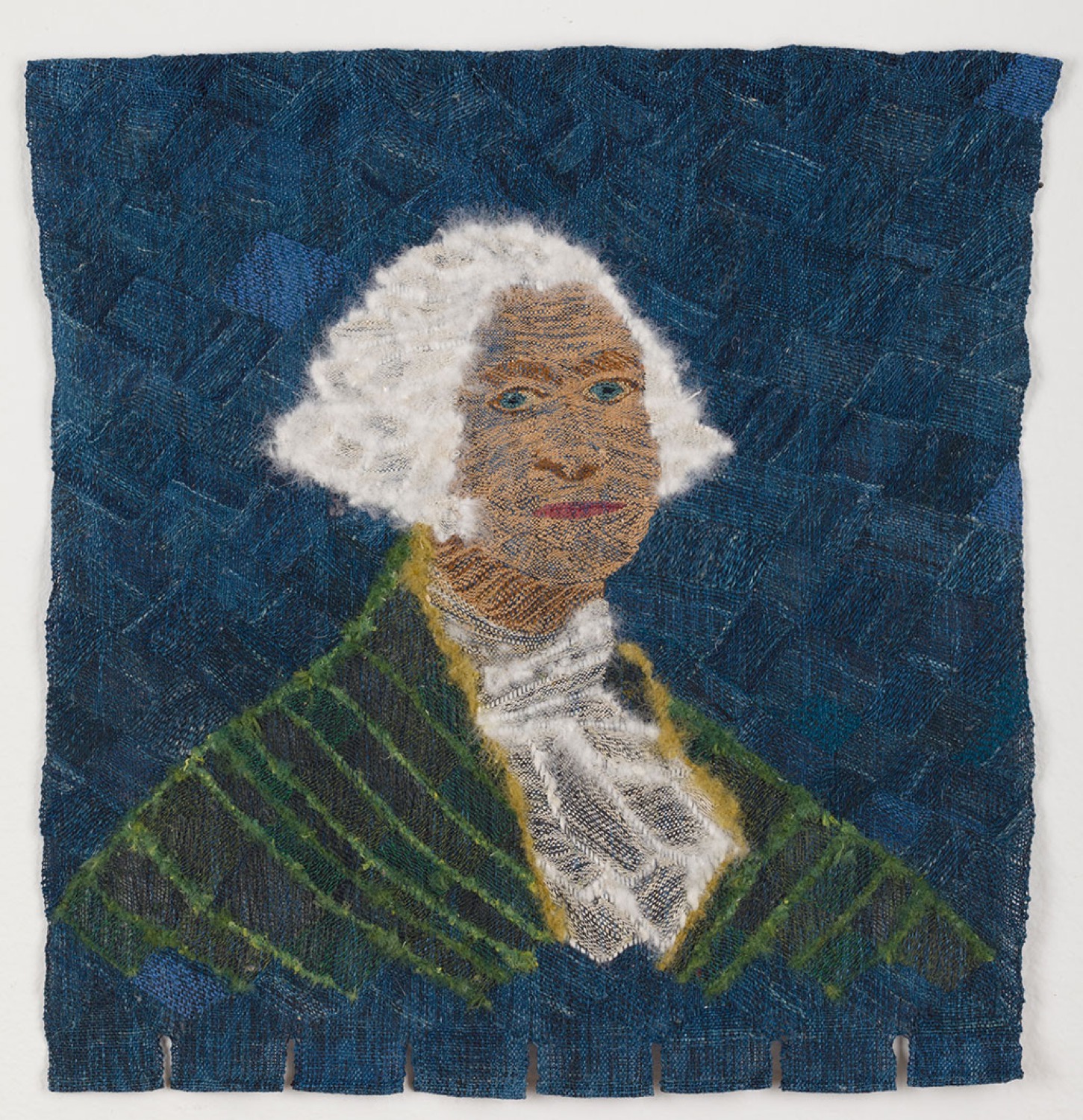
About the Grimké Sisters

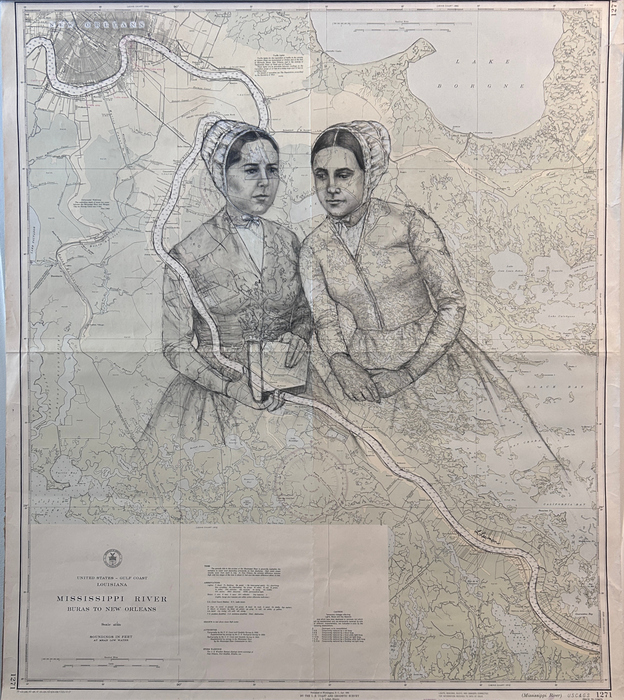
The Grimké Sisters, Sarah (1792-1873) and Angelina (1805-1879), were the very first white women abolitonists and suffragists from the Deep South. They were raised in the cradle of slavery on a plantation in South Carolina. They witnessed the daily cruelty and injustice against the enslaved people who made their family rich. Sarah and Angelina left their family home and moved to Phildelphia to join the Quakers, who were strong abolitionists. However, Quakers wanted women to “keep their place” and not speak or write publicly. These brilliant women defied public convention and today are cosidered to be two of the most influential women in changing America’s attitudes toward slavery and Women’s Rights. I recommend you read The Grimké Sisters From South Carolina, Pioneers for Women’s Rights and Abolition by Gerda Lerner, for a deeper insight into these courageous women.

Statement

My art is an avenue by which I share my love and knowledge of the natural world. It is also a way for me to express my commitment to inclusivity and justice. I hope my art inspires humanity to a more careful stewardship of our planet and to recognize our responsibility to each other.

Statement

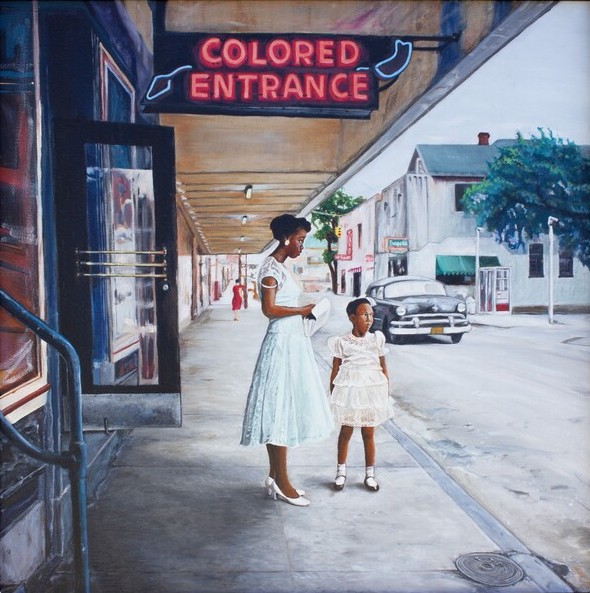
My work examines America’s mid-century culture and how history tends to repeat itself. It focuses on persistent issues like inequality, discrimination, violence, and societal morals. I’m driven by a desire to understand why we continue to make the same mistakes, and my art seeks to answer that question.

Biography

Julie Lipa, a self-taught artist from Detroit, channels her fascination with discarded objects into her art— a passion ignited by garbage picking with her parents. Her creative path was further shaped by an influential electro-kinetic teacher at Macomb County Community College, who taught her to see the world differently. Early on, Lipa repurposed 1950s portable TVs into functional art. But ultimately she needed to make the rent so she stopped making art and founded an entertainment marketing agency.

Two decades later she retired and returned to her art, using the vintage TVs she had stored to create her solo show Beneath Perfection: The Underside of America’s Mid-Century Belle Époque, a journalistic exploration of American history.

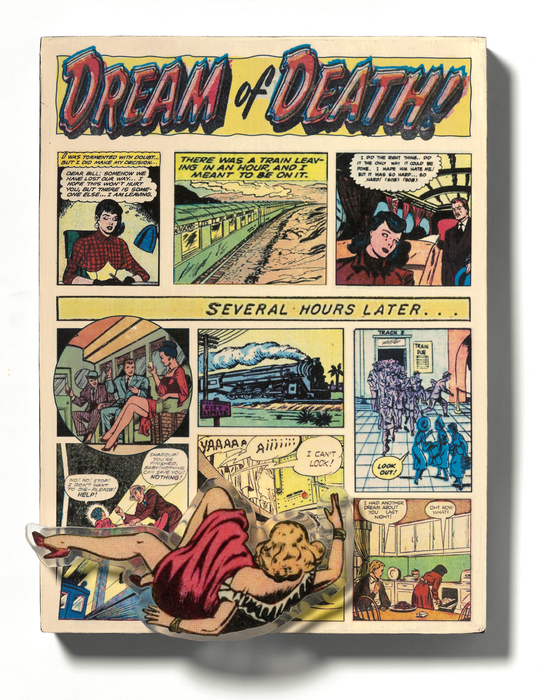
Her latest series, Pulp Fission: Classic Comics Reconstructed, deconstructs the violent, sexist comic panels of the 1950s, exposing their false moral narratives while infusing them with subversive, queer, and risqué themes that challenge America’s sanitized history.

Her work can be found at the Smithsonian Affiliate The Atomic Museum in Las Vegas, Nevada and in private collections.

Edith Martin

Peonies

Mary McGill

Statement

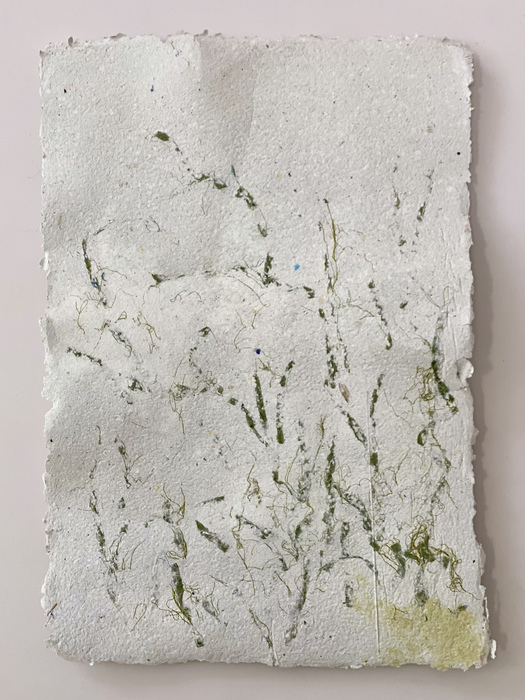
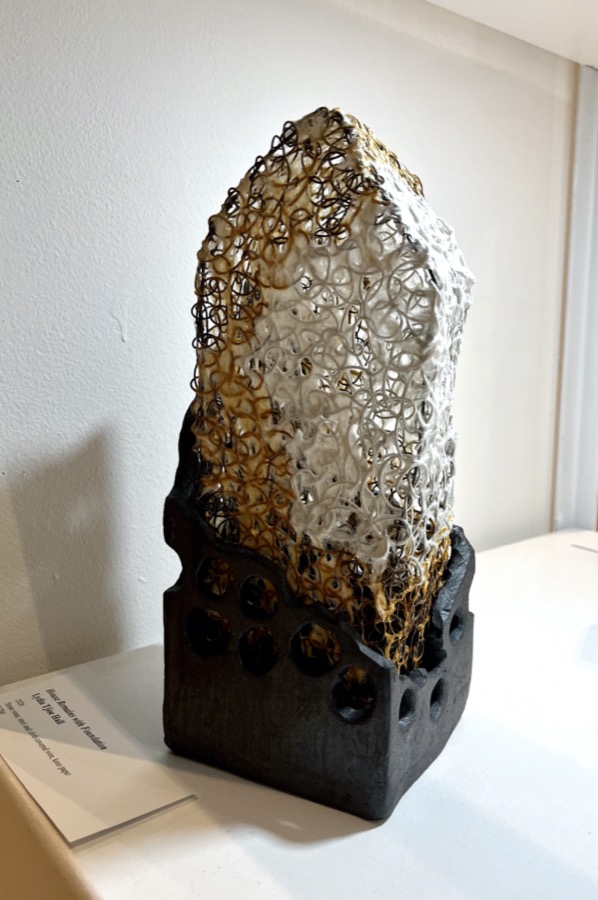
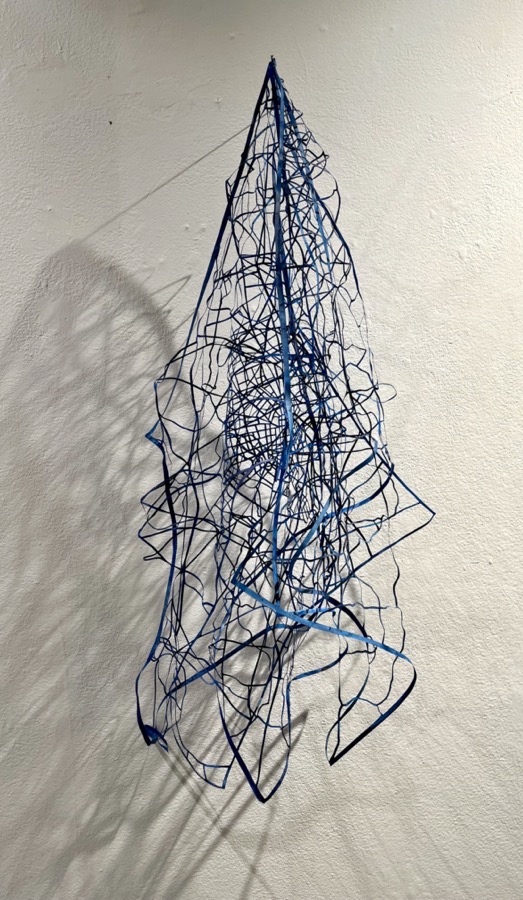
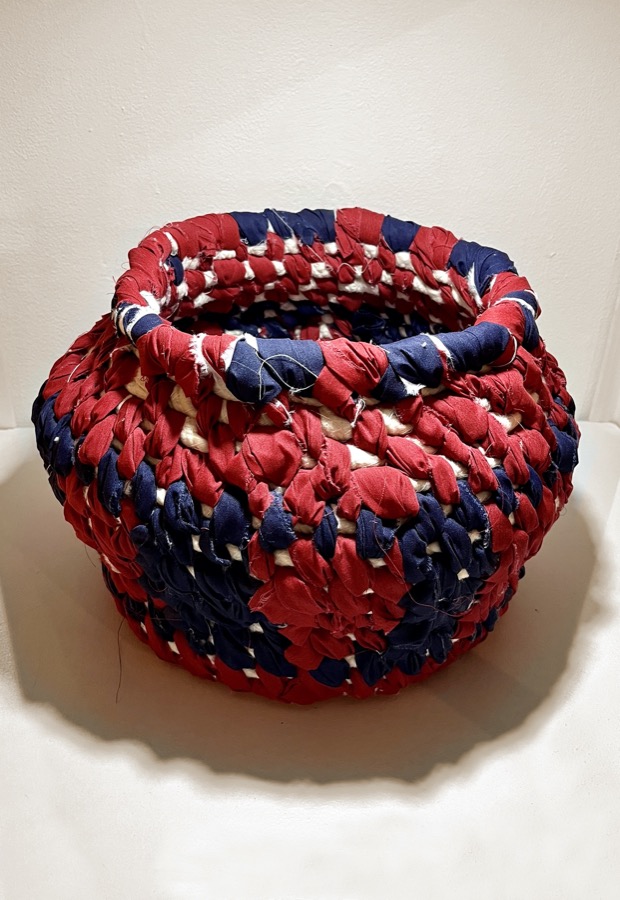
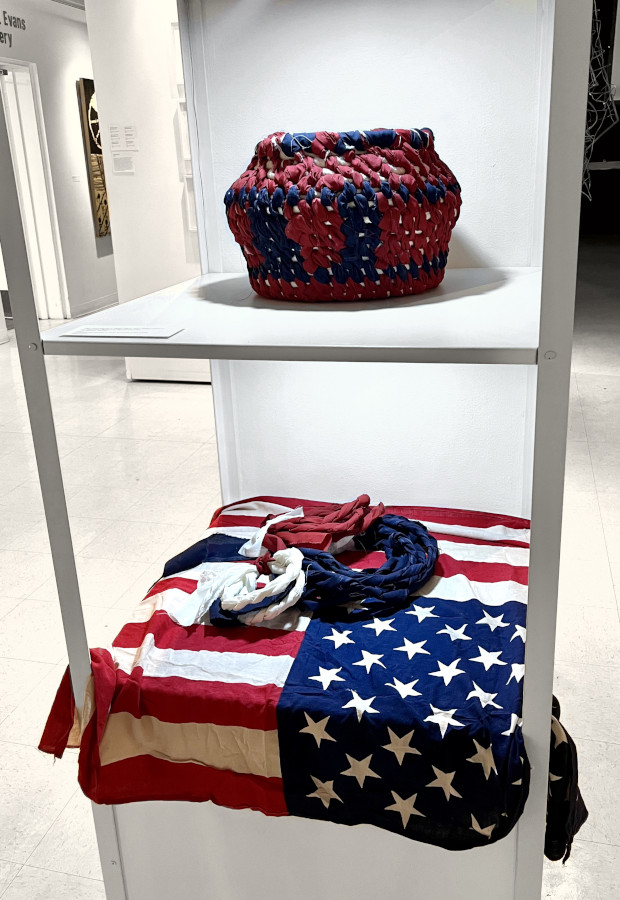
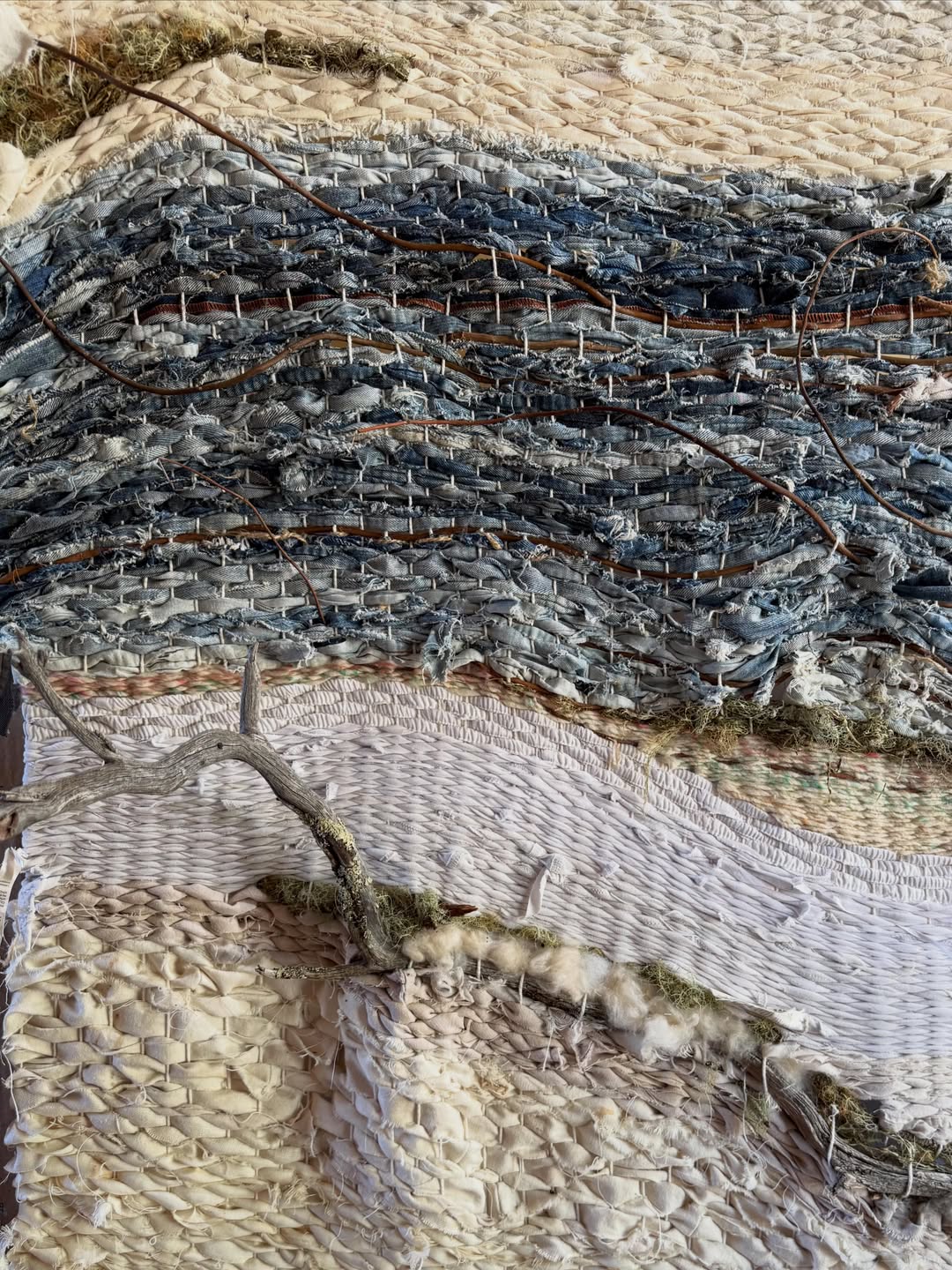
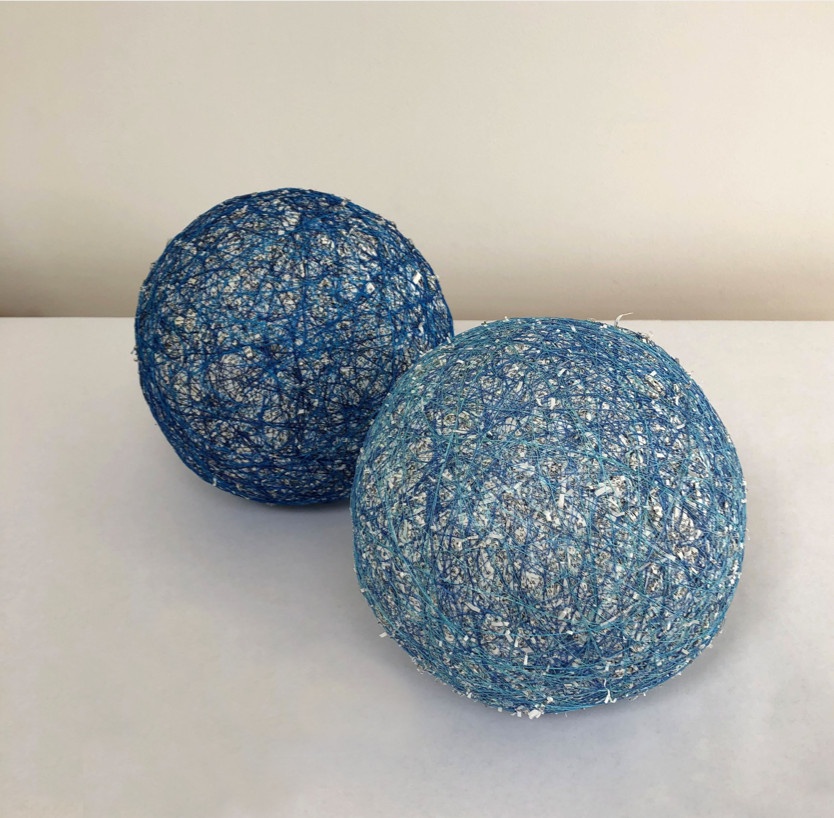
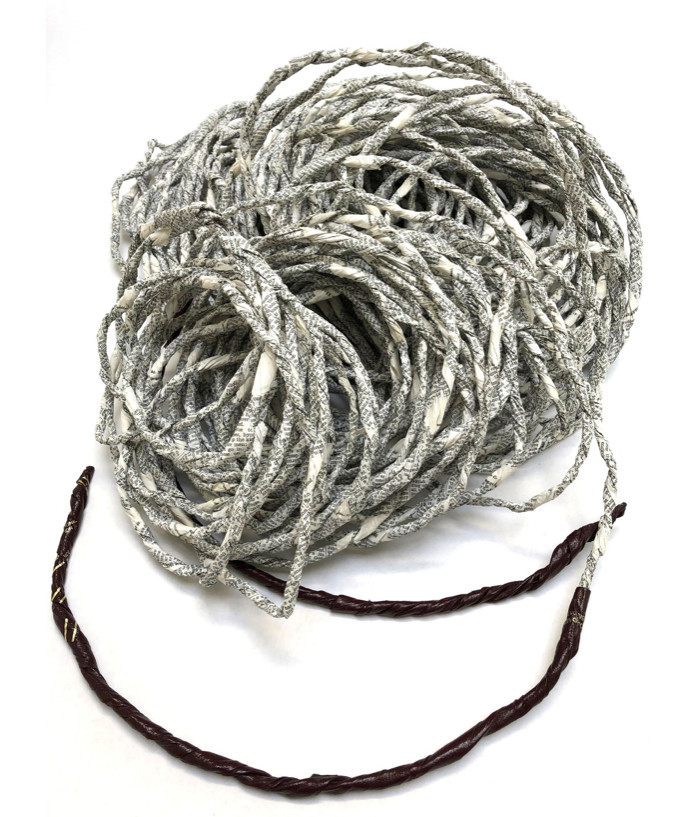
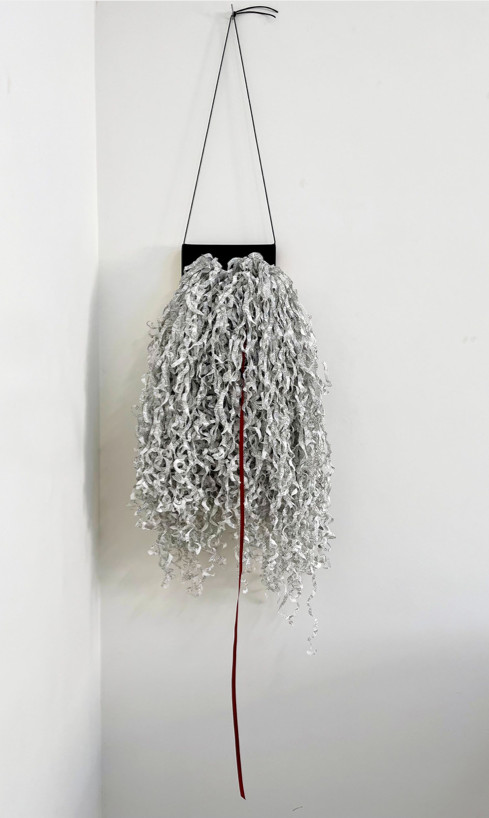
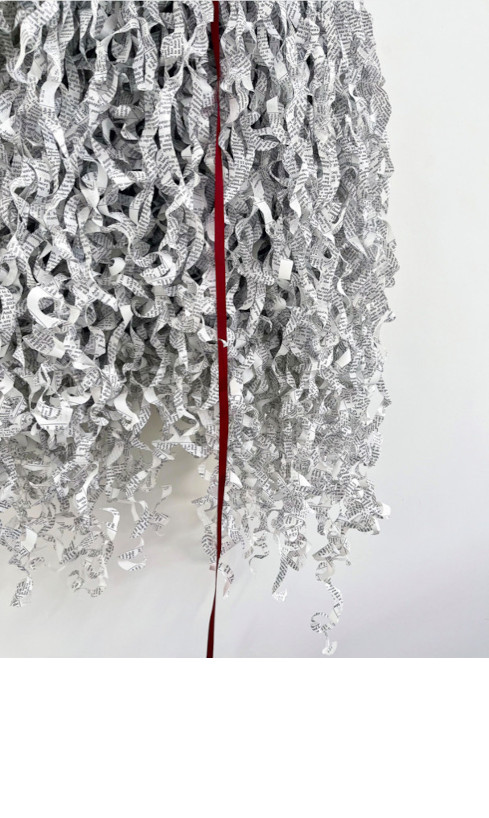
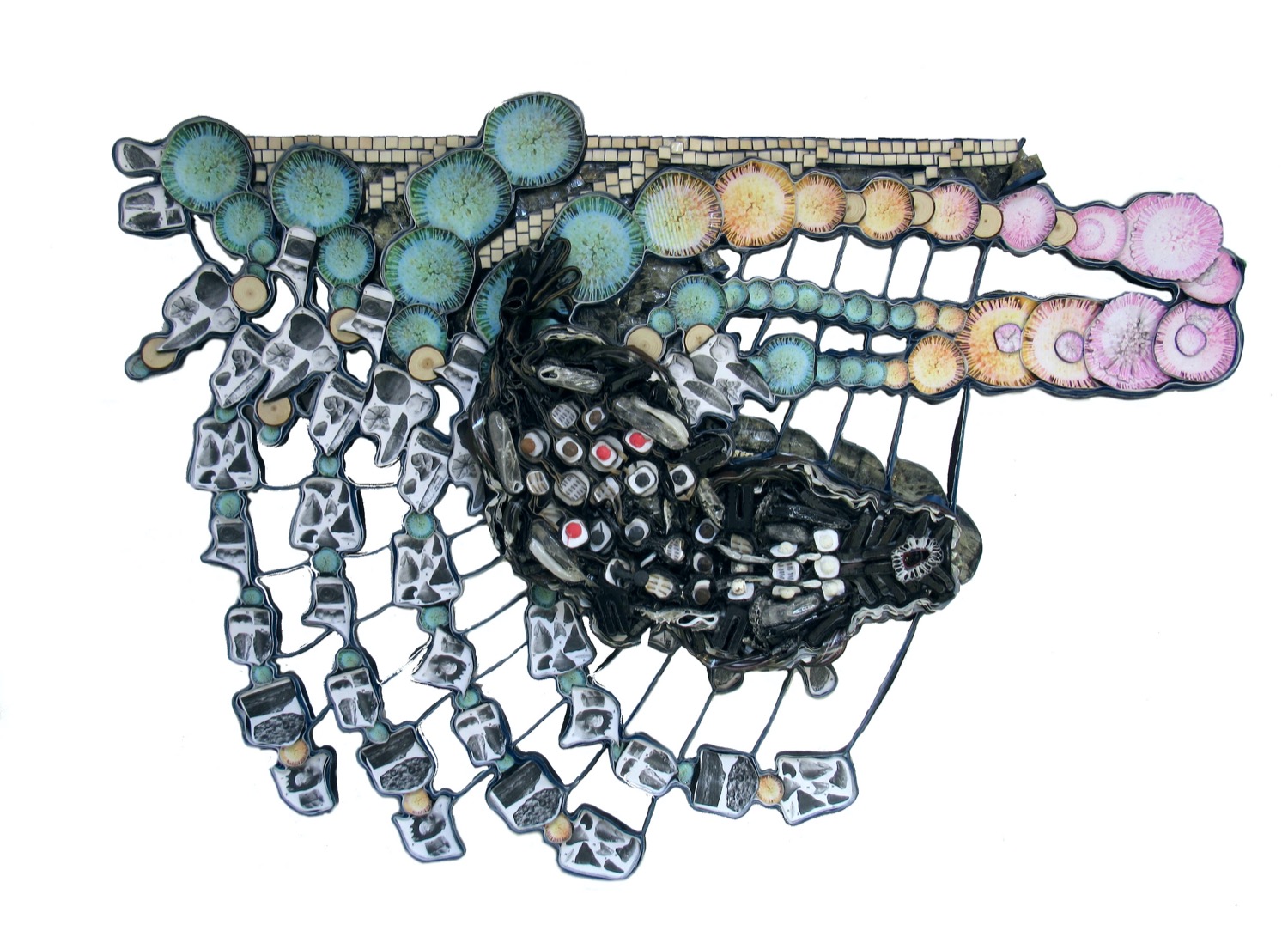
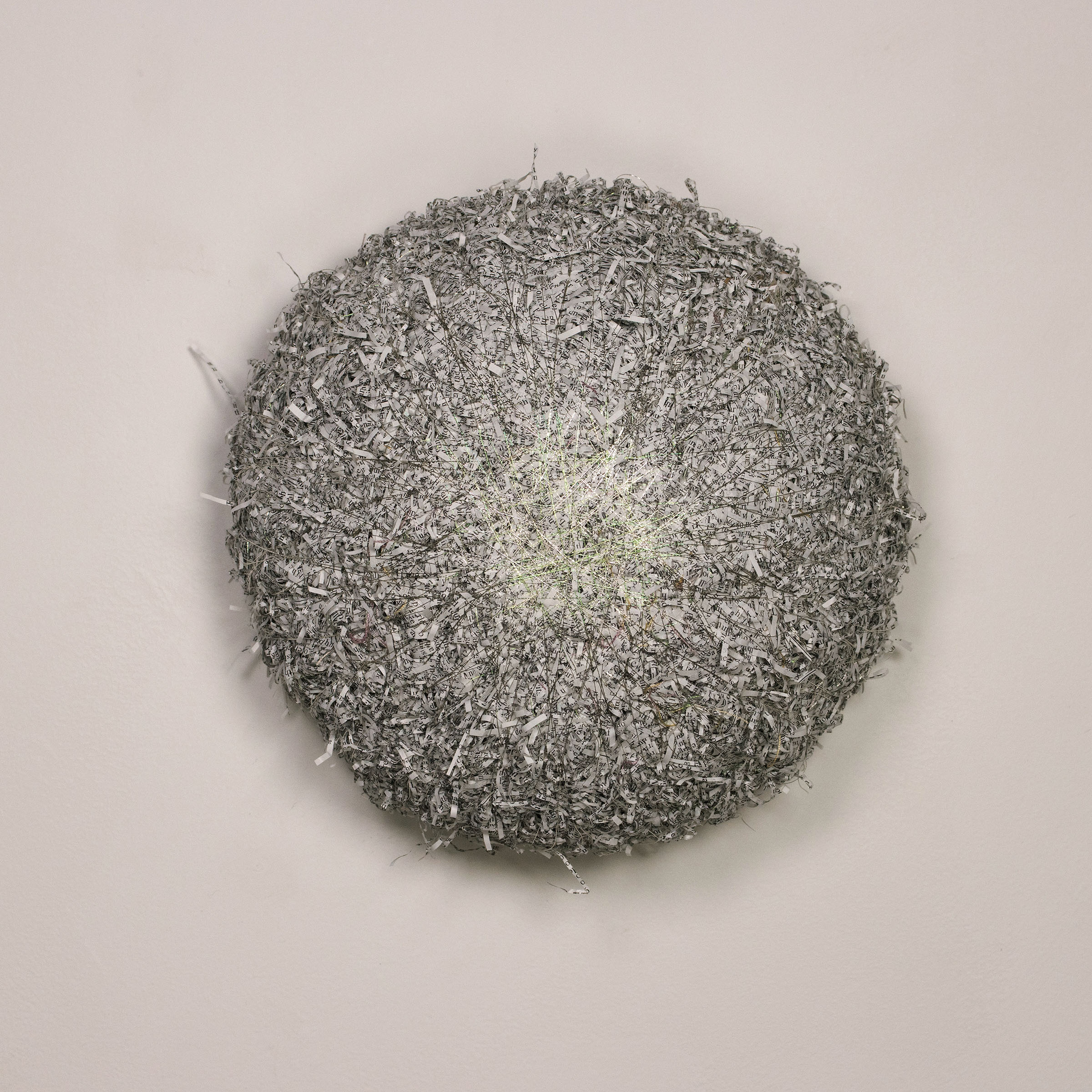
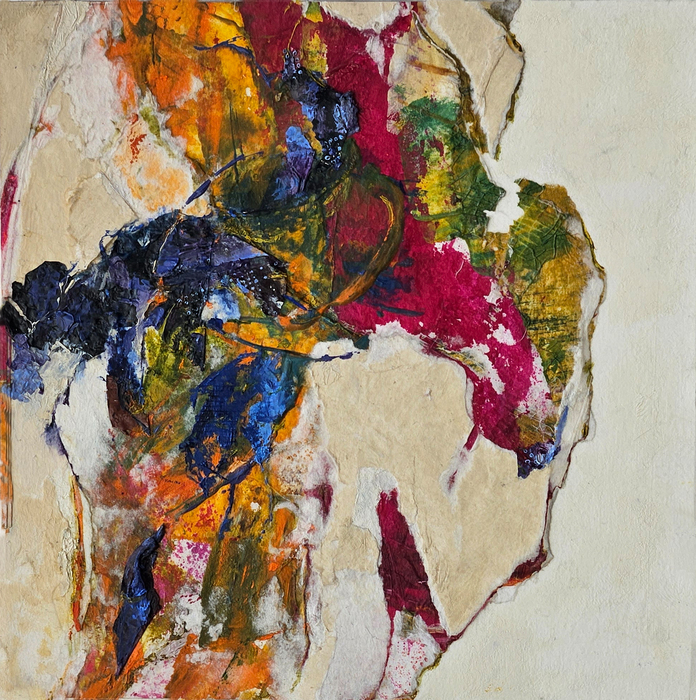
Through the lens of environmental sustainability, my work reincarnates the discarded and transforms the used to explore our fraught relationship with the natural world. My creative research is often material-driven and opportunistic, with experimentation integral to the finished work. This mixed media sculpture combines recycled paper and reclaimed textiles to celebrate biological structure and acknowledge human impacts on fragile ecosystems.
Melody Nunez

Statement

My work, as both an author and artist, begins with an act of creative collision. I bring together disparate elements—text and image, comedy and trauma, the personal and the systemic—to see what new meanings emerge. This process allows me to explore a wide range of subjects.

Sometimes, I apply this lens to the complexities of the human condition, exploring fear and identity. Drawing on my childhood in the Jim Crow South, I use tools from the Theater of the Absurd and Southern tall tales to deconstruct social narratives in my novel-length works.

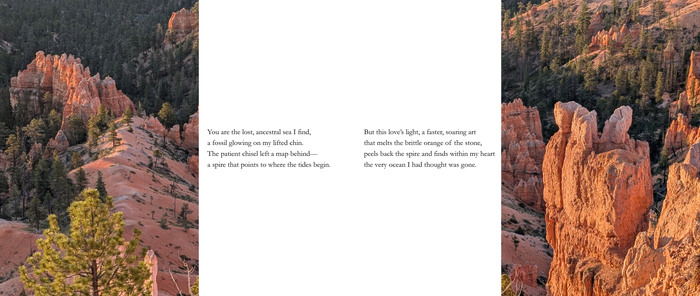
At other times, my focus shifts to the slow, vast narratives of the physical world, contemplating geology and entropy. These explorations often take the form of art books, where the starkness of a photograph is cross-activated by the lyricism of poetry. The movement of a single grain of sand—or the theft of a horse from a U.S. President’s barn—can become the anchor for an entire project.

While my subjects may range from the intimate to the immense, my ultimate goal is consistent: to disrupt rigid ways of thinking about identity, fear, and social justice, and to foster a more peaceful understanding of our multifaceted world.

Biography

Based in Galena, Illinois, and Hot Springs, Arkansas, David Orr is an author and artist who brings a structural perspective to his work, honed by careers in architectural design and corporate creative direction, to his work. Orr now explores histories—both personal and systemic—through a unique lens of comedic structure, absurdity, and lyricism. He dedicates his practice to creating novels and art books that merge photography, graphics, and poetry.
This ‘third act’ in his creative life is built on a rigorous foundation of lifelong learning. A graduate of the Low-Residency MFA program at the School of the Art Institute of Chicago (SAIC), Orr also holds two other Master’s degrees, one in Architecture, the other in Media and Popular Culture. His path began with Writing Seminars at Johns Hopkins and includes formal study in comedic theory at the Second City and play-writing at Chicago Dramatists.

Raised in a small college town in the U.S. South, Orr’s voice was shaped by a culture of raconteurs steeped in the traditions of the tall tale and magical realism. This heritage informs his distinct approach, blending influences from Jorge Luis Borges to stand-up comedy—to dissect complex subjects with wit and humanity.

SKParker

Julia Pinkham

Linda Sue Price

Alabaster Raven

Statement

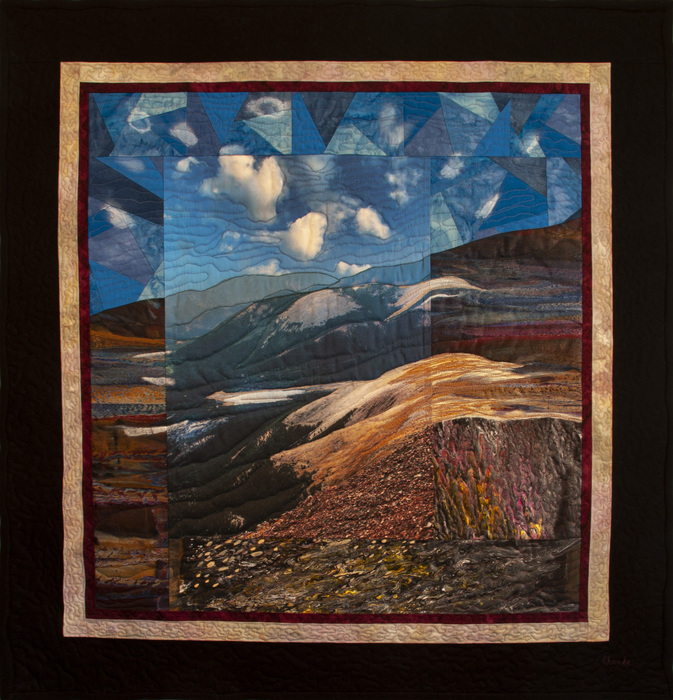
My artwork emerges organically, without a preconceived pattern or plan. Each piece is the result of intuitive exploration-an accumulation of experimentation with a variety of mediums. I blend original photography, paint pours, and fabrics, allowing them to interact in unexpected and harmonious ways. Thread painting unifies the work, creating a sense of cohesion and balance across the layered textures. Fabric is my primary medium-both a canvas and a sculptural element. I use it to construct original fine art compositions that draw viewers in from a distance and invite them to linger, discover, and connect more deeply with the subtle details. My work lives in the space between abstraction and landscape, memory and material, inviting personal interpretation and quiet reflection.

Miriam Schulman

Tony J. Smith

Dobee Snowber

Elizabeth Souza

Linda Stelling

Statement

In the most recent series presented here, I found a deeply satisfying connection between the aesthetics and language of the Middle Ages and the emotional landscape of the present. The visual vocabulary of that era allows me to explore today’s inner experiences through a lens that feels both distant and immediate.

Biography

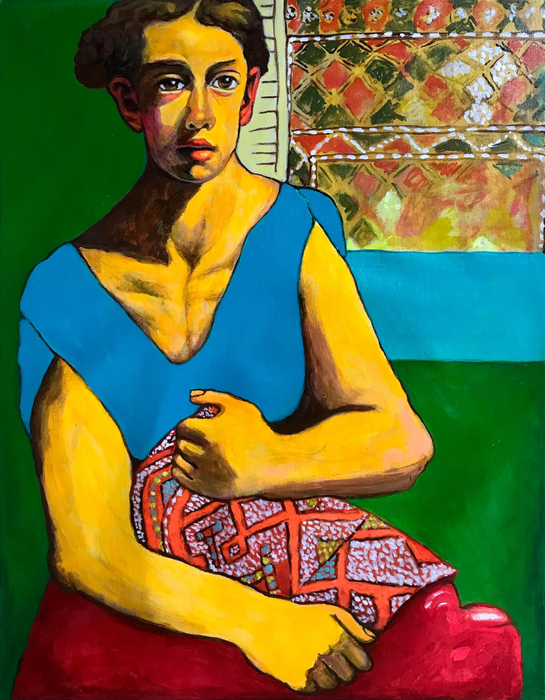
Silvia Wagensberg, originally from Barcelona, holds degrees in Spanish Language and Literature from the University of Barcelona and studied at the Sant Jordi School of Fine Arts. After a brief career in local art circuits, she moved to the United States. Her exhibitions include Troy Café (1992), Back to LA at Corridor Gallery (1995), the Steinbeck Center (2012), Sola Gallery (2021), The Ebell of Los Angeles (2024), and Yours Truly at the Backman Gallery, Heller Museum, New York (2024). Her work, often rooted in memory and migration, appears regularly in Maintenant, with a 2024 illustration nominated for a Pushcart Prize.

Her paintings reflect personal experience while engaging with cultural references that hold deep significance for her. Rooted in memory, her work frequently explores the female experience, focusing on the resilience women cultivate throughout their lives.

Claudia Wilson

Marion Wood

Statement

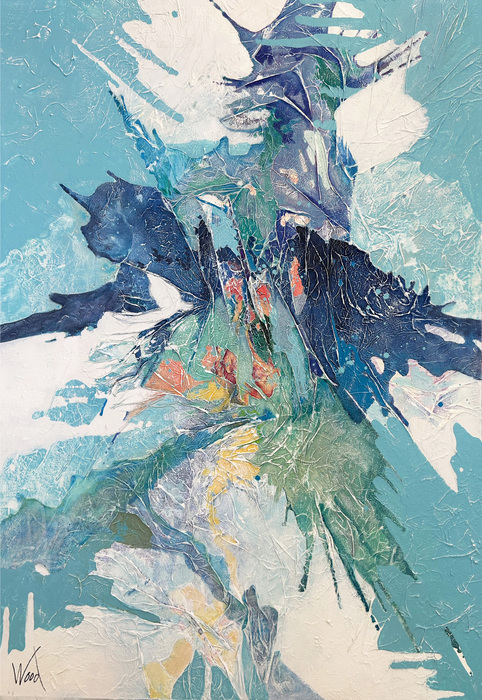
The invitation of the blank canvas and the purity of the act of painting, is what inspires me.

Having grown up in the English countryside, long stretches of rainy days put drawing, and eventually painting, foremost in my pursuits. Through decades of filling the blank canvas, constant experimentation, and pushing boundaries, I broke into my own voice.

There is something raw and beautiful in the process of painting large canvases, using my whole body to inhabit the space, with no pre-meditation for the outcome, just having a conversation with the materials in that specific moment of time. I explore the balance of order and chaos’s and the joy and pain of creating. Leaving the gestures obvious to their origination; a drip, a flow or a strike, either emotional, playful, or aggressive, laying it bare for the viewer’s observation.

Statement

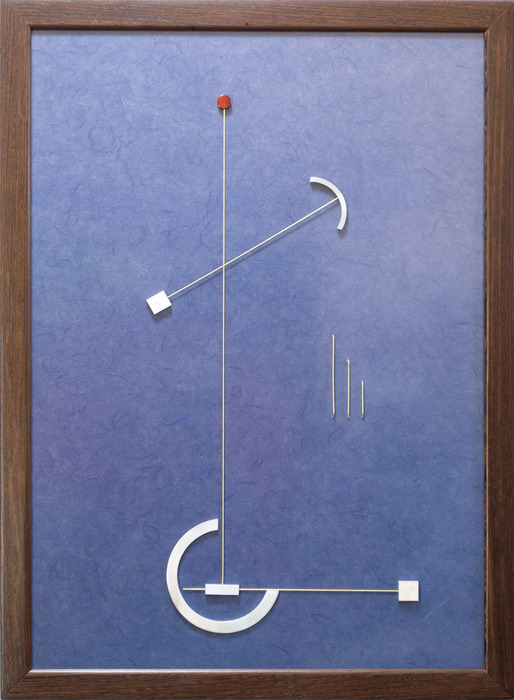
As an artist specializing in geometric abstraction, my work gravitates toward the realm of minimalism. This artistic choice allows the design’s essence to take center stage, free from extraneous distractions. My pieces do not carry deliberate symbolism or emotion; they are visually mute entities, waiting for the viewer to impart their own emotions and interpretations. Whether it is wall art or sculpture, each creation is a canvas for personal meaning.

In the domain of non-objective art, the subject matter is drawn from a rich tapestry of experience gathered over decades. While my work does not depict a specific subject, it is the culmination of countless explorations into the style itself.

The allure of a particular scene lies in the composition—the interaction and balance of geometric elements. The color dynamics between forms and the backdrop are crucial to this balance, and each piece seeks harmony in these visual relationships. [ Read more ]

Biography

James Woronow’s art is all about geometry and clean lines. His work is characterized by its strong use of basic shapes and colors. But there is more to Woronow’s art than meets the eye. His work also shows the hidden connections between things.

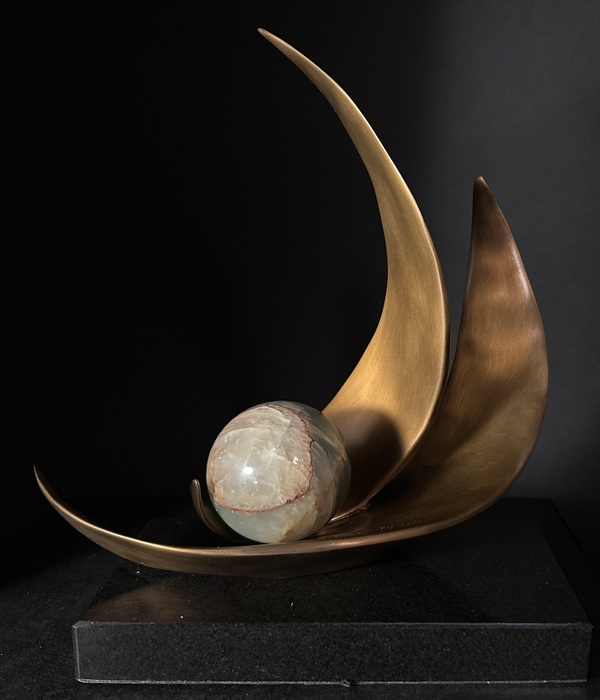
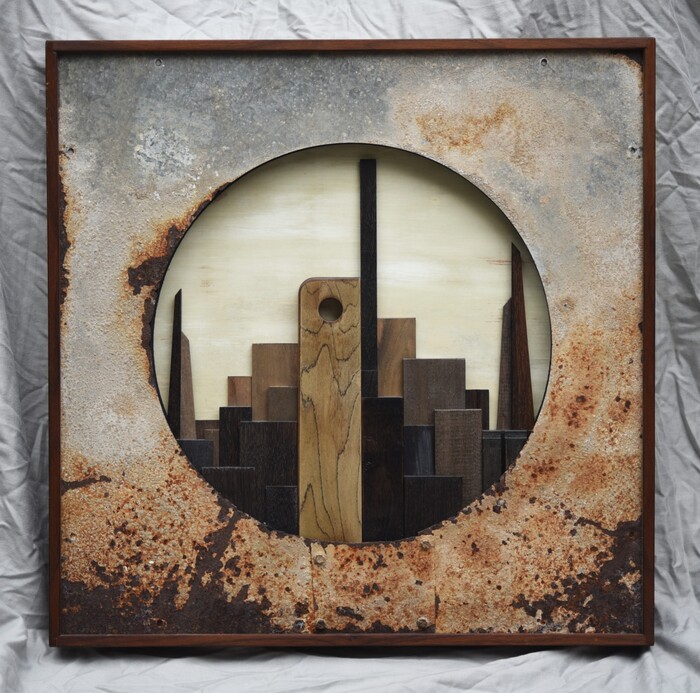
Woronow’s work often explores the relationship between the seen and the unseen, the material and the ethereal. His sculptures usually use different metals and exotic woods to create geometric shapes. The elements are then affixed to a non-glare sheet of acrylic. Under this acrylic sheet is another panel to which Woronow adheres handmade papers that bring life to his geometric elements. By doing this, Woronow establishes a sense of depth and dimension that in-person viewing can fully appreciate. [ Read more ]

Jim Zver

Statement

Implications Series

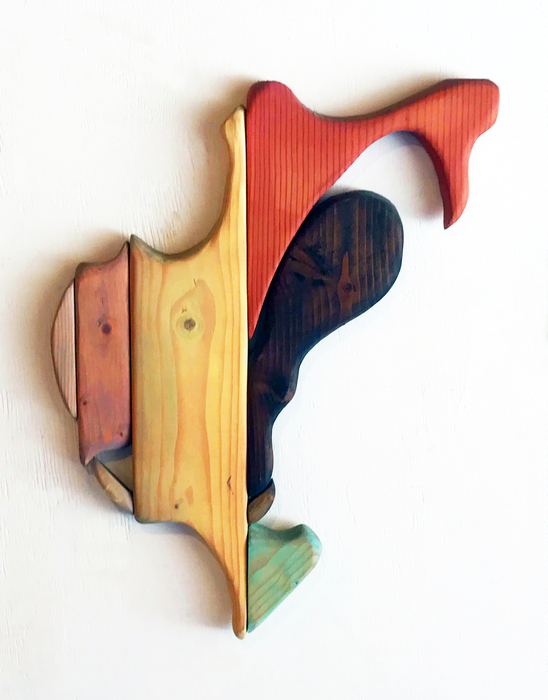
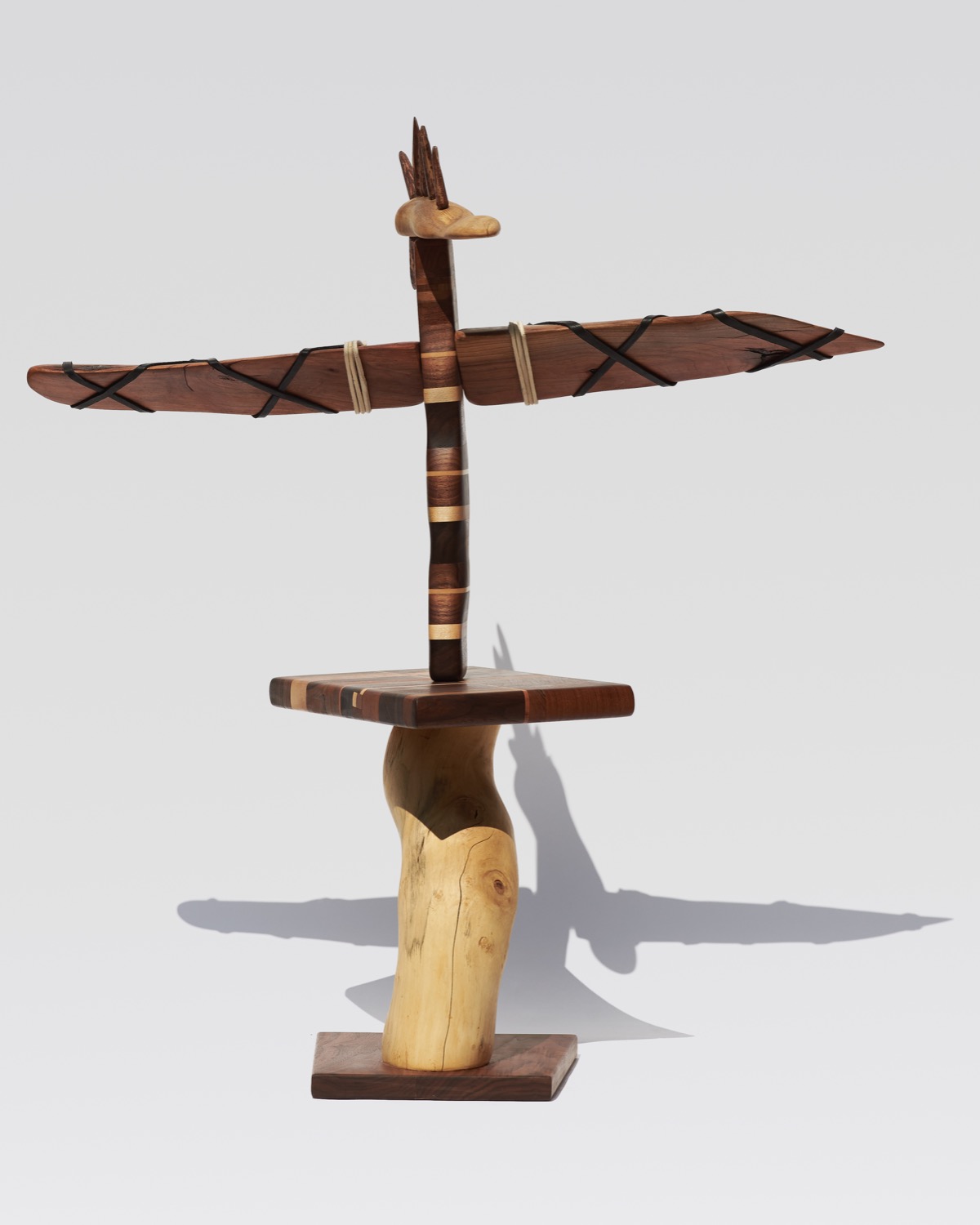
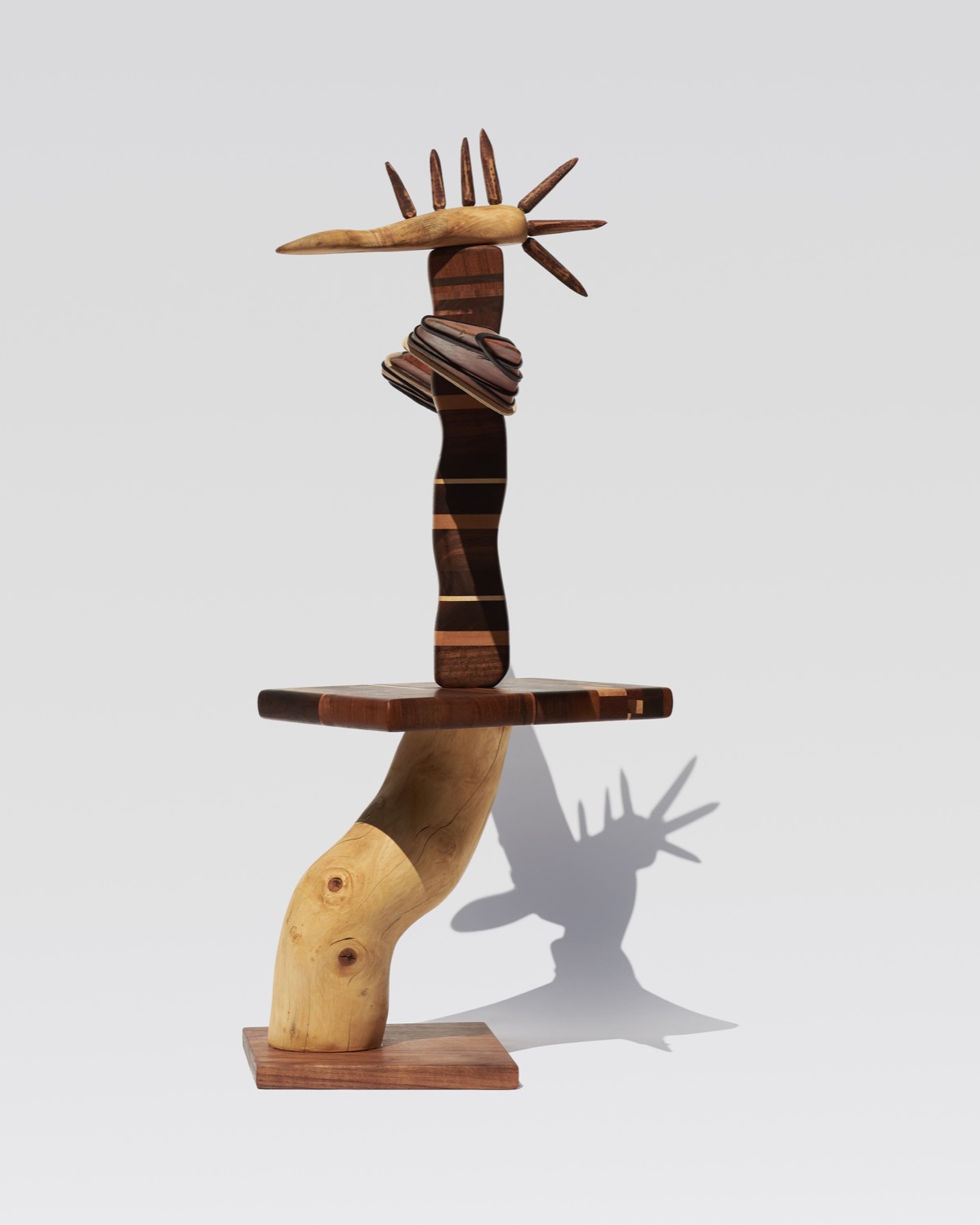
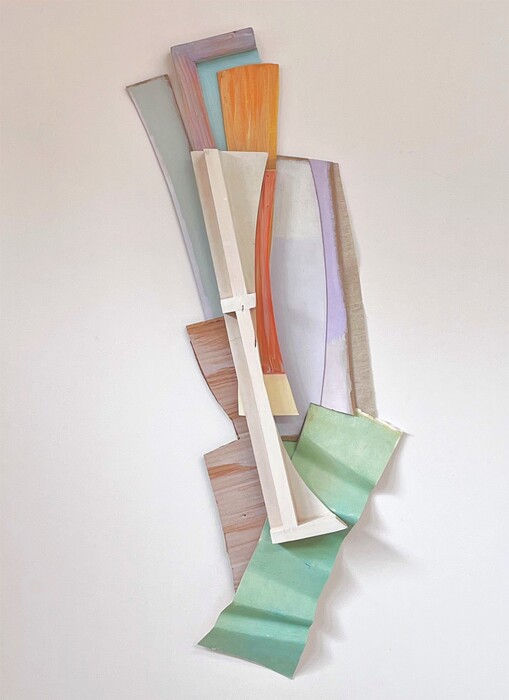
This ongoing series of painted wood reliefs were prompted by my discovery of the possibilities and pleasures of a Makita angle Grinder tool. Initially bought for its ability to easily remove layers of paint and damaged wood surfaces, I soon saw its potential to shape the individual pieces of wood I use in my sculptures into forms closer to the biomorphic ones I use in my collages.

These abstract, non-objective collages, although not directly intended, have always contained suggestions of subject matter. I make no attempt to avoid this, nor is it possible, since the collage shapes and their arrangements are formed and chosen by a lifetime of focusing on images that I have remembered, responded to and enjoyed.

These sculpture’s more contemplative and deliberate process of assembly, each piece cut, shaped by grinding, sanded and carefully considered before it is doweled and glues in place, intensifies their sense of subject matter. The finished sculptures, with their implied imagery, become the recipient and container of many implications. There are 37 sculptures and reliefs in the series.